
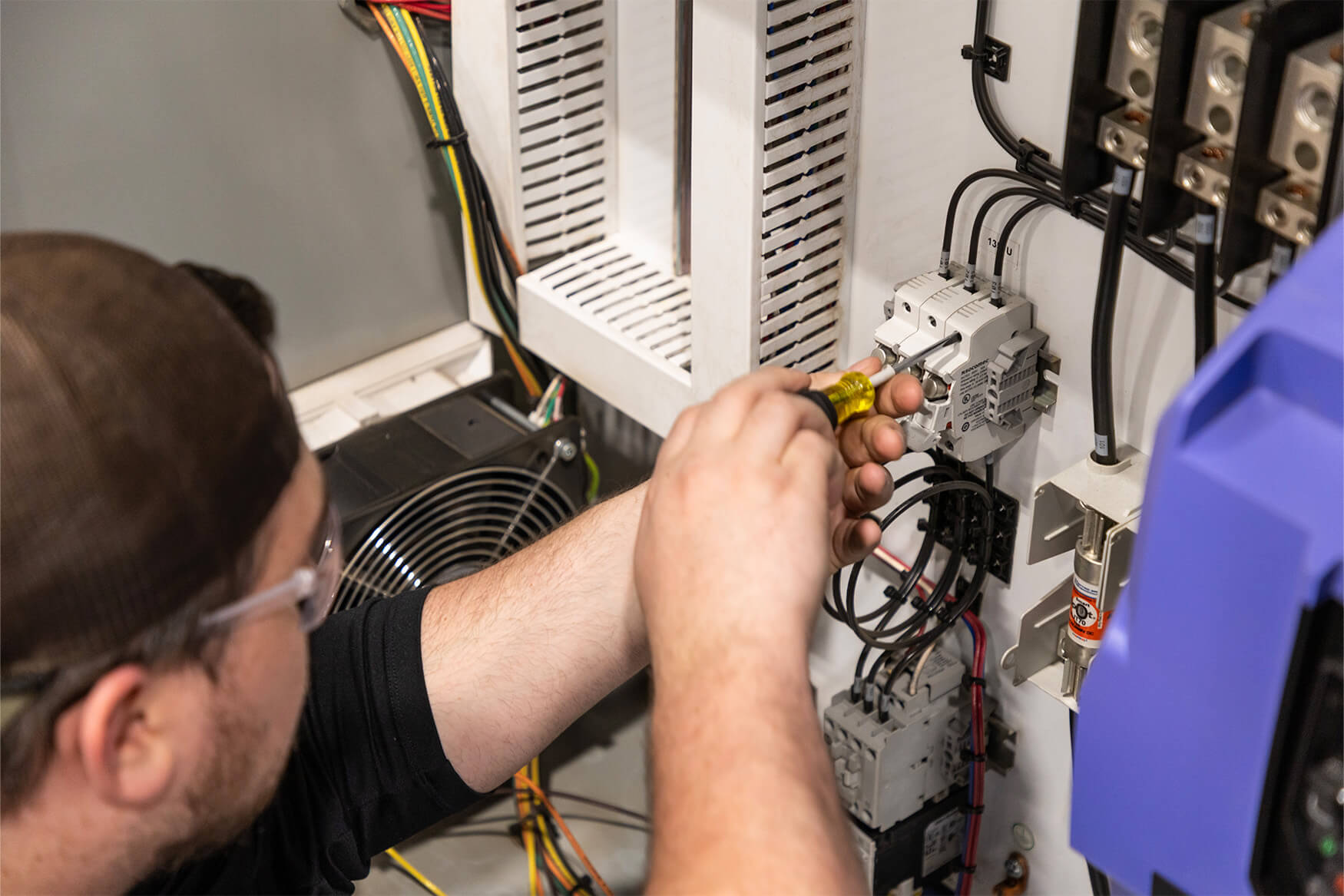
Many pieces need to come together for an automated system to function well—hardware, software, panel layout, wiring, and more. That’s why thoughtful automated control system design is key for the efficiency, safety, and scalability of your process. Experienced industrial solution providers can take you from design through commissioning and ensure every piece meets your specific needs.
What Are Industrial Automation Controls?
Industrial automation controls are the brains behind any automated process. Automation and robotics are used for repetitive or hazardous tasks, helping you improve efficiency, safety, and consistency in your output.
Here are the basic components to know:
- Programmable Logic Controllers (PLCs): the “brains” of the control system, handling decision-making and controlling the machinery.
- Sensors: what gather information in your system.
- Actuators: perform actions according to instructions from the controller.
- Human Machine Interface (HMI): how humans interact with the system, typically through a touch screen that displays data.
- Power supply: source of energy.
- Software: programming that tells the controller what to do.
- Variable Frequency Drives (VFDs): control the motor speed and torque through changing voltage and electricity, allowing for greater flexibility, precise control, and energy efficiency.
Automation is useful across all industries, and it brings many benefits to your plant.
- Flexibility: the ability to run different products across one machine.
- Reliability: consistent output and quality, limiting errors as much as possible.
- Cost savings: reduced manpower, energy consumption, and floor space used.
- Centralized controls: controls all in one convenient place.
- Safety: limited human interaction in hazardous processes.
See Custom Controls In Action
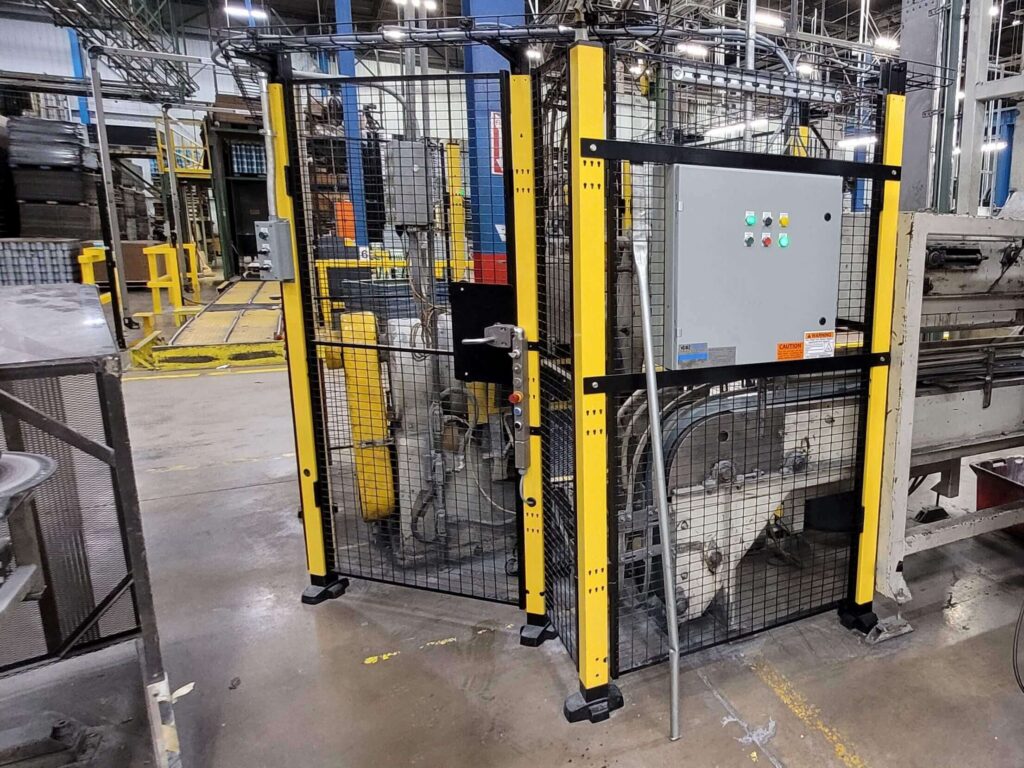
We upgraded a packaging company’s production lines by installing centralized control panels that integrate all junction boxes into one safe, easy-to-use location. Equipped with safety controllers and emergency stops, the panels let operators manage machines from outside the fenced area, improving efficiency and safety during maintenance.
What Are the Key Considerations for Automated Control System Design?
Our team has 40 years of experience designing automated control systems. Here are the six main elements that guide our designs.
1). Safety and Compliance
Every project requires different safety features. We typically categorize our work into two groups: process control or packaging and robotics.
For process control systems, like dust collectors, controls focus on explosion protection, fire mitigation, proper ventilation, and interlocks that prevent unsafe operation.
For packaging and robotics, human safety is the priority. Key elements include safety guarding, emergency stops, light curtains, two-hand controls, safety mats, lockout/tagout integration, and flexible systems that allow part of the line to run while maintenance is performed elsewhere.
No matter the project, our engineers approach automated control system design with a safety-first mindset. We ensure all systems comply with local and national codes (NFPA, NEMA, OSHA, etc.).
2). Hardware Selection
Choosing the right sensors, actuators, and controllers is a critical part of automated control system design. Our philosophy is to use hardware you can trust—proven, reliable components that perform consistently in the industry.
Equally important is compatibility. For retrofits and upgrades, all new hardware must work seamlessly with your existing system and process. We carefully select components that integrate smoothly, avoiding costly mismatches or communication issues.
Hardware selection is often customer-driven. We honor plant standards, brand preferences, and budget considerations. Our goal is always to balance quality, reliability, and cost while ensuring your system works flawlessly now and in the future.
3). Scalability
Your operations and product lines will likely evolve over time, so your control system should be ready to grow with you. Systems designed without scalability in mind can quickly become outdated and costly to replace.
PLCs are key to scalable industrial automation controls, allowing you to adjust programs and make minor hardware changes to support new processes or products. Beyond that, scalability can be built in through:
- Modular hardware design: using panels, I/O modules, and components that can be added or swapped without reworking the entire system.
- Spare I/O and capacity: leaving extra inputs, outputs, and memory in the PLC and network for future expansions.
- Flexible network architecture: designing communication networks that can integrate additional devices easily.
- Expandable HMI and software: programming interfaces that can be updated to include new processes, alarms, or dashboards without major rewrites.
These design choices ensure your system can grow and adapt over time, reducing downtime and avoiding full replacements.
4). Wiring and Panel Layout
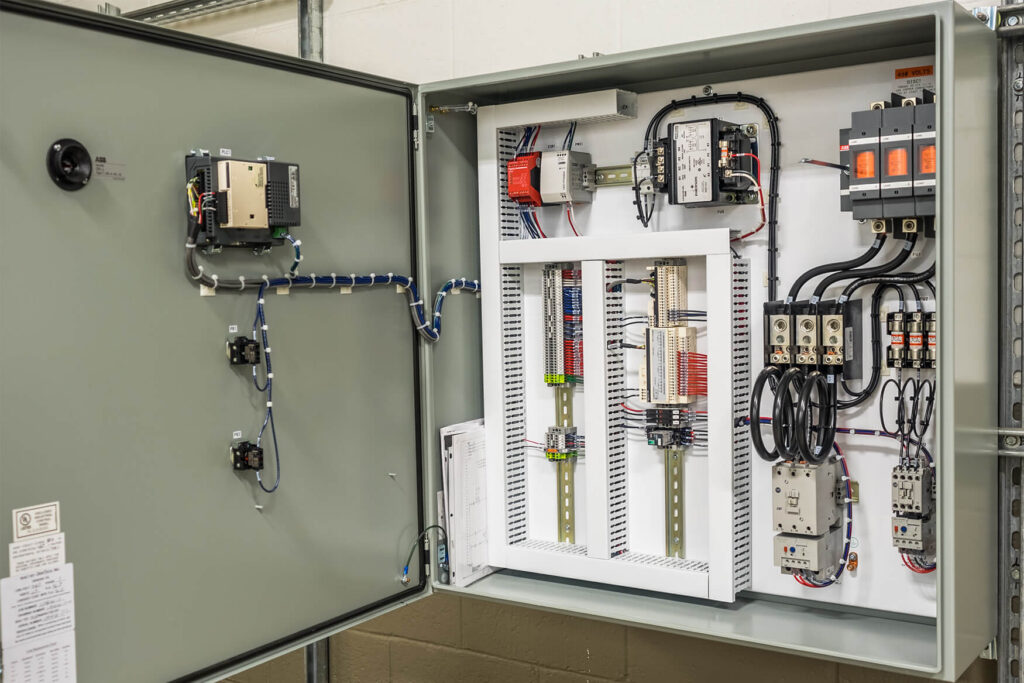
Improper wiring isn’t just an organizational issue. It’s a safety issue. Following panel and wiring standards makes your controls easy to access, convenient to maintain, and reduces risk.
Panel layout impacts your signal, so when building control panels, prioritize proper routing to cut back EMI/electrical noise. Color coding wires limits misidentification and keeps your maintenance technicians safe. Follow other best practices on labelling, voltage separation, shielding, and overcrowding.
Code compliance and documentation are also essential. UL 508A provides a baseline for compliance, and NEC Article 409 and NFPA 79, along with other codes, help guide successful installations.
Scalability matters here, too. Design your panel with extra space so you don’t have to build a completely new one if you add a new element.
5). Programming and Logic
This step of automated control system design can be done on a variety of programming platforms. No matter which you use, all programs should be lean, flexible, and configurable.
At DenTech, we follow best practices in our PLC and HMI programming solutions:
- Modular programming: breaking processes into reusable blocks for easier updates and scalability.
- Clear commenting and documentation: so future engineers can quickly understand and modify the system.
- Standardized structure: similar navigation, style, and hardware controls across systems for operator familiarity and ease of use.
- Robust error handling and interlocks: to prevent unsafe operation and minimize downtime.
- Thorough testing and simulation: to ensure logic behaves as expected before deployment.
Our custom dust collection HMI software, AyrDyne, enhances these practices by providing detailed system monitoring, maintenance tracking, and insights into the health of your equipment.
6). System Integration and Testing
Ensuring a smooth integration happens 90% on the frontend of a project. It starts with having the right conversations, proper training, research, and site visits. It’s also helpful to have team members who are cross-trained across multiple disciplines.
Before integration, we need to test the industrial automation controls. Factory Acceptance Tests (FATs) are conducted on the shop floor, where we run the line and follow detailed checklists to verify each component functions correctly. Site Acceptance Tests (SATs) follow at your plant, allowing operators to learn the system while we provide on-site support.
By combining careful planning, thorough documentation, staged testing, and open communication, our team ensures integration and handoff are seamless.
Well-Designed Controls in the Real World
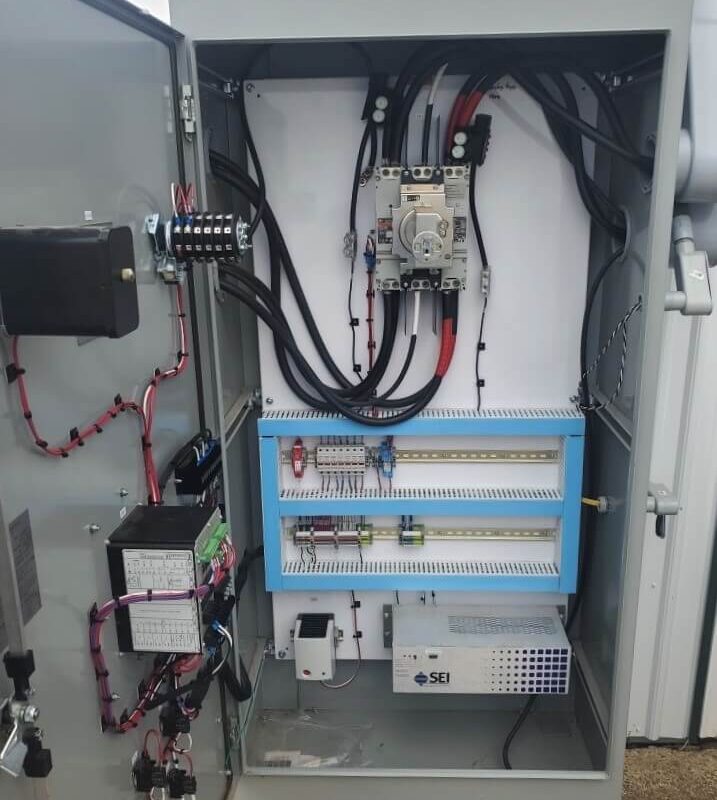
We delivered custom electrical control panels that simplified solar-to-grid integration while improving safety and compliance. By designing integrated protective relay systems that actively monitor power conditions and isolate solar generation during disturbances, we helped the client reduce risk, meet utility requirements, and maintain reliable, uninterrupted operation.
Designing for Different Types of Control Systems
With these essentials of automated control system design covered, here is how the process shifts for different types of projects.
| New Controls | Retrofits | Upgrades | |
| Design Considerations | Highest flexibility with the fewest constraints. Design is driven by customer preferences, internal standards (like preferred brands), and project goals. | Most constraints and least flexibility. Compatibility is critical. Components must work with existing systems, often requiring adapters and careful integration. | Falls in between. Some flexibility, but still working within an existing system. Decisions depend on how extensive the upgrade will be. |
| Level of Flexibility | High | Low | Medium |
| Constraints | Minimal—mostly defined by customer requirements. | High—must work within existing system limitations. | Moderate—some existing constraints, but more room than retrofits. |
| Benefits | Fully modern system with the latest technology, features, and performance capabilities. Built exactly to spec. | Cost-effective way to enhance an existing system. Adds new functionality without full replacement. | Improved performance and functionality without the cost of a full new system. Flexible scope depending on budget and goals. |
| Cost | Highest cost | Lowest cost | Mid-range cost |
| Design Process | Highly collaborative and customer-driven. Requires detailed upfront planning to define system requirements and functionality. | Less upfront discussion, more hands-on analysis of the existing machine. Focus is on modifying current functionality. | Mix of both approaches. The existing system defines some parameters, but there’s still room for strategic improvements and planning. |
DenTech’s Approach to Automated Control System Design
DenTech delivers custom control panels, system design, installation, and PLC and HMI programming solutions tailored to your needs.
Our UL508A and UL698A certified panel shop handles retrofits, upgrades, process controls, starter panels, and custom HMI programming. Unlike other providers, we focus on realistic solutions. We never overpromise and underdeliver.
A key benefit of working with us is our full-project commitment. We stay involved after installation, providing dedicated support for service, parts, and troubleshooting. We partner with you long-term, ensuring your system runs smoothly now and in the future. In fact, we have a dedicated team member responsible for fielding calls about service and parts, so nothing slips through the cracks.
We also prioritize thorough documentation. Every system comes with manuals, diagrams, photos, spare parts lists, and reference materials. Even years down the line, you can call us with questions or request a site visit for our expertise.
We help solve challenges like:
- Outdated analog systems limiting production
- Inconsistent data monitoring and control response
- Downtime caused by control system failures
- Integration issues between old and new controls