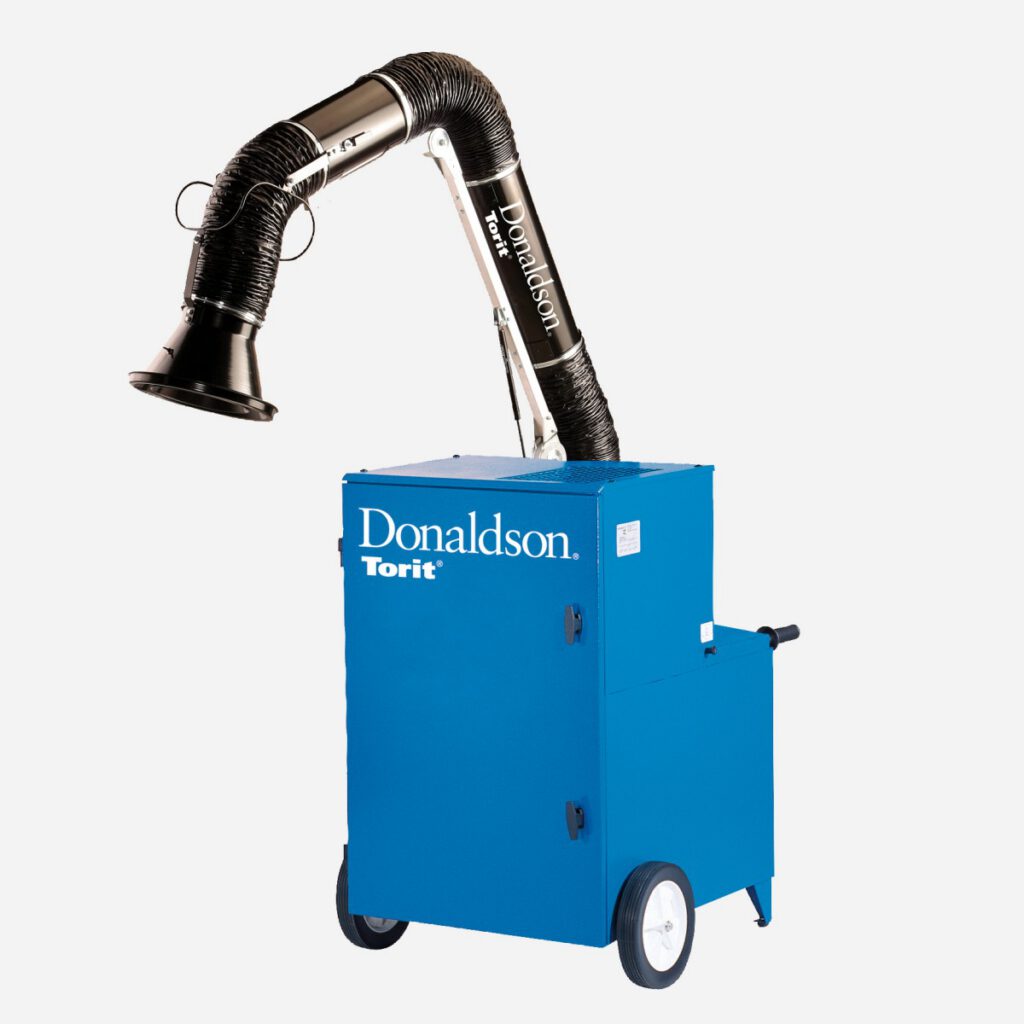
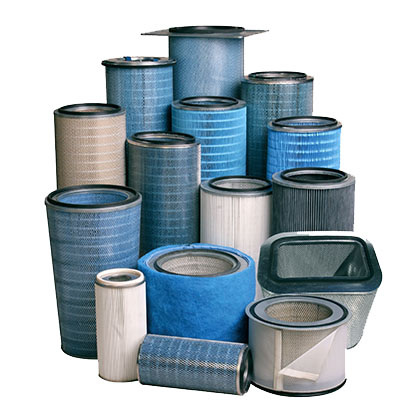
Summer months are a great time to check dust collection equipment and perform maintenance. Scheduling maintenance activities during a plant shutdown requires preparation, so here are some considerations.

1. Schedule in advance

Schedules fill up quickly with regular work plus summer maintenance. It’s best to get a quote from DenTech and issue a PO in advance, so we can lock in shutdown dates and work through logistics for the work needed.

2. Order parts and filters

If you’ll need replacement parts and filters, plan as far in advance as possible. Supply chain challenges have caused longer lead times and product shortages. Certain parts and filters may take longer than usual to arrive. As part of the quoted work, DenTech can order the parts and filters needed.

Interested in a similar project?

Let’s talk about your application.

Our team is here to help you plan, select, and implement the right solution.

3. Change out filters

Shutdowns are a good time to replace filters without interfering with production. Filter changeouts can take a few days to complete, depending on the size and number of filters. The best way to determine when to change filters is by monitoring filter life with AyrDyne, but some facilities prefer to change filters during a shutdown, regardless of filter condition. This prevents the possible need to shut down for filter changes later, while under full production.

4. Check equipment that cannot be serviced during normal operation

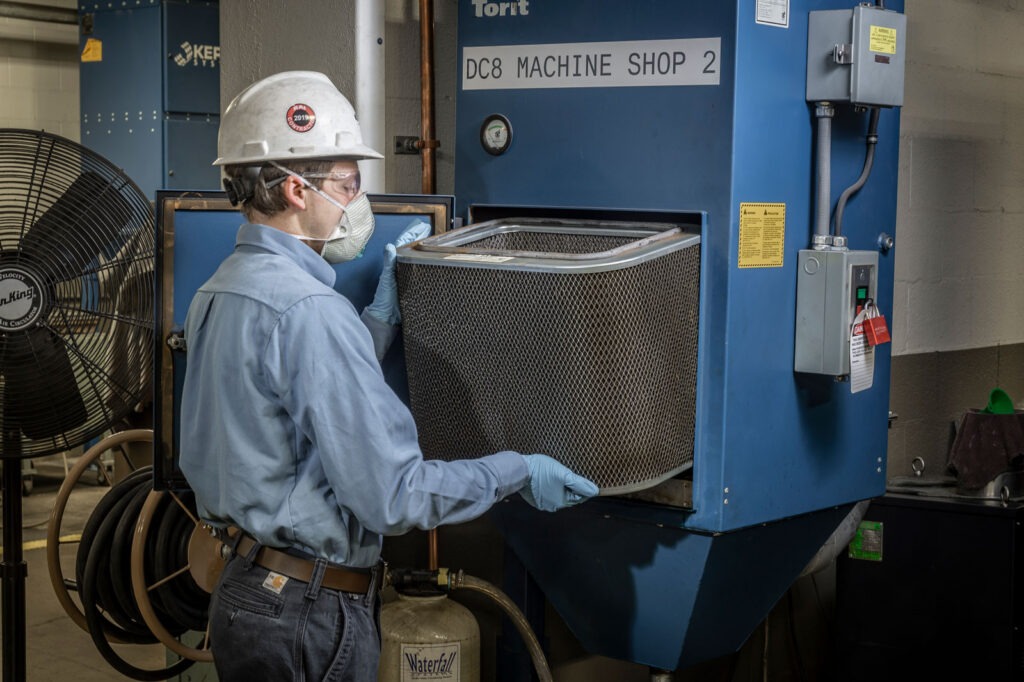
In some facilities, summer shutdown is the only time during the year when the plant completely shuts down. So, this is a great time to inspect equipment. Check belts, pulleys, bearings, and any other moving components that cannot be inspected while in operation.

Summer shutdowns are a great time to inspect and perform maintenance on dust collection systems. Planning in advance for the work, filters, and parts needed will help the shutdown go smoothly.

Our team is here to help!

Contact us with any questions about dust collection systems. Our experts can help you determine the appropriate equipment for your facility.

Welding produces weld fume particulate that is harmful if people breathe it in. Weld fume collection is essential to maintaining a safe, clean, and healthy workplace.

Donaldson offers a variety of weld fume collectors. The best option depends on the type of welding in your process and how the work area is set up.

Here are factors to consider when choosing a weld fume collection system:

  • What types of materials are being welded and what kind of particulate do they produce?
  • What is the rate of fume generation?
  • How are work cells laid out?
  • Is the welder stationary or moving around the piece they’re working on?
  • Are there physical space limitations due to the facility’s structure?
  • Is it important to have flexible space, with the ability to rearrange work cells?
  • Are workers willing to use a portable system or a capture hood?

Work with a qualified professional to evaluate these factors. Then determine which capture method is better—source capture or ambient air capture.

Source capture is more effective. This method captures fumes before they reach welders’ breathing zone or disperse throughout the facility. Source capture options include hoods, extraction arms, and downdraft benches. Also, welders can use portable equipment to have flexibility in their work environment.

Interested in a similar project?

Let’s talk about your application.

Our team is here to help you plan, select, and implement the right solution.

Types of source capture collectors:

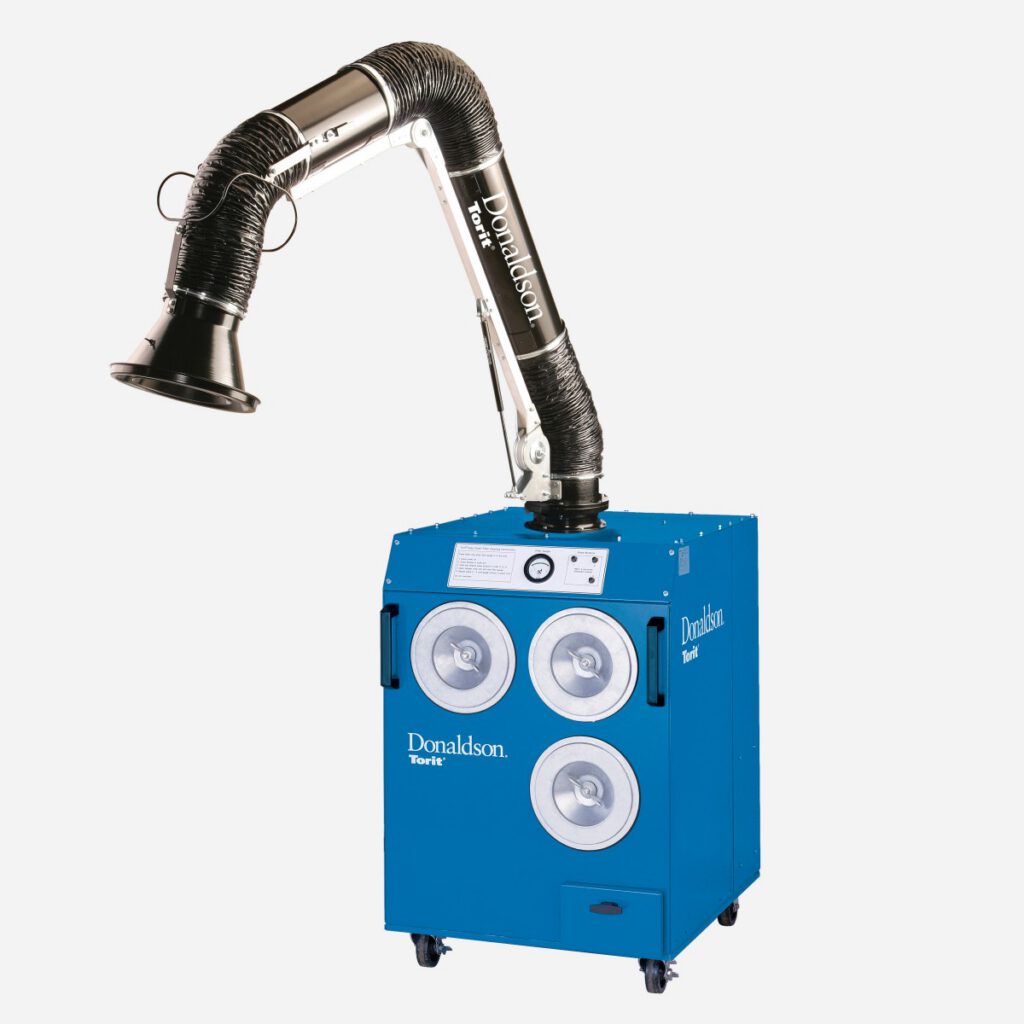
  • Easy-Trunk™ and Porta-Trunk™ – Portable fume collectors to filter smoke, dust, and fumes in metalworking, welding, and grinding
  • Trunk 2000 – Ceiling-mounted, self-contained weld fume dust collector with extraction arms for moderate-to-heavy welding applications
  • Weld bench – Work bench designed for fume collection in welding operations
  • Remote weld bench – Remote workstation for welding that integrates with other Donaldson Torit® air filtration products

Source capture is the preferred method for weld fume collection, but it has limitations:

  • Some plant layouts do not allow the use of source capture equipment
  • If welders work on longer welds, stationary equipment cannot move with them
  • Relocating portable equipment can be difficult and time consuming

If source capture systems cannot be implemented, then consider ambient air collection.

Ambient air collection addresses the overall air filtration in the room. This method reduces the concentrations of weld fumes, but it does not address each weld process.

Maintaining proper air movement in the designated work zone is vital to effective ambient collection. Since weld fumes naturally rise 10 to 15 feet above the shop floor, that height is where air intakes should be located. Filtered air should be returned near the floor level to support natural circulation in the work area.

Ambient air collectors are typically placed throughout a facility. They can be used for challenging facility layouts or in addition to source capture.

Our team is here to help!

DenTech can help determine the best weld fume collection solution for your facility. Contact our experts and we’ll review your operating conditions to select the appropriate equipment.

Whether your facility has a cartridge or baghouse dust collector, several options for filter media are available. Which filter media is best for your application?

To determine the best filter media, evaluate characteristics of dust and operating conditions in your system.

If you don’t know what the characteristics of your dust are, start with a lab test. Use information from the results to select filter media.

Dust particle size

Dust particle size determines the appropriate filter media by using MERV ratings.

MERV stands for Minimum Efficiency Reporting Value. It is a standard rating system developed by ASHRAE (the American Society of Heating, Refrigerating, and Air-Conditioning Engineers) that assigns a single numerical rating to a filter. The rating identifies the filter’s minimum performance in removing particulate (from 0.3 to 10 microns) from an airstream. Ratings go from 1 to 16, with a higher number indicating a higher filtration efficiency.

The MERV rating tells you what percentage of particles in a specific size range the filter will capture. For example, a filter with a MERV 12 rating will capture 80% to 89% of dust particles that are between 1 and 3 microns in size. So, depending on the size of the dust particles in your application, you can determine which MERV rating is appropriate. That narrows down your filter choices to ones with the MERV rating you need.

For more information on how MERV ratings correspond to particle size and filtration efficiency, see the EPA’s website.

Since MERV ratings apply to filters in a static environment, the MERV system doesn’t account for the cleaning system or dynamic changes in a dust collection system. So, you need to consider additional factors to select the appropriate filter for your dust collection system.

Fibrous dust

Fibrous dust is common in applications including woodworking, grain handling, textiles, and fiberglass. This type of dust presents a challenge because the dust’s fibers easily attach to filter media and settle into filter substrate. Dust buildup restricts airflow and interferes with pulse cleaning.

Donaldson offers filter media designed for fibrous applications. Two examples are Fibra-Web® and Ultra-Tek®.

Statically charged dust

Some types of dust, like in dry food or chemical processing applications, generate static electricity. The presence of static electricity creates a high risk of deflagration. Specific types of filter media can dissipate static charges to safely collect dust.

For example, the Ultra-Web® Conductive FR Cartridge filter includes carbon-impregnated media to dissipate static charges and flame-retardant media that complies with UL® Standard 558.

For baghouse collectors, the Dura-Life™ Anti-Static bag filter dissipates static charge buildup.

Interested in a similar project?

Let’s talk about your application.

Our team is here to help you plan, select, and implement the right solution.

Moisture

If moisture is present in the dust particles or airstream, dust can build up on filters and shorten filter life. In this case, select filter media that can stand up to moisture, such as Ultra-Web® SB cartridge filters. These filters have a web of very fine, resilient fiber to catch submicron dust particles on the surface of the filter. This prevents particulates from settling deep into the filter substrate, so filters last longer, clean better, and cost less to operate compared to competitive filters.

Some types of baghouse filters can manage moisture. The operating temperature of the process will determine which baghouse filter is appropriate for your application.

Options from Donaldson include:

Operating temperature of the system

Applications that operate at high temperatures (generally over 180° F for cartridge dust collectors and over 275° F for baghouse collectors) require filter media that can withstand dry, high temperature conditions. Application examples includes metallurgical and chemical processing. When selecting filter media, be sure to check the maximum temperature the filter can operate in.

Additional considerations

Depending on the dust properties in your application, there may be more factors that determine the filter media you use.

For example, if oil vapors, hydrocarbons, or odors are present, activated carbon filters can remove these. Among baghouse filters, the Dura-Life™ Oleophobic bag filter is designed to release wet, oily, and sticky dust.

Another example is when product contamination is a concern, such as in chemical, food, and industrial processing. In this case, select a filter that’s designed to minimize product contamination, such as Donaldson’s Torit-Tex® cartridge filter.

Many options for filter media are available for cartridge and baghouse dust collectors. The best media for your system will depend on the dust properties and operating conditions in your facility.

Our team at DenTech can help you determine the right filters for your application. We also offer preventative service agreements to keep your dust collection system up and running.

Our team is here to help!

Contact us with any questions about dust collection systems. Our experts can help you determine the appropriate equipment for your facility.

Dust collection systems are built to withstand outdoor environments, but cold weather can affect system components. Especially in regions with high moisture levels, cold weather may affect performance.

Cold weather climate kits can help prevent components from freezing and keep your dust collection system up and running during winter months.

Condensation may build up in compressed air lines of the cleaning system, around the solenoid valves, and around the air diaphragm. After temperatures drop below freezing, these issues may come up:

  • the pulsing system can’t operate properly to pulse filters
  • the solenoid valves may stick
  • the diaphragm can’t function properly and may even fail


Cold weather climate kits can reduce chances of components freezing in cold weather. Kits include heat tape, insulation, and thermostats.

Heat tape is wired into the cleaning system. A thermostat attached to the heat tape activates heating when the temperature drops to a certain degree.

Insulation is wrapped around diaphragm bodies.

In some systems, a small heater (activated by a thermostat) is installed in the solenoid enclosure to maintain a temperature above freezing and prevent valves from sticking.

Cold weather climate kits are installed when needed, depending on the location and environment of the dust collection system. Kits will last a few seasons, and individual parts can be replaced if necessary.

Before a component fails due to winter weather, how might you know there’s an issue?

If your system is controlled by AyrDyne, DenTech’s monitoring system HMI, then you can monitor system performance. For example, an operator can use AyrDyne to test and monitor solenoid valves.

Aside from monitoring the dust collection system, DenTech’s service technicians can diagnose and repair issues. DenTech is a factory authorized service center. Our technicians are trained and qualified to service all makes and models of dust collection systems, so we can help if cold weather conditions impact your system.

Our team is here to help!

Contact us with any questions about dust collection systems. Our experts can help you determine the appropriate equipment for your facility.

Baghouse dust collectors are used to filter dusty air produced by manufacturing and processing applications in industrial facilities. Traditionally, polyester bags are used in baghouse collectors, but large pores in the bags can collect dust in the fabric. This makes polyester bags difficult to clean and reduces filter life.

If maintaining traditional filters in your baghouse dust collector is a challenge, consider switching to pleated bag filters from Donaldson Torit®.

What are pleated bag filters?

Donaldson Torit’s innovative Ultra-Web® technology uses an electrospinning process to produce a very fine, continuous fiber (0.2-0.3 micron in diameter). The nanofibers form a permanent web-like net that traps dust on the surface of the media. Ultra-Web technology combines with a sturdy spunbond polyester substrate to form Ultra-Web Spunbond (UWSB) pleated bag filters.

UWSB pleated bag filters offer several advantages over traditional polyester bag filters in baghouse dust collectors. Benefits include energy savings, labor savings, and better dust capture.

What are the benefits of using pleated bag filters?

Energy savings

UWSB pleated bags have a significantly lower pressure drop compared to polyester bags. This is because pleated media offers more filter area, an easier path for airflow, and no large holes for dust and air to flow through. With fewer smaller dust particles passing through the media, filter efficiency increases.

Lower pressure drop also offers energy savings, since less energy is required to move a given volume of air over a period of time.

Labor savings

Pleated filter bags do not use cage and filter bag components, which makes installation and removal quicker and easier. The one-piece design and shorter length are easier to maneuver, so less time is needed to change out pleated filter bags. Less time for filter changeouts results in reduced labor costs and reduced loss of production time.

Here is an example of how changeout costs could differ for polyester filter bags and pleated filter bags. Note: These numbers are only for example purposes, and do not represent actual costs.

Contact us for service rates.

 Polyester filter bagsPleated filter bags
Number of filter bags in collector630630
Number of technicians for changeout88
Labor rate per hour$50 (may need to add in overtime rates)$50
Total amount of time for changeout20 hours5 hours
Total man hours8 x 20 = 160 hours8 x 5 = 40 hours
Total labor cost$8,000 per changeout$2,000 per changeout
Changeout cost comparison of polyester and pleated filter bags

Better dust capture

UWSB pleated bags can capture submicron dust particles (0.3 micron and larger), which is finer than the dust particles that polyester bags can capture. Surface loading technology on UWSB pleated bags allows for better pulse cleaning, lower energy use, and lower operating pressure drop. This leads to two benefits: 2-3 times longer filter life and fewer filter changeouts compared to polyester bags.

UWSB pleated bags are designed to be shorter in length than polyester filter bags. This leaves a larger dropout space in the baghouse collector, which encourages material fallout. Heavier, more abrasive particulate falls into the open space, reducing the potential of abrasion on filter bags.

UWSB pleated bag filters are available for all popular brands of baghouse collectors.

Upgrading to pleated bag filters requires an initial investment, but there are long-term benefits in energy savings, labor savings, and better dust capture.

Our team is here to help!

Contact us with any questions. Our experts can help you determine the appropriate equipment for your facility.

Dust collection systems are an important part of manufacturing facilities to minimize dust exposure and contribute to a safe environment for employees. But dust collectors are not pieces of equipment that you can install and forget about. They require regular maintenance to operate properly and efficiently.  

Some preventative maintenance may be done by in-house personnel. On a daily basis, they record the pressure drop on filters, look for anything out of the norm in equipment performance, and may check the drum. However, in-house maintenance technicians have the responsibility of keeping all equipment up and running in the facility. They may prioritize process equipment over other types of equipment, including dust collectors. Especially at facilities where teams have been reduced, in-house maintenance personnel may be busy responding to issues as they come up. They might not have time or resources for preventative maintenance on dust collectors. 

This is why having a service agreement with a third party, like the DenTech service team, offers several benefits, including ongoing support, reduced downtime, and peace of mind. 

Ongoing support that matches customer needs

DenTech offers yearly service agreements tailored to customers’ needs. Customers determine the frequency of visits, depending on factors including system usage and processes in the facility. 

For example, service agreements may include visits on a quarterly, bi-annual, or annual basis. Service agreements outline how often filters are changed and how often the system is cleaned. Preventative service agreements also offer discounts on Donaldson Torit® filters and parts. In some cases, these savings may even cover the cost of preventative maintenance visits. 

According to Donaldson, an important safety requirement is to change filters “when airflow reaches a differential pressure (above the specified maximum specifications) or 120 – 150daPa / 4.8 – 6.0 in. wg.” Many factors affect airflow, including type of dust and how many shifts the unit runs. Checking filters on a regular basis and changing them when needed helps the system run efficiently.   

If a customer is not sure of what their system needs, DenTech can visit the customer to determine appropriate preventative maintenance for the system. 

Reduced downtime, thanks to thorough inspections

Service agreements include regularly scheduled inspections, so that dust collectors are shut down, and technicians can inspect them from top to bottom. 

Preventative maintenance is performed by technicians who receive regular compliance training. The DenTech service team is qualified to inspect and repair dust collection systems from any manufacturer brand.

In accordance with NFPA 91, we inspect hoods, ductwork, fittings, and all other parts of the dust collector. Our technicians can identify an issue and replace parts before the equipment fails. DenTech technicians have replacement parts in the service vehicle. If repairs are needed and the facility approves the work, the technician can do the repair during the same visit, rather than schedule for a separate time. 

With regularly scheduled visits, preventative maintenance:

  • extends filter life
  • contributes to lower overall energy consumption
  • minimizes costs of emergency service and expedited shipping
  • reduces the chances of an unexpected shutdown

Peace of mind that dust collection systems are well-maintained

As part of service agreements, technicians create reports that document the inspection, what maintenance was performed, and any recommended repairs. Reports include data on the motor, electrical readings, filters, airflow, doors, gaskets, cleaning system, and dust discharge. This offers a record of the state of equipment at the time of inspection, and the customer can reference it as needed.

DenTech service technicians follow standard procedures, so maintenance is performed consistently on each visit. Customers can rely on DenTech technicians to keep dust collection systems operating properly, especially in facilities with hazardous dust. 

Preventative service agreements offer ongoing support, reduced downtime, and peace of mind. Partnering with DenTech allows customers to ensure their dust collection systems operate efficiently and contribute to a safe working environment for employees.

A final note

Without preventative maintenance, a dust collection system may have operation issues, develop clogs, and have worn-out parts. In those cases, DenTech service technicians can visit customers to determine what isn’t working properly in the system. Then they can make repairs to get the dust collection system up and running again. 

But waiting for equipment to develop issues can lead to unexpected downtime and unplanned expenses. A better approach is to have regular preventative maintenance in place. Then service technicians can catch potential issues before they lead to lost production time.

Our team is here to help!

For more information on preventative maintenance for dust collection systems.