Dust collection and explosion protection for a confectionery manufacturer
Many manufacturing processes produce small dust particles that may be combustible. Under the right circumstances, this dust may create a fire hazard or explosion.
What actions do you take in your facility to minimize the risk of fire or explosion hazards?
DenTech Industrial works with customers to develop custom solutions that fit their needs.
Read on for examples of solutions we’ve installed for customers.
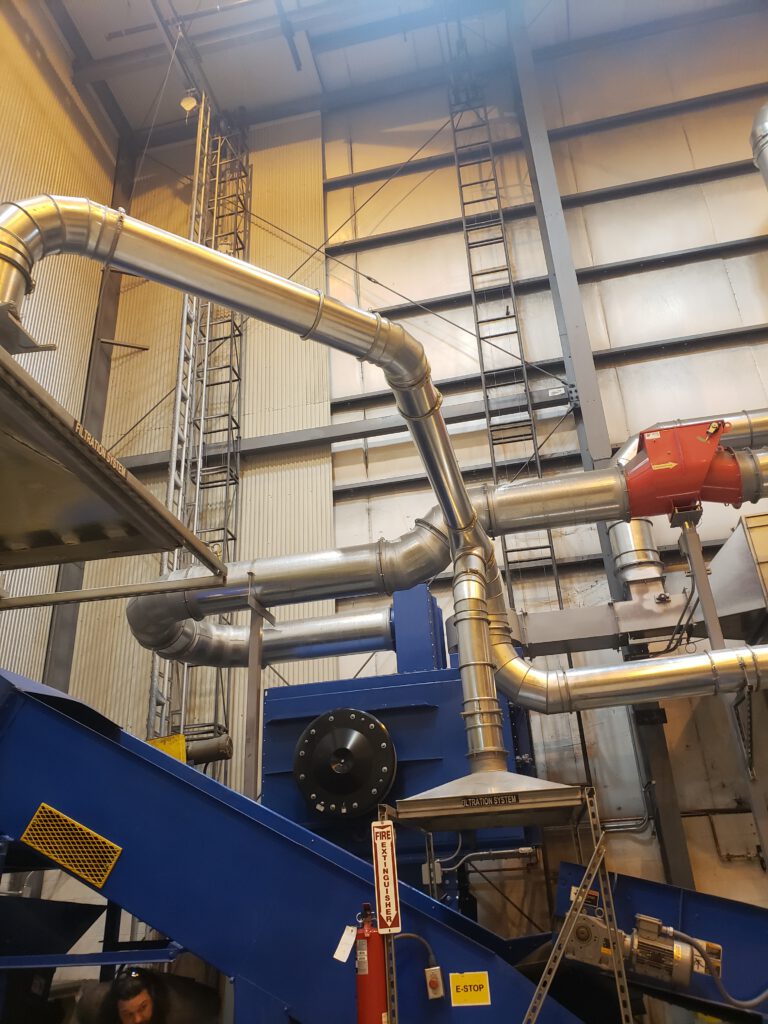
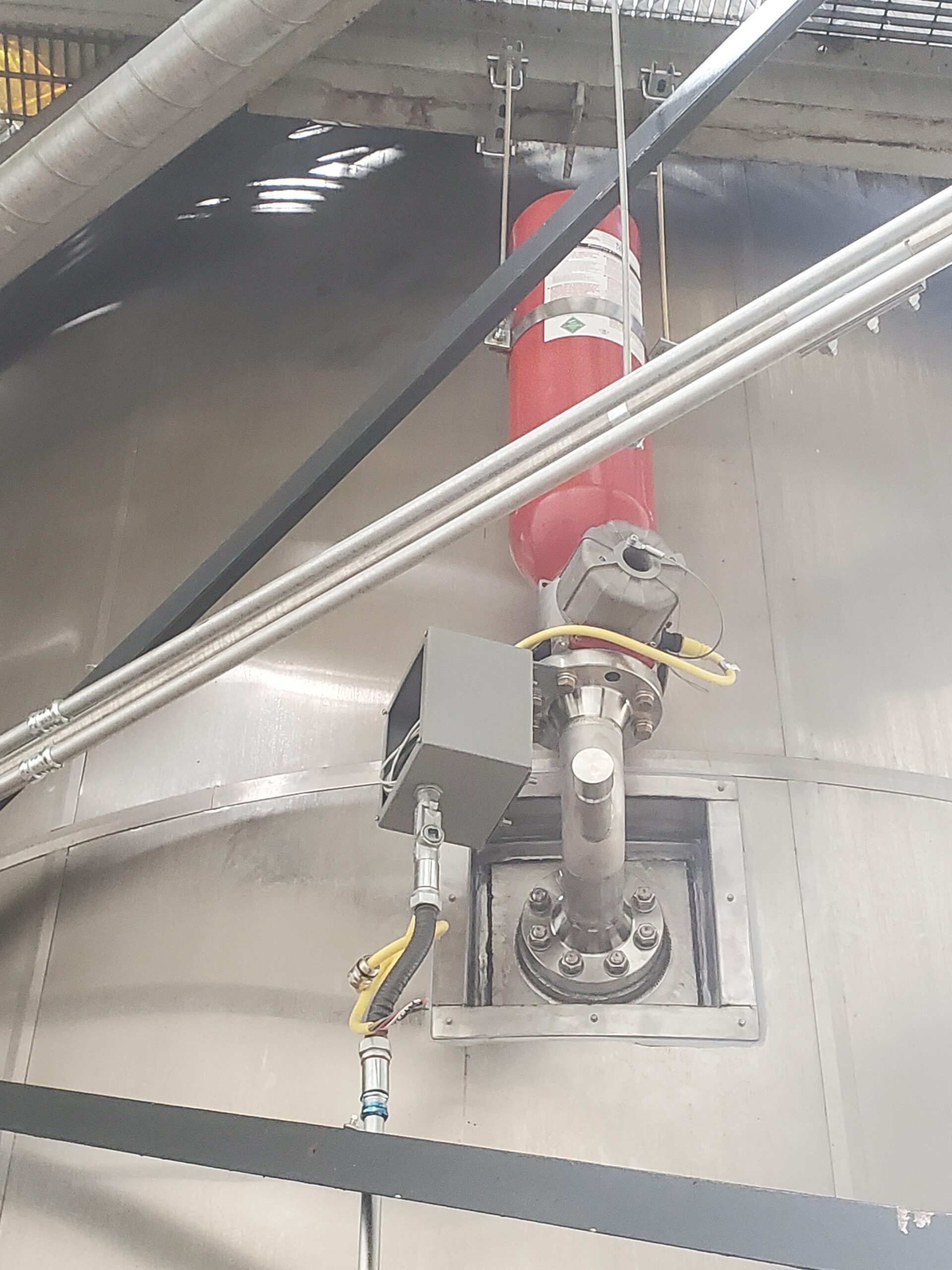
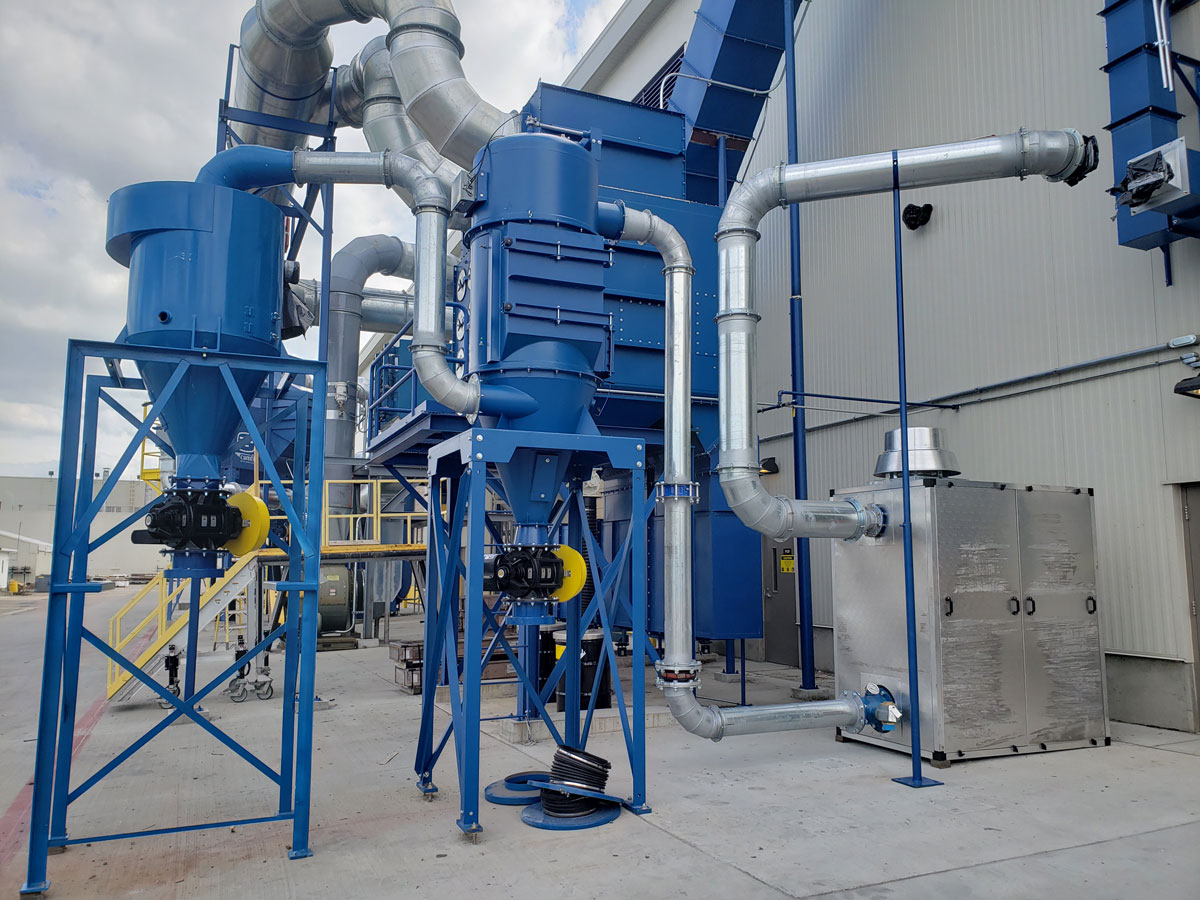
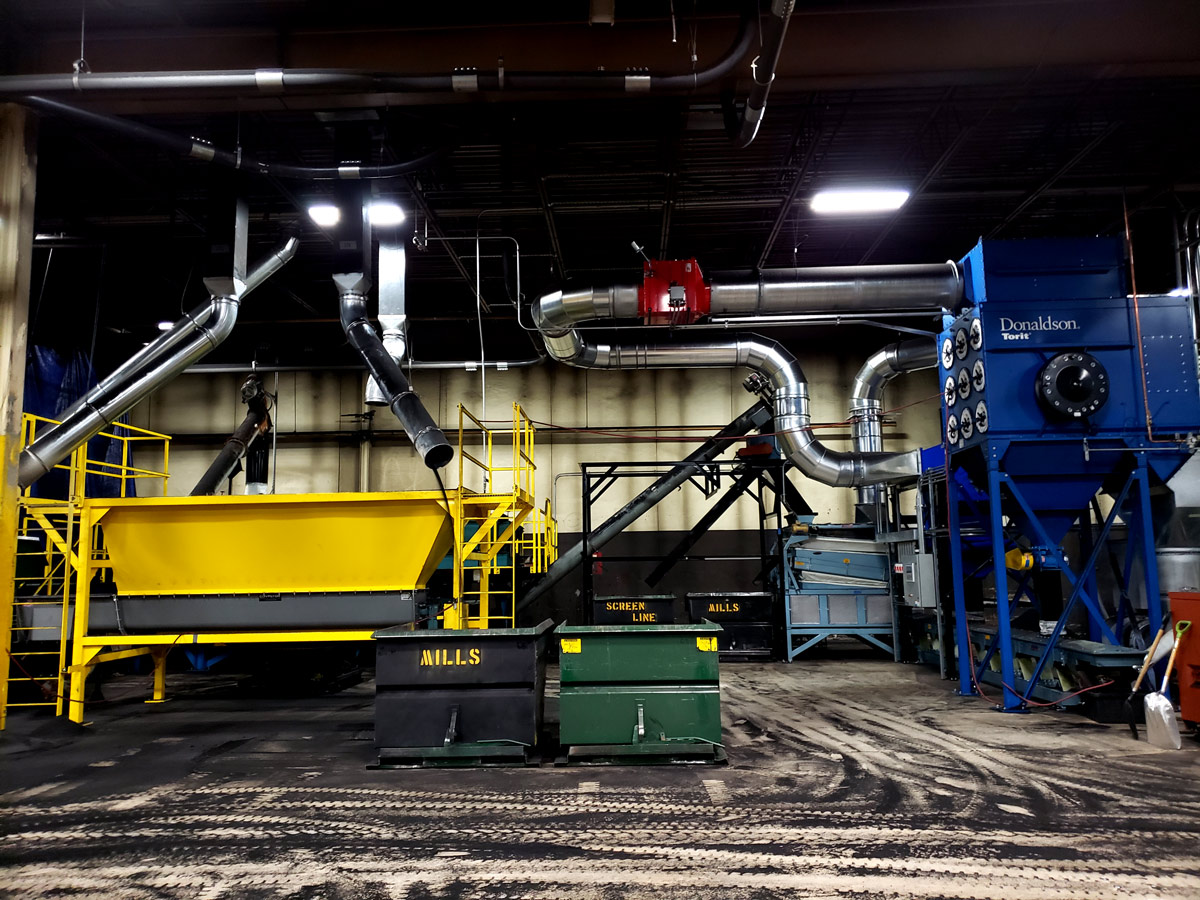
DenTech installed a Donaldson Downflo® Evolution (DFE) dust collection system for more effective cleaning, and reduced energy losses. DenTech designed, built, and installed an AyrDyne electrical control panel that includes safety system integration and maintenance monitoring. For explosion protection, we installed several devices, including a flameless explosion vent on the dust collector and an isolation valve on the ducting.
Explosion protection keeps your employees, processes, and equipment safe.
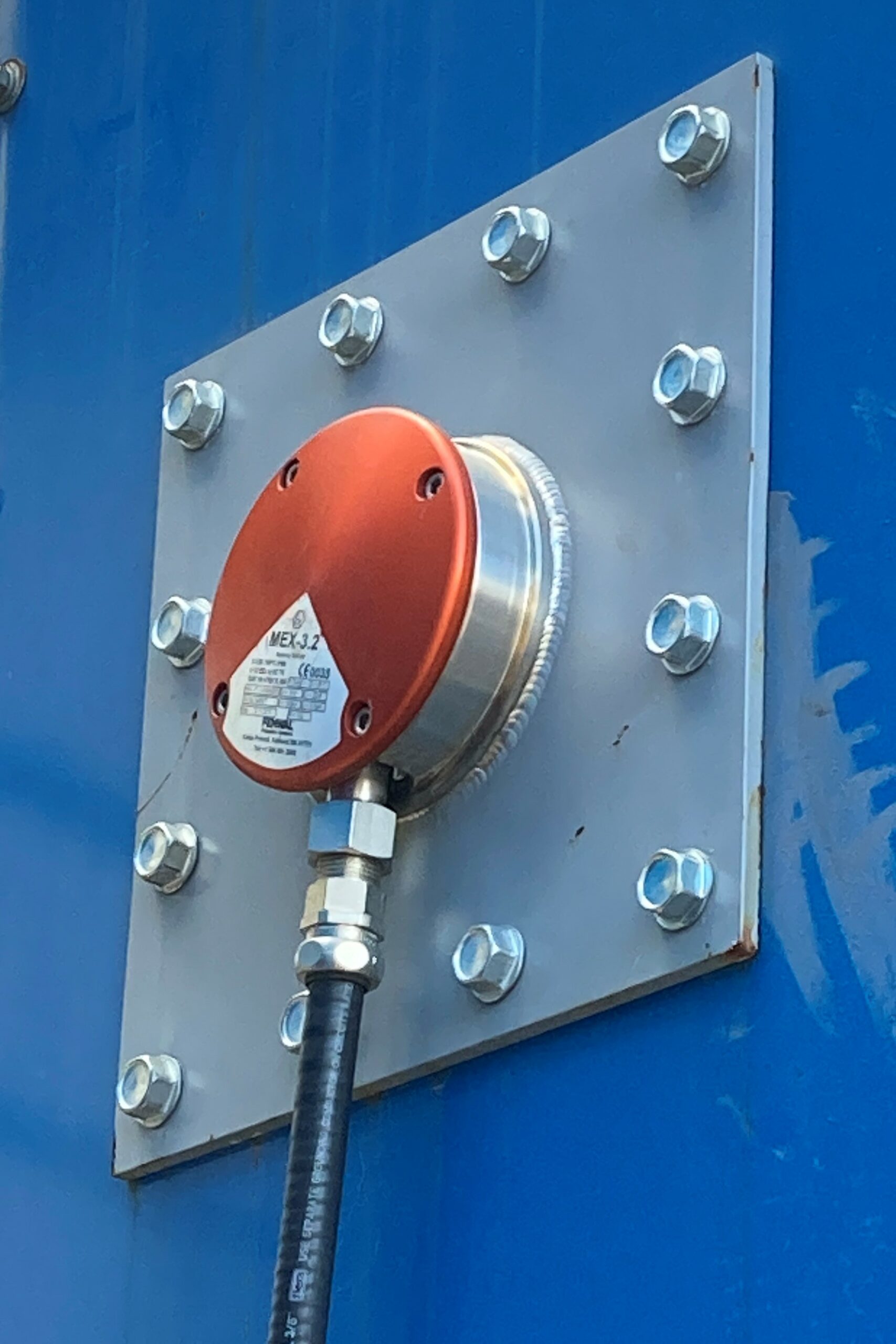
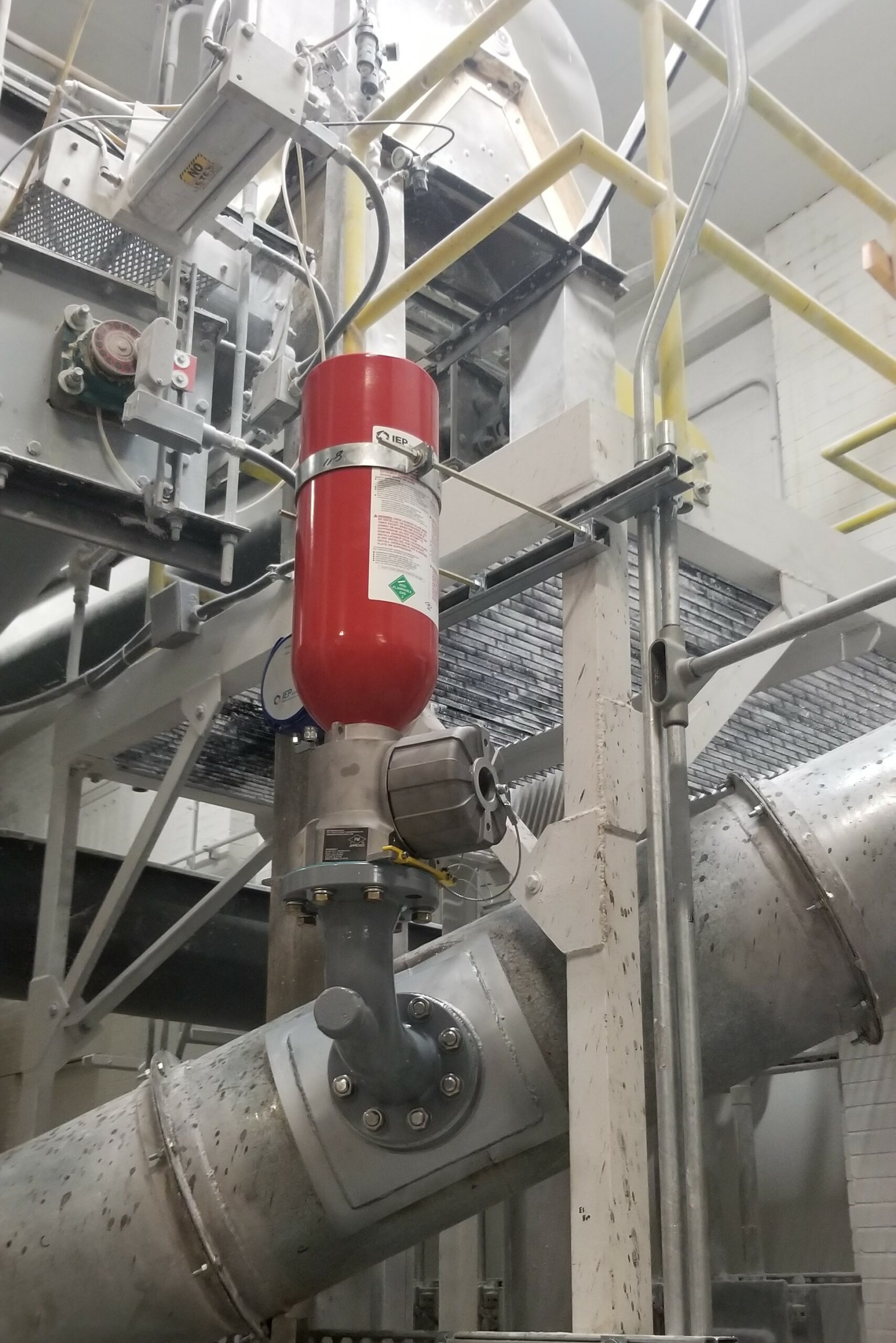
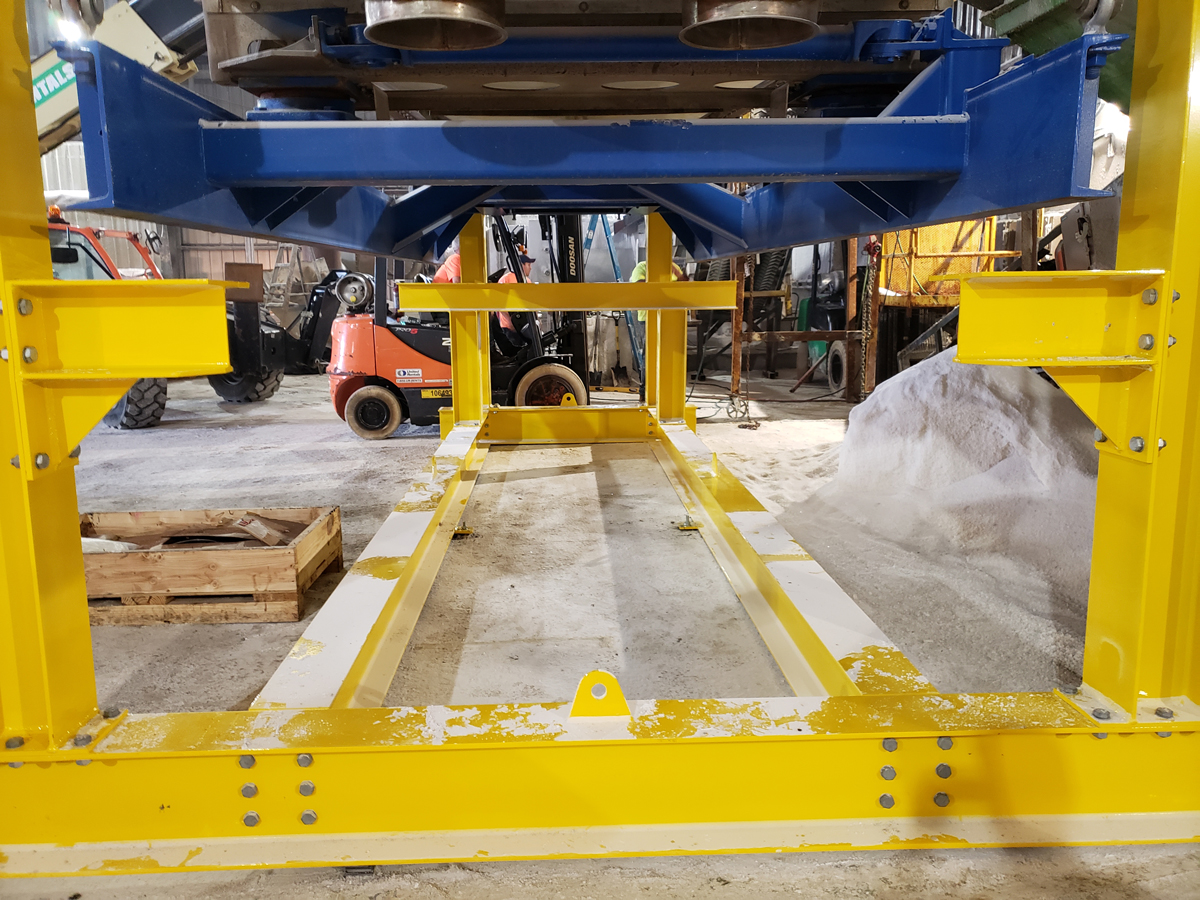
We worked with a sugar producer to update explosion protection devices in their facility. DenTech fabricated hygienic mounting pads, bottle assemblies, and other custom components. Our team installed MEX detectors, FAB units, bottle assemblies, and piston fire bottles.
Updated controls to reduce risk of fire
DenTech worked with an aerospace manufacturer to integrate fire protection solutions into their dust collection systems. We added temperature sensors, duct smoke detectors, compressed air isolation, and control modifications to their existing dust collection system.
Our team supplied a custom interface panel that provides system shutdown to further protect the process and equipment. With these modifications in place, the manufacturer can better monitor and control conditions that may lead to a production shutdown.
Talk to our team about explosion protection methods for your facility.
Our team is here to help!
Contact us with any questions about explosion protection methods. Our experts can help you determine the appropriate equipment for your facility.
Facility needs change throughout the year and so do your employees’ needs. Make sure you’re considering how seasons affect work conditions.
In the summer, one topic on employees’ minds might be how warm it feels on the plant floor. The maintenance staff may have concerns about areas overheating, like the air compressor room.
These are valid concerns, and there are several options for addressing them.
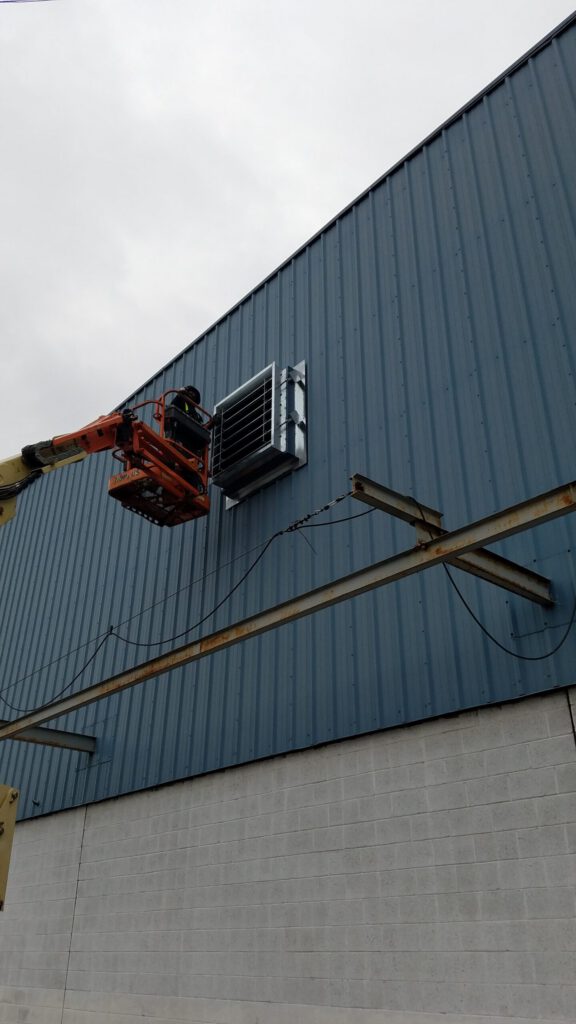
DenTech Industrial offers many solutions for air ventilation in facilities. These solutions result in improved employee comfort and safer work areas.
DenTech’s first step is to understand the temperature conditions in your facility.
Interested in a similar project?
Let’s talk about your application.
Our team is here to help you plan, select, and implement the right solution.
Are specific areas or rooms of the building too warm? What are the sizes of those spaces? What produces heat in those areas?
What types of solutions make sense given the existing systems in the facility?
After understanding these factors, DenTech will recommend solutions to manage air temperature. Below are some examples.
High-volume fans
High-volume fans can be installed to circulate ambient air. Fans create stratification for cooling effects.
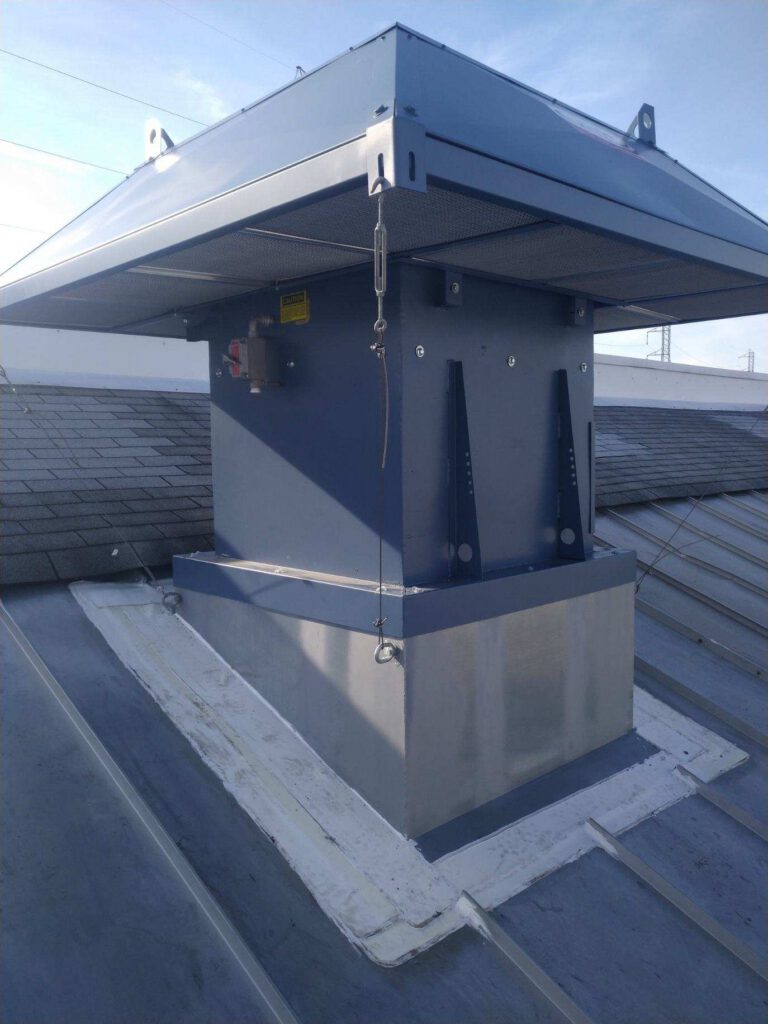
Roof ventilation fans
Roof ventilation fans pull hot air out the top of the building.
Ducting for the air compressor room
Ducting can be installed to ventilate the air compressor room and move hot air outside. This reduces the chance of overheating in the air compressor room.
Air loop in the compressor room
In the summer, an air loop moves hot air from the compressor room to the outside of the building. In the winter, the air loop still moves hot air out of the compressor room. Then the hot air returns into the building to help with heating.
Summer/winter bypass in dust collector
In the summer, the bypass discharges heated air from the dust collector to the exterior of the facility. In the winter, the bypass pushes heated air from the dust collector through a filter, and then the air returns into the building.
Evaporative cooling
An evaporative cooler is a rooftop unit that draws in warm air and cools it through the evaporation of water. The cooled air is then returned to the building through ductwork. Ducting directs the cooled air to areas where employees work, so that the air temperature is more comfortable for them.
Air temperature management includes a broad range of equipment and solutions. Work with our experts to determine the right solution for your custom needs.
Our team is here to help!
Contact us with any questions about air ventilation systems. Our experts can help you determine the appropriate equipment for your facility.
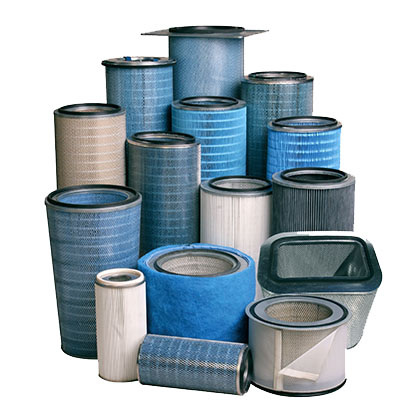
Whether your facility has a cartridge or baghouse dust collector, several options for filter media are available. Which filter media is best for your application?
To determine the best filter media, evaluate characteristics of dust and operating conditions in your system.
If you don’t know what the characteristics of your dust are, start with a lab test. Use information from the results to select filter media.
Dust particle size
Dust particle size determines the appropriate filter media by using MERV ratings.
MERV stands for Minimum Efficiency Reporting Value. It is a standard rating system developed by ASHRAE (the American Society of Heating, Refrigerating, and Air-Conditioning Engineers) that assigns a single numerical rating to a filter. The rating identifies the filter’s minimum performance in removing particulate (from 0.3 to 10 microns) from an airstream. Ratings go from 1 to 16, with a higher number indicating a higher filtration efficiency.
The MERV rating tells you what percentage of particles in a specific size range the filter will capture. For example, a filter with a MERV 12 rating will capture 80% to 89% of dust particles that are between 1 and 3 microns in size. So, depending on the size of the dust particles in your application, you can determine which MERV rating is appropriate. That narrows down your filter choices to ones with the MERV rating you need.
For more information on how MERV ratings correspond to particle size and filtration efficiency, see the EPA’s website.
Since MERV ratings apply to filters in a static environment, the MERV system doesn’t account for the cleaning system or dynamic changes in a dust collection system. So, you need to consider additional factors to select the appropriate filter for your dust collection system.
Fibrous dust
Fibrous dust is common in applications including woodworking, grain handling, textiles, and fiberglass. This type of dust presents a challenge because the dust’s fibers easily attach to filter media and settle into filter substrate. Dust buildup restricts airflow and interferes with pulse cleaning.
Donaldson offers filter media designed for fibrous applications. Two examples are Fibra-Web® and Ultra-Tek®.
Statically charged dust
Some types of dust, like in dry food or chemical processing applications, generate static electricity. The presence of static electricity creates a high risk of deflagration. Specific types of filter media can dissipate static charges to safely collect dust.
For example, the Ultra-Web® Conductive FR Cartridge filter includes carbon-impregnated media to dissipate static charges and flame-retardant media that complies with UL® Standard 558.
If moisture is present in the dust particles or airstream, dust can build up on filters and shorten filter life. In this case, select filter media that can stand up to moisture, such as Ultra-Web® SB cartridge filters. These filters have a web of very fine, resilient fiber to catch submicron dust particles on the surface of the filter. This prevents particulates from settling deep into the filter substrate, so filters last longer, clean better, and cost less to operate compared to competitive filters.
Some types of baghouse filters can manage moisture. The operating temperature of the process will determine which baghouse filter is appropriate for your application.
Applications that operate at high temperatures (generally over 180° F for cartridge dust collectors and over 275° F for baghouse collectors) require filter media that can withstand dry, high temperature conditions. Application examples includes metallurgical and chemical processing. When selecting filter media, be sure to check the maximum temperature the filter can operate in.
Additional considerations
Depending on the dust properties in your application, there may be more factors that determine the filter media you use.
Another example is when product contamination is a concern, such as in chemical, food, and industrial processing. In this case, select a filter that’s designed to minimize product contamination, such as Donaldson’s Torit-Tex® cartridge filter.
Many options for filter media are available for cartridge and baghouse dust collectors. The best media for your system will depend on the dust properties and operating conditions in your facility.
Our team at DenTech can help you determine the right filters for your application. We also offer preventative service agreements to keep your dust collection system up and running.
Our team is here to help!
Contact us with any questions about dust collection systems. Our experts can help you determine the appropriate equipment for your facility.
Dust collection systems are built to withstand outdoor environments, but cold weather can affect system components. Especially in regions with high moisture levels, cold weather may affect performance.
Cold weather climate kits can help prevent components from freezing and keep your dust collection system up and running during winter months.
Condensation may build up in compressed air lines of the cleaning system, around the solenoid valves, and around the air diaphragm. After temperatures drop below freezing, these issues may come up:
the pulsing system can’t operate properly to pulse filters
the solenoid valves may stick
the diaphragm can’t function properly and may even fail
Cold weather climate kits can reduce chances of components freezing in cold weather. Kits include heat tape, insulation, and thermostats.
Heat tape is wired into the cleaning system. A thermostat attached to the heat tape activates heating when the temperature drops to a certain degree.
Insulation is wrapped around diaphragm bodies.
In some systems, a small heater (activated by a thermostat) is installed in the solenoid enclosure to maintain a temperature above freezing and prevent valves from sticking.
Cold weather climate kits are installed when needed, depending on the location and environment of the dust collection system. Kits will last a few seasons, and individual parts can be replaced if necessary.
Before a component fails due to winter weather, how might you know there’s an issue?
If your system is controlled by AyrDyne, DenTech’s monitoring system HMI, then you can monitor system performance. For example, an operator can use AyrDyne to test and monitor solenoid valves.
Aside from monitoring the dust collection system, DenTech’s service technicians can diagnose and repair issues. DenTech is a factory authorized service center. Our technicians are trained and qualified to service all makes and models of dust collection systems, so we can help if cold weather conditions impact your system.
Our team is here to help!
Contact us with any questions about dust collection systems. Our experts can help you determine the appropriate equipment for your facility.
Today is National Manufacturing Day! Thank you to all our manufacturing customers who continue to navigate challenges like pandemic-driven demand, disrupted supply chains, and new standards for safety and cleanliness.
U.S. manufacturing production is the largest around the globe—producing about 18% of the world’s goods. To keep growing, millions of manufacturing jobs will need to be filled in the U.S. with new careers and pathways opening every day.
DenTech is excited—and honored—to work with innovative companies that constantly look for ways to improve their processes and make facilities safer. You are a vital part of our economy and future, and you deserve to be recognized on this day!
Our team is here to help!
Contact us with any questions about dust collection systems. Our experts can help you determine the appropriate equipment for your facility.
Baghouse dust collectors are used to filter dusty air produced by manufacturing and processing applications in industrial facilities. Traditionally, polyester bags are used in baghouse collectors, but large pores in the bags can collect dust in the fabric. This makes polyester bags difficult to clean and reduces filter life.
If maintaining traditional filters in your baghouse dust collector is a challenge, consider switching to pleated bag filters from Donaldson Torit®.
What are pleated bag filters?
Donaldson Torit’s innovative Ultra-Web® technology uses an electrospinning process to produce a very fine, continuous fiber (0.2-0.3 micron in diameter). The nanofibers form a permanent web-like net that traps dust on the surface of the media. Ultra-Web technology combines with a sturdy spunbond polyester substrate to form Ultra-Web Spunbond (UWSB) pleated bag filters.
UWSB pleated bag filters offer several advantages over traditional polyester bag filters in baghouse dust collectors. Benefits include energy savings, labor savings, and better dust capture.
What are the benefits of using pleated bag filters?
Energy savings
UWSB pleated bags have a significantly lower pressure drop compared to polyester bags. This is because pleated media offers more filter area, an easier path for airflow, and no large holes for dust and air to flow through. With fewer smaller dust particles passing through the media, filter efficiency increases.
Lower pressure drop also offers energy savings, since less energy is required to move a given volume of air over a period of time.
Labor savings
Pleated filter bags do not use cage and filter bag components, which makes installation and removal quicker and easier. The one-piece design and shorter length are easier to maneuver, so less time is needed to change out pleated filter bags. Less time for filter changeouts results in reduced labor costs and reduced loss of production time.
Here is an example of how changeout costs could differ for polyester filter bags and pleated filter bags. Note: These numbers are only for example purposes, and do not represent actual costs.
Changeout cost comparison of polyester and pleated filter bags
Better dust capture
UWSB pleated bags can capture submicron dust particles (0.3 micron and larger), which is finer than the dust particles that polyester bags can capture. Surface loading technology on UWSB pleated bags allows for better pulse cleaning, lower energy use, and lower operating pressure drop. This leads to two benefits: 2-3 times longer filter life and fewer filter changeouts compared to polyester bags.
UWSB pleated bags are designed to be shorter in length than polyester filter bags. This leaves a larger dropout space in the baghouse collector, which encourages material fallout. Heavier, more abrasive particulate falls into the open space, reducing the potential of abrasion on filter bags.
UWSB pleated bag filters are available for all popular brands of baghouse collectors.
Upgrading to pleated bag filters requires an initial investment, but there are long-term benefits in energy savings, labor savings, and better dust capture.
Our team is here to help!
Contact us with any questions. Our experts can help you determine the appropriate equipment for your facility.