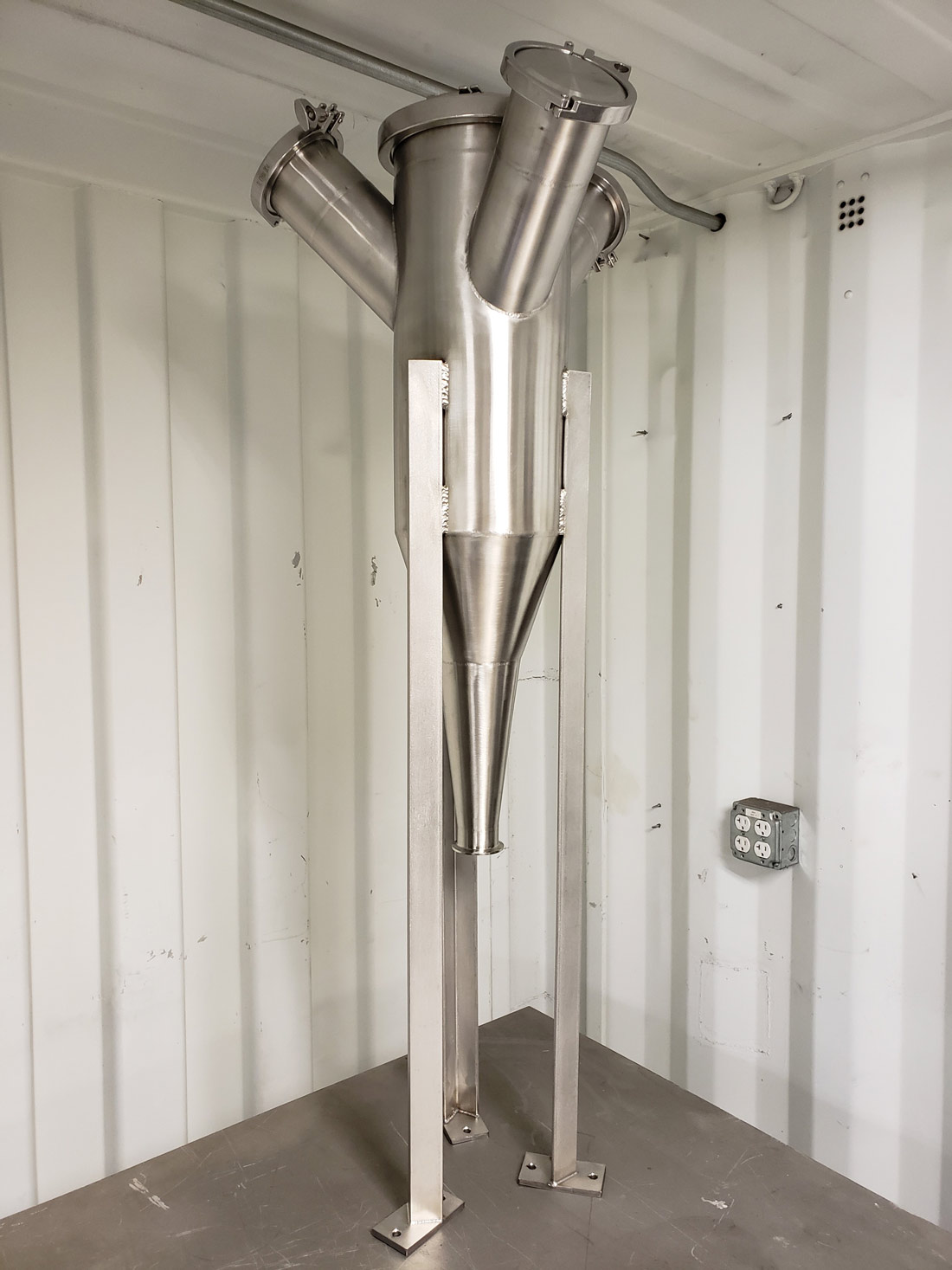
Process piping systems are the lifelines of industrial operations, moving gases, liquids, and chemicals safely and efficiently. That’s why process piping design and installation is crucial. The right team can design, fabricate, and install piping systems all under one roof, while meeting the necessary codes and sanitary standards. 

However, without the right team and a well-planned approach, your system may be more vulnerable to safety hazards and costly downtime.

Common Applications of Process Piping

Industrial process piping systems are used across a variety of industries, and each one brings its own challenges and specifications: 

  • Food and beverage → sanitary welds, hygienic finishes, easy cleaning  
  • Pharmaceuticals → high-purity materials, CIP and SIP systems, regulatory compliance 
  • Chemicals → corrosion resistance, chemical compatibility
  • Manufacturing → compressed air reliability, complex routing 
  • Oil and gas → pressure ratings, temperature extremes 

Every process is unique and requires different material construction and code requirements. Our team has extensive knowledge across various industries, and we know how to meet all regulations for code-compliant process piping. 

No matter the industry or what you’re transferring, there are some key considerations to keep in mind for effective process piping design and installation.

What Makes a Piping System Successful?

Successful industrial process piping systems go through four stages: design, fabrication, installation, and testing. Some plant managers use multiple vendors for a piping job, but DenTech offers design, fabrication, and installation services. This eliminates coordination between vendors and lets us easily adapt to any last-minute requests or changes.

Four things separate a “functional” piping system from a truly well-designed one:  

  • Attention to detail
  • Proper slopes
  • Practicality
  • Accessibility

A system may technically move product from point A to point B, but if it lacks precise slope for drainage, creates hard-to-reach valves, or includes tight routing that complicates maintenance, it will create long-term operational challenges. 

DenTech approaches process piping design and installation with the understanding that every decision affects cleanability, serviceability, and overall system performance. The easiest routing option isn’t always the right one. This level of detail is what prevents contamination risks and reduces downtime so your system performs reliably, well after we leave.

Process Piping Design Considerations

Pipes impact efficiency, safety, and performance of your plant. Their success all starts with design. Here are the six main elements of a well-designed, custom process piping solution. 

1). Fluid Properties

At the start of a project, the first step is understanding exactly what the system will carry and under what conditions. We evaluate operating and maximum design pressures, temperature ranges (including startup and shutdown extremes), desired flow rate, and fluid characteristics such as viscosity, density, and corrosiveness.

If the product is consumable or food-grade, we take into consideration CIP (clean-in-place) and SIP (steam-in-place) design standards, which include, amongst many other things, proper slope for full drainage.

2). Material Selection

With these fluid properties in mind, we choose the best material to complete the job. Popular options include: 

  • Carbon Steel: Often used for high-pressure, high-temperature systems in oil and gas. 
  • Stainless Steel (304 and 316): A sanitary, corrosion-resistant choice for food and beverage, pharmaceuticals, and chemical processes. 
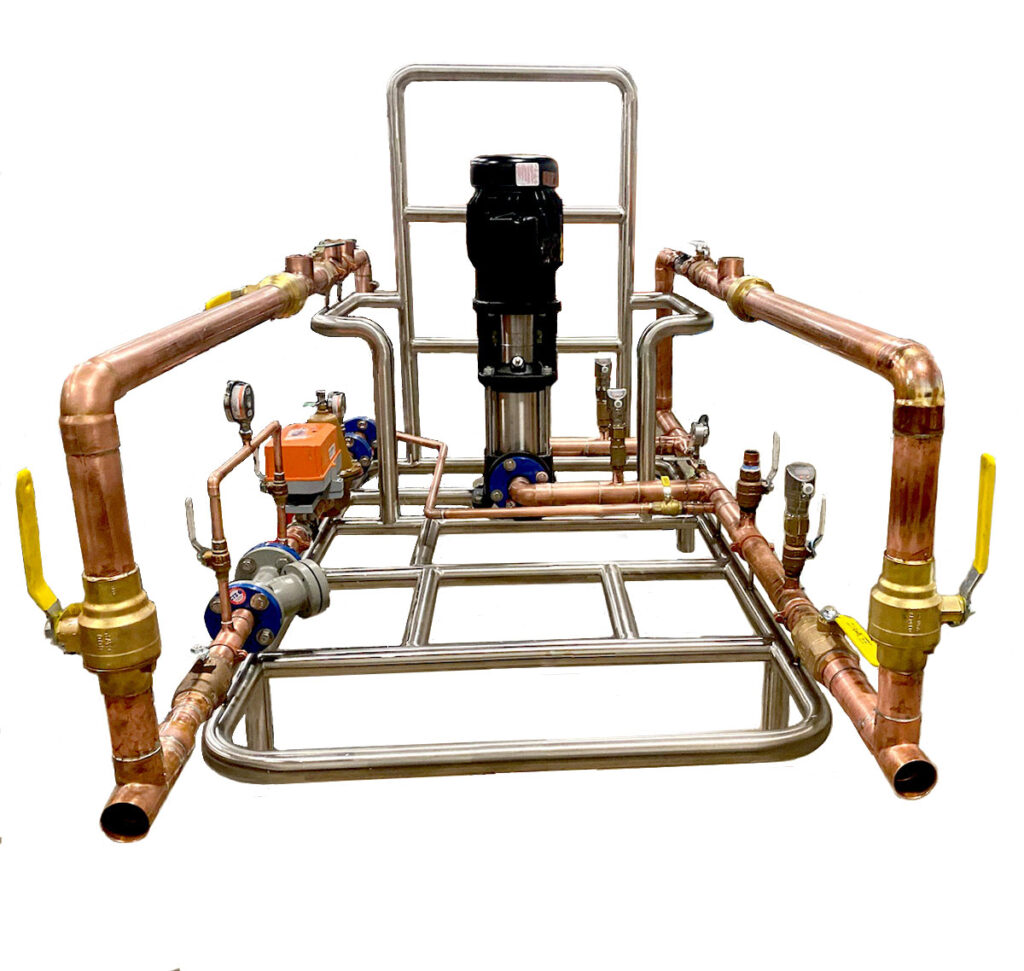
  • Copper: Can be an economic choice due to its benefit of quicker installation, but can react to cleaning chemicals. 
  • PVC: Lightweight and corrosion-resistant, ideal for chemical and waste applications. 
  • CPVC: High-performance plastic for extremely hot liquids. 

Process piping operates under changing conditions. Pressure, temperature, and the amount of liquid are all subject to change, so the piping needs to be prepared for any possible scenario—including start ups, shut downs, maintenance, and all extremes. 

In process piping design and installation, designing only for “average” conditions isn’t good enough. Systems must account for pressure spikes, thermal expansion, and other events that can place additional stress on piping and weld joints.
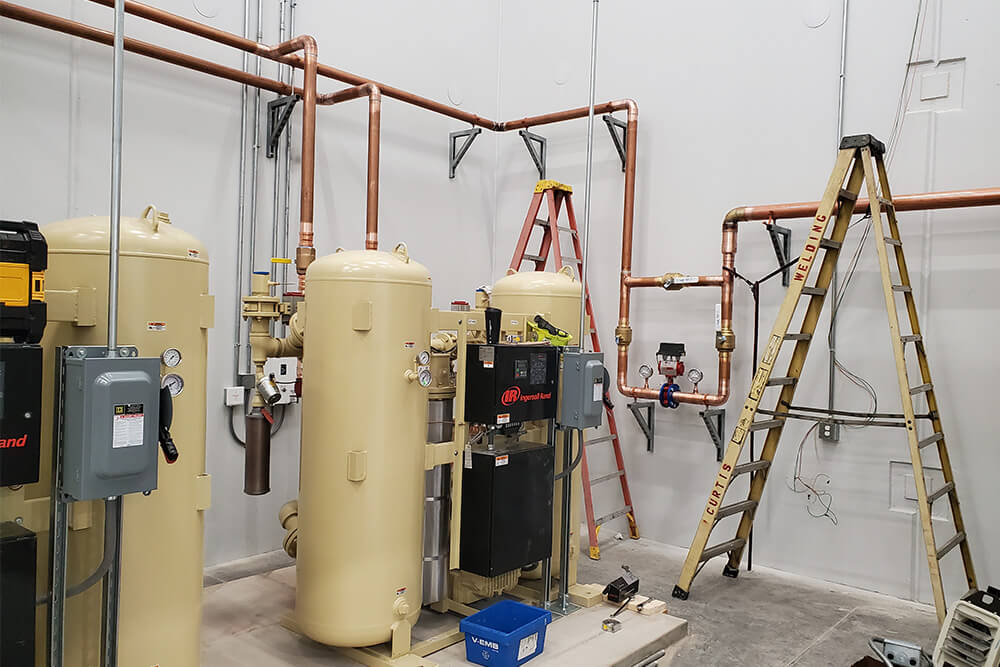
Completed process piping installed in a facility

3). Instrumentation

Industrial process piping systems include far more than the pipes themselves. Vents, valves, drains, strainers, fittings, and insulation are all critical to safe and efficient operation. 

At DenTech, we determine the type, size, and placement of each component based on a thorough understanding of your fluid properties, flow requirements, and operational constraints. Pressure relief valves, emergency shut-offs, and isolation points are strategically positioned to protect your plant and personnel. This instrumentation is always installed with maintenance access in mind. 

4). Layout

Next, we look at the layout of the system. When determining layout, we focus on eliminating dead legs and ensuring each piece gets fully cleaned. Dead legs are spots in the piping system that don’t get any flow. This can lead to standing water and bacteria growth. 

Once the layout is finalized, we display the details with a piping and instrumentation diagram (P&ID). This schematic drawing lets us see every element of the system and how they connect. 

From there, we can produce a 3D model. It includes the pipes and surrounding environment so our team can spot any potential points of interference. This limits errors and complications during installation, ultimately saving you money. It also allows you to see and understand the piping system during the approval process. 

With DenTech, process piping design and installation starts with getting it right from the beginning. By investing time upfront in thorough designs and detailed models, we’re able to streamline installation, minimize downtime, and deliver a high-quality system that will last for years. 

5). Structural Support

Having the proper structural support is just as important as the pipes themselves. Too much stress on your pipes and joints can cause the system to fail. 

When we design industrial process piping systems, we account for pipe hangers and build with joint flexibility to avoid failure and shutdown. We also fabricate pipe bridges, access platforms, or whatever other support the system needs. 

6). Compliance

Code compliance with ASME, ANSI, and ISO standards are essential in process piping. Our team draws from our knowledge and expertise over 40+ years in manufacturing to ensure each piece we engineer meets all codes. 

While the specifics depend on your process, ASME B31 is essential for code-compliant process piping. Here’s a list of some of the relevant codes developed by the American Society of Mechanical Engineers: 

  • ASME B31.3: Process Piping
  • ASME B31.1: Power Piping
  • ASME B31.4: Pipeline Transportation Systems for Liquids and Slurries
  • ASME B31.8: Gas Transmission and Distribution Piping Systems
  • ASME B31.5: Refrigeration Piping and Heat Transfer Components
  • ASME B31.9: Building Services Piping

Sanitary processes require additional compliance with 3-A sanitary standards, ASME BPE, and more.

Process Piping Designed Right

Don’t trust this critical piece of equipment to just any contractor. Learn about our services or talk to an expert to get started.

Piping Fabrication

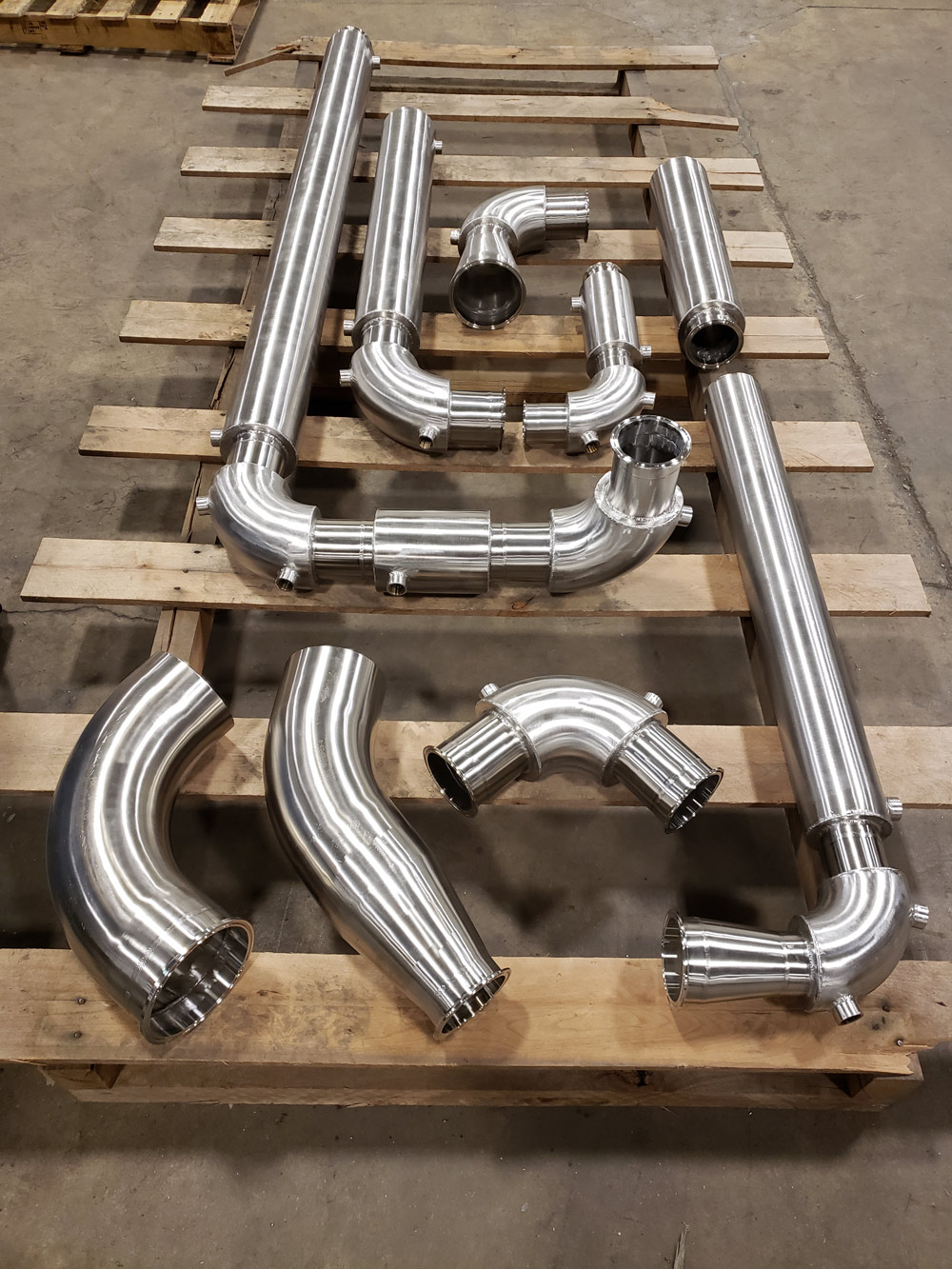
There are two types of fabrication: field work and prefabrication. We prefer to do as much prefabrication in the shop as possible. 

Benefits of Piping Prefabrication

  • Reduces field labor hours
  • Lowers safety risk
  • Minimizes plant disruption
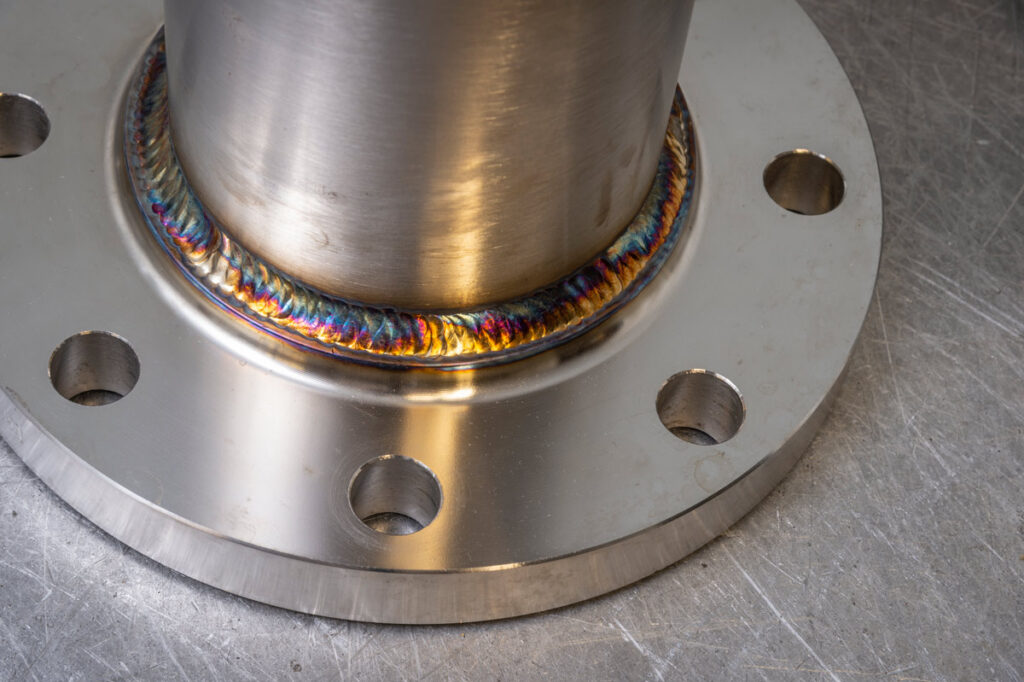
  • Improves weld quality consistency
  • Shortens shutdown windows
  • Allows us to make any customer changes and last-minute requests 
  • Minimizes onsite hot work (grinding, welding)

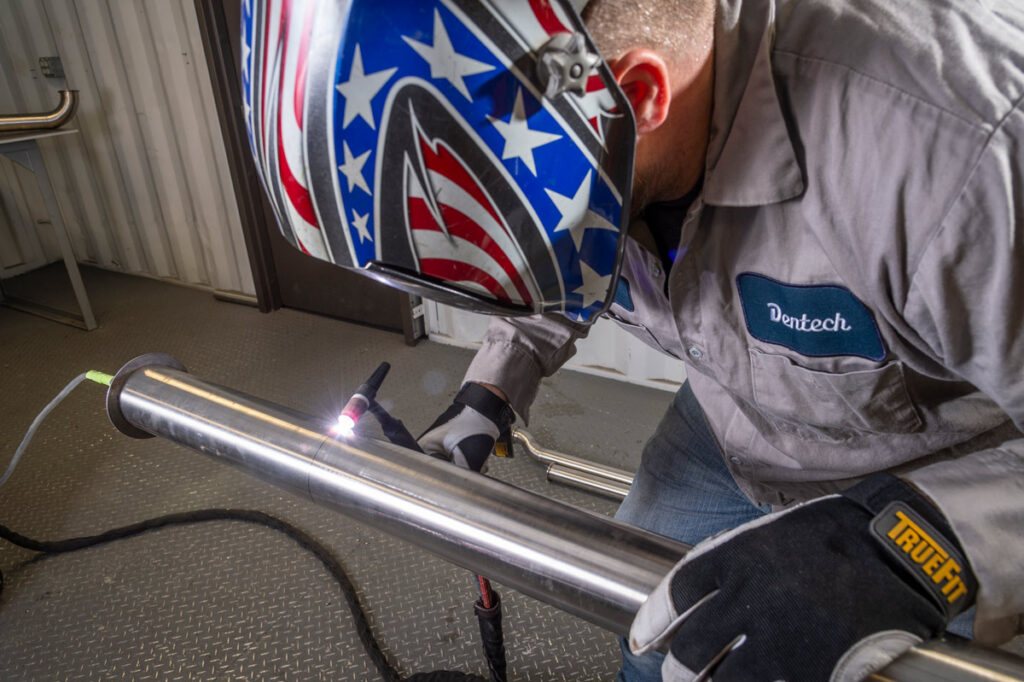
Our process piping fabrication services are made possible by our 21,600-square foot shop. Our welders have certifications in SMAW, GTAW, and FCAW. The more welds we can do in a controlled environment, the better the quality to ensure each piece is top notch.

Steve Rapp, DenTech president and CEO, says, “Anyone can weld two pieces of pipe together, but what sets us apart is focusing on the details. We don’t rush through the job. Every decision we make is what’s best for your system.”
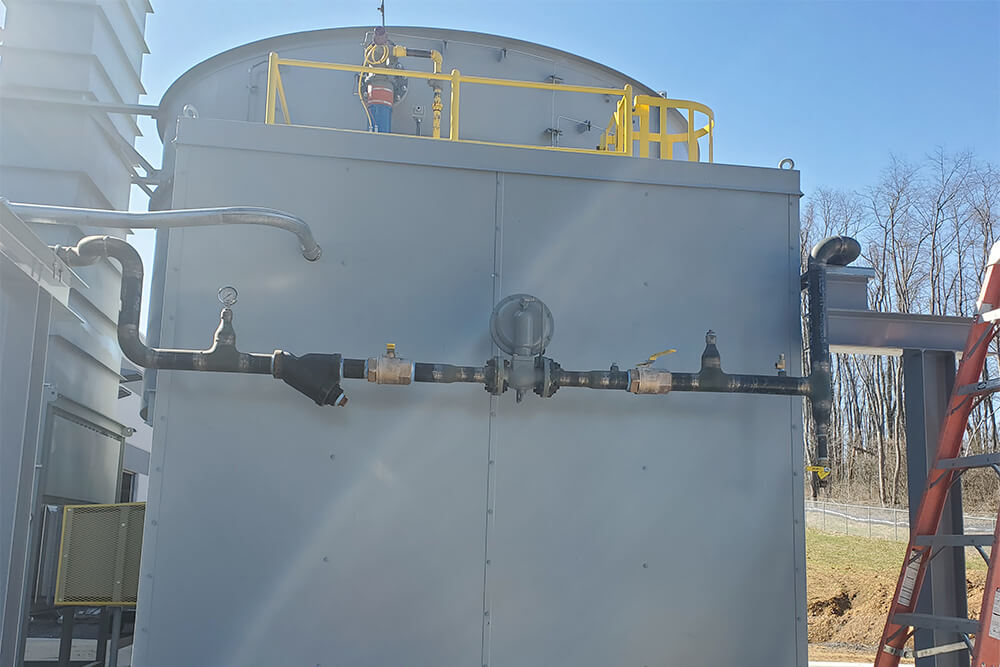
Completed process piping designed and installed outside a building

Process Piping Installation

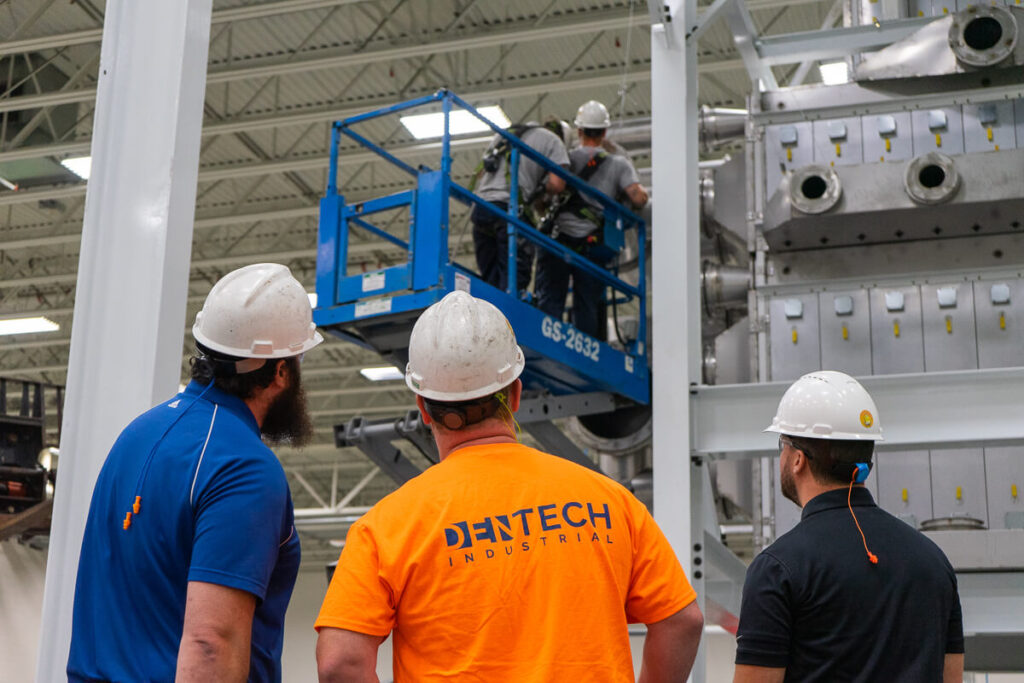
Installation is where design and planning meet real-world operations, and it’s often the phase where mistakes are most costly. We don’t just install piping wherever it fits. We install it where it makes the most sense for your space and process. 

We plan installations to minimize plant downtime, starting with main headers and critical lines, then moving to secondary piping. Each connection, support, and valve placement is coordinated to ensure proper alignment, slope for drainage, and easy accessibility. With most of the fabrication happening in our shop, we reduce on-site welding and adjustments. 

With DenTech, process piping installation isn’t just about connecting pipes. We promise to deliver a fully functional, safe, and maintainable system that supports your operation for decades.

Process Piping Inspection and Testing

After fabrication and installation, every piping system undergoes rigorous inspection and testing to ensure it meets the engineered design and performs reliably under all operating conditions. DenTech provides complete quality control documentation, giving you confidence that the system is safe, code-compliant, and ready for operation.

Every project requires something different, but we often conduct: 

  • Pressure Testing: Verifies the piping system can handle its design pressure without leaks or deformation. 
  • Hydro Testing: Uses water or another fluid to check the integrity of welds, joints, and connections. 
  • Dye Testing: Introduces a visible or fluorescent dye to detect leaks or structural weaknesses. 
  • Prefabricated Visual Inspection: Visual quality control inspection conducted by DenTech operations management prior to shipment. 

DenTech always conducts a comprehensive end-result test before turning over the system. This final check confirms the entire piping network functions as designed, leaving you with a safe and high-performing process piping system.

Custom Piping In Action

We put these pieces together for a roofing manufacturer. We provided compressed air, steam, and nitrogen process piping. In addition, our team fabricated operator access platforms and pipe bridges. With our help, this manufacturer was able to get their facility up and running without having to coordinate with multiple contractors to complete the work.

DenTech’s Approach to Process Piping Design & Installation

We bring over 40 years of expertise to process piping design and installation. We know the industry regulations and code requirements that make your system run as efficiently and safely as possible. This helps you reduce downtime, improve safety, and simplify coordination. 

Beyond new systems, DenTech can support system modifications, retrofits, and repairs. 

  • Leaking or corroded process pipes
  • Outdated piping systems not meeting code
  • Improperly installed process piping causing downtime
  • Compliance issues with ASME or ANSI standards
  • Modifying or retrofitting existing systems
Your Go-To Source for Custom Process Piping Solutions

Work with DenTech for expertly designed, fabricated, and installed piping systems.

The food and beverage industries face unique manufacturing challenges, from combustible dust to strict sanitation standards. While many manufacturers focus on the upfront price, the real cost of a system comes from downtime, inefficiencies, compliance risks, and wasted product. That’s why industrial solutions in the food industry must be designed differently.

Custom automation, robotics, process piping, and dust collection systems help food manufacturers reduce those hidden costs by streamlining production without sacrificing cleanliness or compliance.

Unique Considerations for the Food & Beverage Industry

All industries can benefit from industrial solutions, but food and beverage manufacturers are especially suited to these upgrades. 

  • Strict Sanitation Standards: Compliance and sanitation are necessities in the food and beverage world. You need a team with experience in clean design to ensure all solutions meet regulations. 
  • Assembly Lines: Your reliance on assembly lines and conveyance can be improved through automation, piping, and custom-designed systems to move ingredients and products throughout your plant. 
  • Dust Control: Many food and beverage plants generate dust at various points in their process, calling for a custom solution to improve the safety of your plant. 
  • Changing Processes: Every product or packaging change impacts your processes. As you make improvements to your facility, you need a team to implement these changes to ensure everything runs as efficiently as possible. 
  • Output and Accuracy: The desire for increased output and accuracy makes automation and robotics a natural solution for many food and beverage manufacturers. 

Why Food Plants Can’t Use Generic Industrial Solutions

What works in general manufacturing often fails in food and beverage production. GMP (Good Manufacturing Practices) requirements, sanitation demands, and combustible dust risks require unique solutions, such as hygienic design, food-grade materials, and precise engineering. Without them, your facility faces higher contamination risks and compliance issues. That’s why we design for food from the start.

Steve Rapp, President of DenTech Industrial, says, “When creating solutions around the food industry, you need to change the way you think about design. We focus on cleanliness to reduce risks of contamination and bacteria growth.” 

Every solution we design balances four things: 

  • Sanitation and compliance
  • Worker safety
  • Long-term scalability 
  • Your operational challenges and goals

Invest in a system that’s designed right from day one, custom-made for your exact application.

Improving Your Facility: Top 3 Industrial Solutions in the Food Industry

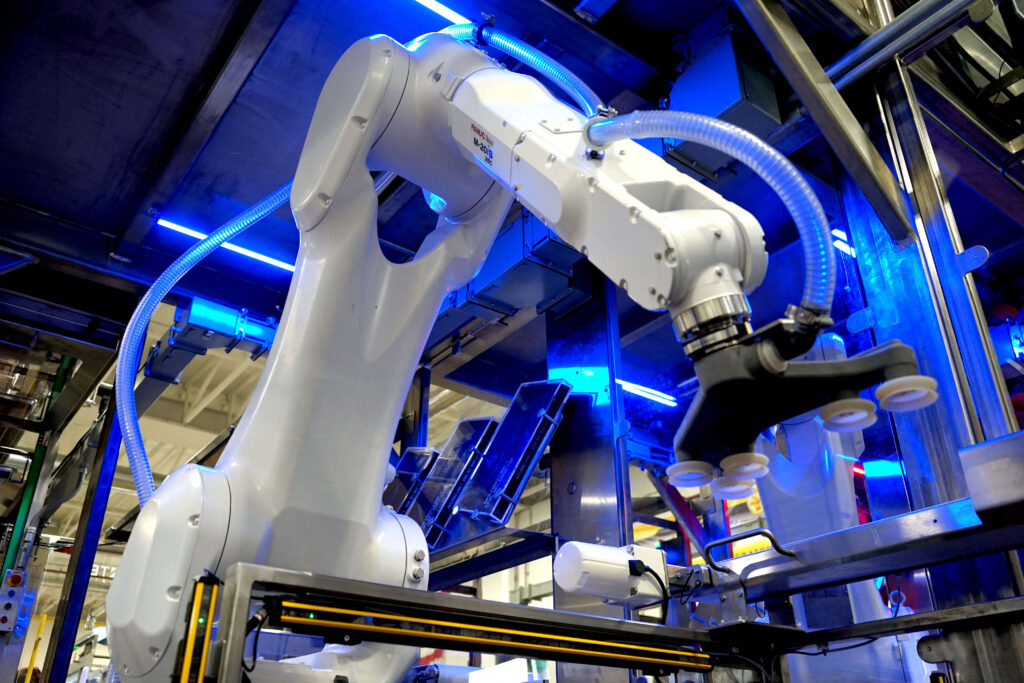
A robot arm working on a food manufacturing process

1). Automation and Robotics

Processes that rely on conveyance or manual sorting are strong candidates for automation and robotics. It comes down to accuracy, speed, and safety. Our systems can help improve the way you pick up, transfer, and package your product at any stage of the process, all while focusing on clean design. 

Our industrial solutions in the food industry can’t be pulled from a catalog or found on the internet. They are designed specifically for your application, so every point in your production process is running as efficiently as possible while meeting all food safety standards. Processes like product assembly, carton loading, case packing, palletizing, and more can all be improved with a custom automated system.

Hidden Cost of Manual Processes:

Overtime pay, inconsistent output, higher injury rates, rework, and missed production targets rarely show up as a single line item, but they can quietly drain margins every day.

Benefits of Robotics and Automation in Food Manufacturing

  • Increased Productivity: Automation and robotics speed up those repetitive tasks and can run 24/7, meaning more output with less downtime.
  • Greater Consistency and Quality Control: Robots are more reliable. They reduce human error and variability, helping you produce uniform products faster and more accurately than a human ever could. 
  • Improved Worker Safety: Robots can take over dangerous tasks and repetitive motions to reduce workplace injuries. 
  • Better Food Safety and Hygiene: Automation limits human interaction and potential contamination, allowing you to meet all GMP regulations. 
  • Saves Money and Reduces Waste: The precision that automation and robotics bring lowers labor costs and material waste, reducing energy usage.
  • Custom Made For You: Each system is built for your specific application, so it integrates seamlessly with your existing processes and equipment.

Signs Your Food Plant Needs to Invest in Automation and Robotics

ProblemExplanation
Heavy reliance on manual, repetitive tasksIf employees are performing the same motions over and over, automation in food manufacturing can reduce fatigue, injuries, and labor strain.
Bottlenecks or inefficient production stepsWhen a current process feels slow, cumbersome, or overly complex, automation can simplify and streamline the workflow.
Safety concerns on the production floorRobots can handle hazardous, high-temperature, or high-risk tasks to improve workplace safety.
Need to increase throughput and cycle timesAutomation in food manufacturing allows you to produce more product in less time without sacrificing consistency.
Inconsistent quality or accuracy issuesAutomated systems deliver precise, repeatable results that reduce errors and product waste.
Desire for repeatable, scalable processesRobots ensure the same process is performed the same way every time, making it easier to scale production.

Project Highlight: Automated Label Applicator

DenTech integrated a new applicator into a customer’s existing line in just 12 weeks. Our solution maintained the current production rate while improving accuracy and flexibility through synchronized motion control and adjustable positioning. The automation eliminated manual steps and streamlined the customer’s labeling process.

See our label applicator at work.

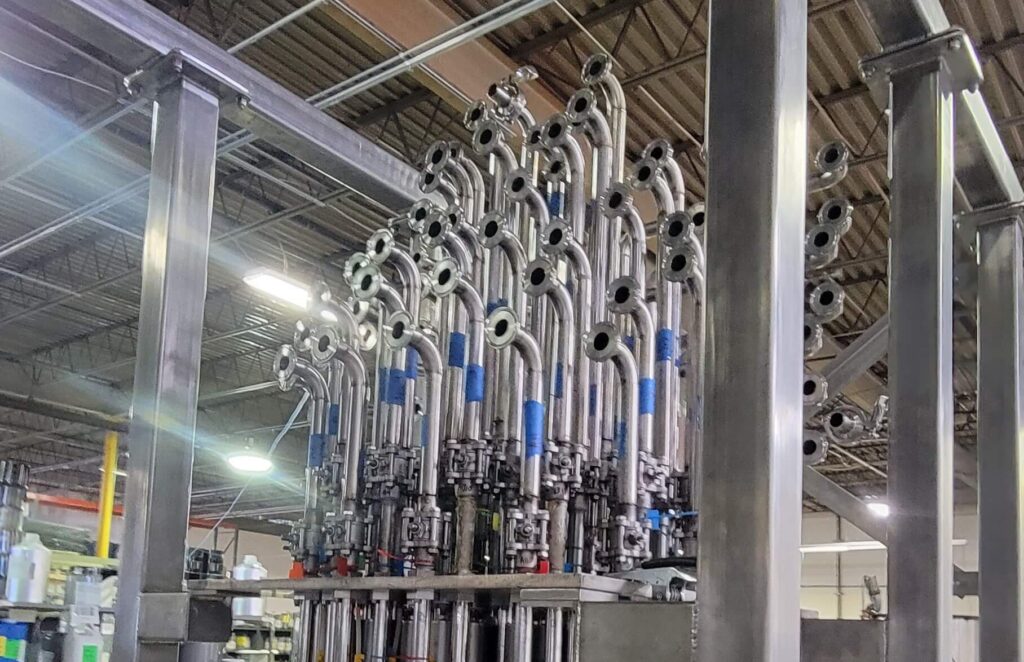
food grade process piping for a food manufacturer

2). Process Piping

Clean design is our top priority when building industrial solutions in the food industry, especially food-grade process piping. Moving your ingredients while maintaining cleanliness, quality, and temperature requires expertise and precision. When designing a system, we look at the type of product being conveyed, the piping system, the material, and the conditions of the room it’s in. Both the outside and inside of your industrial piping need to be sanitary and easy to clean. 

Our experts have worked in the food and beverage industry long enough to know the best type of piping system for your application, whether that’s jacketed, sanitary, stainless steel, PVC, and more. Our team doesn’t just design the system. DenTech’s certified welders and pipefitters install it correctly so you can meet all industry regulations.

Hidden Cost of Improper Process Piping:

Frequent leaks, extended sanitation time, product loss, unplanned downtime, premature corrosion, and increased risk of GMP non-compliance drive up operating costs over time.

Benefits of Food-Grade Process Piping

  • Ensures Safety and Quality of Food: Clean design provides a sanitary transfer of ingredients (whether that’s liquids, powders, or gases) in any plant environment.
  •  Improved Process Efficiency: Custom process piping helps you manage the flow of ingredients efficiently, with an uninterrupted transfer, which reduces leaks and downtime. 
  • Ensures Compliance: Properly designed process piping helps meet FDA and GMP requirements by using approved materials, sanitary welds, and clean-in-place (CIP) designs.
  • Easy to Clean: GMP requires fast sanitation cycles to keep your process clean. 
  • Built for Longevity: Our custom piping is not a temporary fix. These systems are built for long-term service life, reducing the need for frequent replacements or rework.
  • Custom Designed For You: In food plants, a “standard” piping system can become a liability. That’s why we design systems specifically for your product, processes, sanitation needs, and environment.

Signs You Need to Invest in Food-Grade Process Piping

ProblemExplanation
Recurring leaksLeaks caused by failing gaskets or poor welds are a clear warning sign that you need to upgrade your piping system.
Corrosion or other damageCorrosive damage indicates the piping material isn’t compatible with the product being conveyed. Properly specified piping protects your product, extends system life, and ensures safe operation.
Adding new equipment or processesExpanding your production line often requires new or upgraded process piping to seamlessly integrate new equipment with your existing system.
Non-compliant or poorly-installed pipingIf piping doesn’t meet industry or process specifications, it can create safety risks and inefficiencies.

Project Highlight: Process Piping and Dust Collection

DenTech helped a roofing manufacturer bring a new facility online by designing and installing critical process piping systems. With in-house expertise spanning piping, dust collection, and structural support, DenTech streamlined installation, reduced vendor coordination, and delivered a reliable, fully-integrated solution.

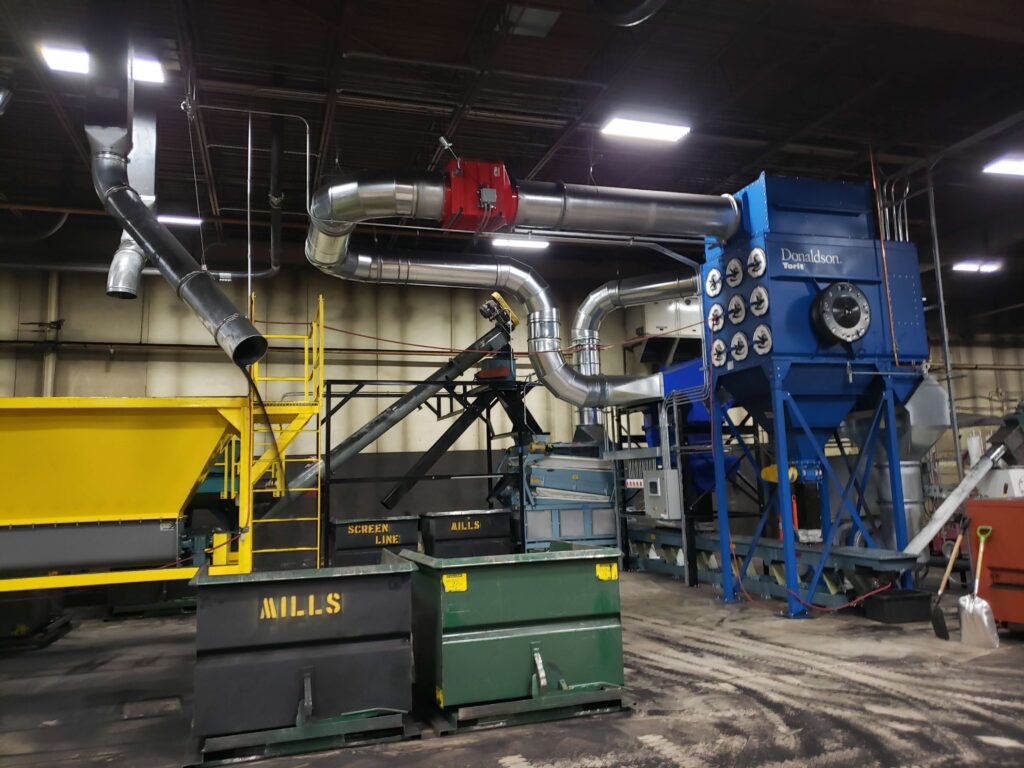
Industrial dust collector for a food manufacturer

3). Dust Collection and Explosion Protection

Dust collection isn’t solely a food and beverage issue, but it’s especially important in this industry where flour, sugar, spices, and other combustible powders are prevalent. Dust hazards in food production lines often come from processes like mixing and drum filling and emptying. You need an effective solution to keep workers safe and your plant compliant. 

Our team designs, installs, and maintains custom dust collection systems for the food and beverage industries. Maintaining a clean production environment is critical to both product quality and regulatory compliance. This is why industrial dust collection for food processing is so important. 

Hidden Cost of Poor Dust Control:

Excessive cleaning labor, lost product, higher insurance premiums, compliance risk, and unplanned downtime can cost more than the dust collector itself.

Benefits of Fire and Dust Hazard Control

  • Reduces Risk of an Explosion: When combustible dust is properly collected, it makes an explosion less likely and helps improve safety in your plant. 
  • Improves Compliance: Efficient dust collection limits compliance issues with food safety standards, so you don’t face fines or employee health problems. 
  • Limits Product Waste: An efficient system only collects dust, not your product or ingredients, reducing the amount of waste in your process. 
  • Saves You Money: Our custom systems are optimized to use as little air volume as possible, reducing energy usage, often resulting in smaller ducts, fans, and collectors. 

Signs You Need Industrial Dust Collection for Food Processing

Problem Explanation 
Fugitive dust Excess dust in the air, on your rafters, on process lines, and on other surfaces indicates you need a dust collection system in place.
Product contamination Dust can compromise product integrity, especially in food and beverage manufacturing, where clean processes and product quality is essential.
Difficulty meeting compliance standards Excess dust can put your facility at risk for OSHA, NFPA, or insurance compliance issues. 
Frequent equipment cleaning and downtimeDust accumulation leads to clogged equipment, unplanned maintenance, and production interruptions.

Project Highlight: Dust Collection and Explosion Protection

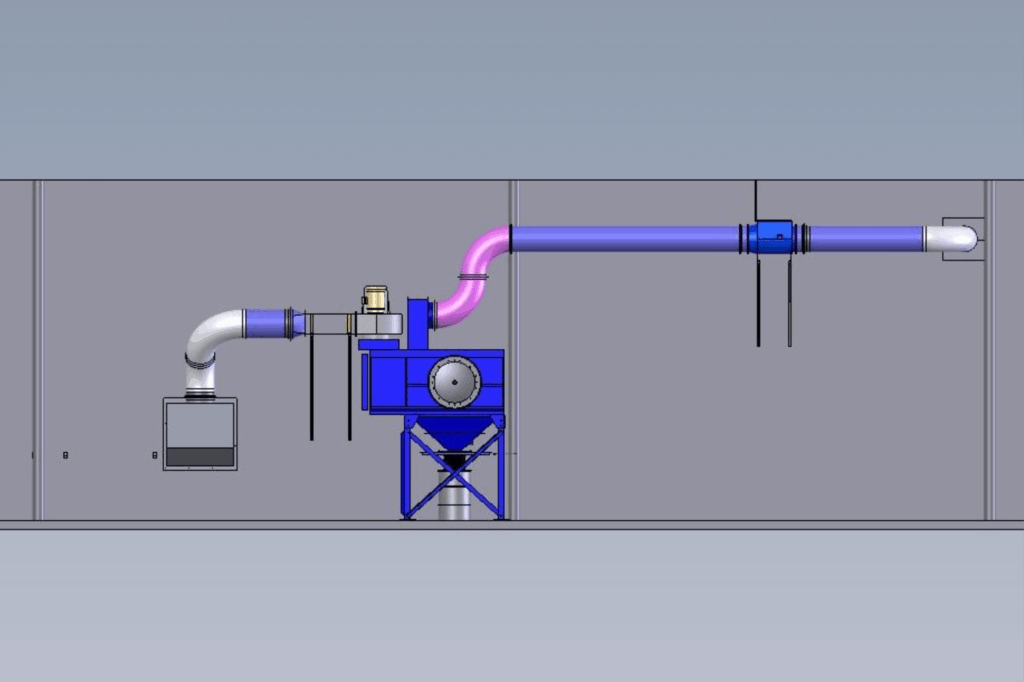
DenTech upgraded a confectionery manufacturer’s facility with a new dust collection system, explosion protection, and redesigned ductwork to safely handle combustible cornstarch dust. With custom controls and properly-routed piping, the solution improved safety, cleanliness, and efficiency.

system design for a dust collector and explosion protection

Our System Design

Work With DenTech for Industrial Solutions in the Food Industry

Real cost savings in food manufacturing come from designing systems correctly the first time. With over 40 years of experience working in the food and beverage industries, we know the typical problems you face. And more importantly, we help you come up with a solution

Our industrial solutions in the food industry are designed to limit downtime. We’ve invested in the facilities and equipment that allow us to prebuild and test components ahead of time. This speeds up the installation process and limits disruptions to your workflow. 

We’ve also prioritized training and certifications. When our team enters your plant, you know we have the proper sanitary certifications for welding, safety, and beyond. We will follow regulations, maintain a safe and clean environment, and provide a quality solution that meets every expectation—all while limiting your downtime. 

This may seem like a lot to ask, but for us, that’s the standard. 

In addition to these industrial solutions in the food industry, we also offer a full suite of in-house services, from fabrication and machining to installation and maintenance. When you work with us, all you need is a single partner to handle the entire process. 

This means: 

  • Easier coordination 
  • Fewer vendors to manage 
  • Streamlined communication 
  • Flexibility in services that can change as you grow

In food manufacturing, the cheapest solution often isn’t the right one. The right solution is the one designed for your product and your process. That’s where real savings come from.

DenTech can work with you for process piping needs, whether you’re looking for solutions to improve efficiency, enhance product quality, or expand production. Our talented team will design, fabricate, and install industrial piping systems custom fit to your facility.

Custom piping solutions

We’ll work with you on a solution that follows your specs and validation requirements for testing, passivation, and cleaning. DenTech’s expertise spans various industries, including food & beverage, pharmaceutical, and chemical.

Highly trained, safe team

We follow piping codes and standards for ANSI, ASME, and ISO. Our team trains on a regular basis to test piping systems, calibrate equipment, and certify personnel.

Single point of responsibility

DenTech manages all aspects of the project, from start to finish. That means we’ll work with you from initial concept through installation of a process piping system. You don’t have to coordinate with various vendors to get the job done.

DenTech works with the following types of industrial piping:

  • Carbon steel
  • Stainless steel
  • Sanitary
  • Traced
  • Jacketed
  • PVC

Did you know DenTech offers additional services to support your facility? We design solutions for millwrighting, fabrication, material handling, electrical controls, and automation.

Our team is here to help!

Contact us with any questions. Our experts can help you determine the appropriate equipment for your facility.