Your dust collector is only as good as its filters. If you care about product quality, employee exposure, and plant cleanliness, then you need to understand the proper maintenance and replacement frequency for your filters. Keep reading for signs your dust collector filters need to be changed, common replacement mistakes, and tips on improving filter life.

Ready to buy?

How Long Do Dust Collector Filters Last?

Unfortunately, there isn’t a quick and simple answer to this question. The life of your filters depends on several factors:

  • The type of dust you are collecting
  • The amount of dust your process generates (dust loading)
  • The type of collector and filter media you have

Your filter usage determines how often you need to change them. This frequency could also change between seasons, as humidity and temperature can impact filter performance. But after you run your system for a year and notice patterns, you can start to build a customized dust filter change schedule for your facility.

Signs Your Filters Need to be Replaced

At the beginning of their life, filters can have an efficiency of more than 99%. Watch for these signs to know if you need a dust collector filter replacement:

  1. Visible dust in the air
  2. Visible dust on the clean air side of the system
  3. Visible damage on the filter (tears, holes, etc.)
  4. Increase in differential pressure, or DP (as seen on your pressure differential gauge)
  5. Decrease in airflow from the system 

Do not replace your filters just because they look dirty. In fact, they are supposed to look dirty! As particles pass through, it will build up on filters and form a dust cake. This is a sign they are working and actually helps facilitate filtration.

Not sure if your dust collector filters need to be replaced? Contact DenTech.

Monitoring Filtering Conditions

You should monitor filter conditions to ensure the dust collector is working at its highest efficiency. Filter conditions are determined by differential pressure (Delta P). Delta P measures the difference in pressure between the clean and dirty side of your filters, in units of inches of water column (inWC). Typically, the scale is zero to six inches, but that may vary depending on system design. 

Some states have air permits that dictate the operating range of differential pressure. But in general, here’s a good rule of thumb: 

  • When you hit the four-inch mark: start thinking about buying new filters
  • When you hit the five-inch mark: start planning a shutdown to change them
  • When you hit the six-inch mark: change the filters because they are now affecting airflow

You can monitor dust collector filter performance using analog gauges (magnehelic or photohelic) or automated systems like AyrDyne electrical control panels. Changes in Delta P are signs of physical changes in the filters. A gradual increase in pressure is normal as dust builds up. But a sudden spike or drop is a sign there is an issue.

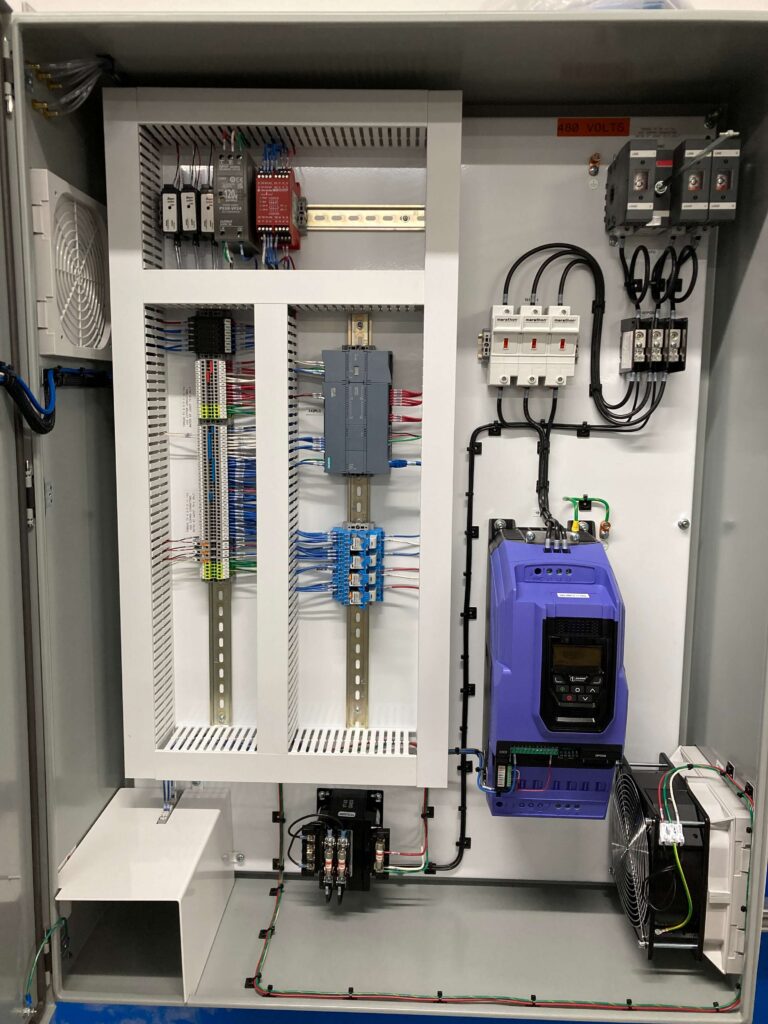
That’s where AyrDyne comes in handy. It provides a visual indication of how your system is operating, using green, yellow, and red indicators. At a glance, you know if you need to make adjustments and the status of your filter life.
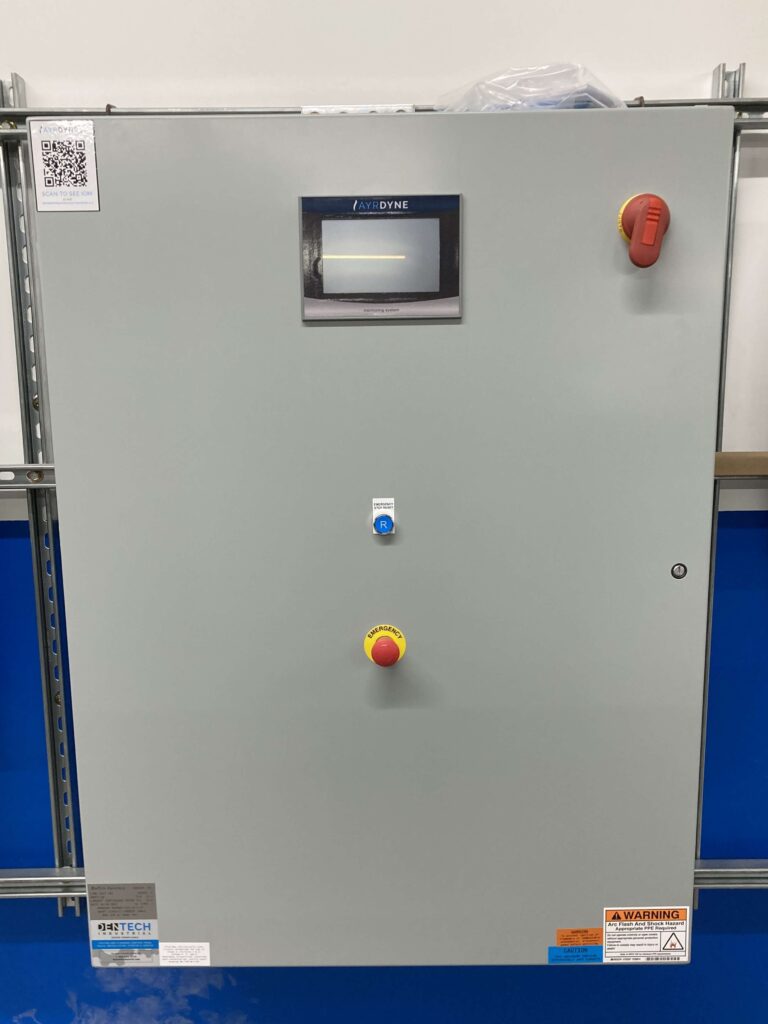
AyrDyne filter monitoring panel closed
AyrDyne filter monitoring panel open showing the interior

Benefits of AyrDyne

Our AyrDyne filter monitoring system consolidates all readings and simplifies where you get your data, eliminating the need for multiple gauges. 

You can see if your filters spiked suddenly or if there was a gradual increase in pressure. It provides information on the condition of your collector and self-adjusts the cleaning range so you’re always operating as efficiently as possible. This reduces compressed air usage, saving you money. You can also set reminders and alarms to change your filters at a certain frequency. 

Lastly, with AyrDyne filter monitoring, there is a removable memory drive that you can easily download for air permit reports.

Dust Collector Filter Replacement Tips

Changing a filter seems easy… until you do it wrong. Filters are expensive, downtime is costly, and making a mistake can have a serious impact on the output and safety of your facility.

Here are some common mistakes we see operators make when changing filters on their own: 

  • Improper handling of new filters: New dust collector filters should be handled with care to ensure they are not damaged before installation.
  • Backwards installation: There’s a specific way to install them, and many people accidentally put them in backwards. Filters will not seal properly when installed in the wrong orientation, causing air leaks and dust to bypass the filters.
  • Not understanding the cleaning system: As filters get dirty, you may adjust your pulse setting range to correctly clean your filters and optimize compressed air usage. These settings need to be reset when new filters are installed to ensure proper system operation.
  • Not planning for supply chain delays: Don’t wait to order replacements until you need them, as this can cause unexpected downtime if there are product shortages or slow delivery times.

Be ready for a replacement at a moment’s notice with a set of back-up filters.

Filter replacement is a tedious task. The time it takes depends on the size of your collector, but an average 16- or 24-cartridge collector takes about a day for a full change out. To make the most of your time, here are our tips for dust collector filter replacement: 

  1. Pulse the cleaning system before removing the filters: This gets loose dust off before opening it. 
  2. Be prepared for that initial opening of the collector: The worst part of this process is getting a dust shower as you pull used filters out over your head. Be prepared to get dirty. 
  3. Check other parts of the collector while you’re inside: Look at all gaskets, diaphragm valves, and the condition of the collector itself, checking for rust, holes, and more. 
  4. Replace all cartridges at once: This ensures consistent dust collector performance and maintains proper airflow. 

The process itself is time-consuming. On replacement day, our team will lay down tarps, isolate the area, go through the safety checklist, remove filters and bag them to contain the dust, put new filters in, and finally seal up the old cartridges.

When in doubt, we recommend working with a professional team to ensure the installation is done correctly the first time. At DenTech, we can work with all makes and models of dust collectors, including popular brands like Donaldson, Farr, Imperial, RoboVent, and MAC. If you need a new collector, replacement filters, or help with maintenance, we’re the team to call.
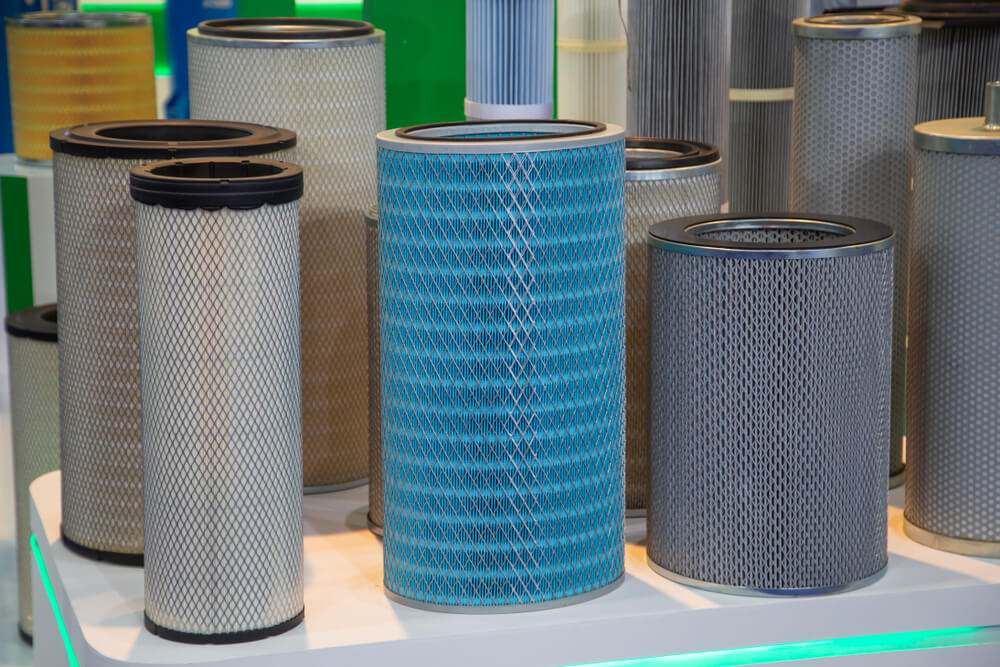
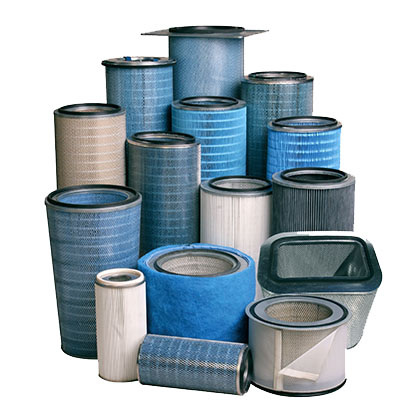
Dust collector filters of various sizes and colors on a table

Extending the Life of Your Dust Collector Filters

Properly maintaining your dust collector filters is crucial to managing dust efficiently. If you don’t, it will require more energy to run your equipment, your filter life will shorten, you’ll spend more money, and you’ll risk the health and safety of your employees. Here are our top four tips to improve the life of your filters.

1). Don’t Manually Clean Filters

While you may be tempted to manually clean filters to help extend their use, we don’t recommend that. It can actually end up damaging your filter. Instead, rely on the automated cleaning system in your machine for consistent dust collection performance. 

Many dust collectors use a pulse-jet cleaning system. The pressure gauge sends a signal to activate the diaphragm valves, which shoot a pulse of air to knock dust cake off the filters. This pulse goes off for one millisecond every ten seconds while the cleaning system is engaged. You can set this pulse to activate at a certain pressure, and change that activation point as dust builds up. 

2). Use the Correct Air Pressure

Make sure you’re using the correct compressed air pressure for cleaning (usually between 60 and 100 PSI). Too low, and it won’t clean the filter enough. Too high and your filters and diaphragms could be damaged by the air. Always follow manufacturer recommendations for compressed air settings and make sure it’s oil- and water-free. And if you have multiple pieces of equipment running at the same time, ensure your air supply system can deliver enough compressed air to meet the needs of each one.

3). Check Your Valves

If your cleaning system doesn’t work properly, the life of your dust collector filters will shorten drastically. Check your diaphragm valves yearly (and whenever you replace filters). There are features built into AyrDyne to help ensure the cleaning system is working, but the experts on our team can tell just by the sound if a collector is pulsing correctly.

4). Rely on Differential Pressure Gauges

Monitor your gauges—analog or digital—to determine if your filters are working. There’s no need to open your collector and inspect the filters unless you suspect the gauge is incorrect. Make it a habit to frequently check your differential pressure gauge to avoid overloading or over-cleaning the collector.
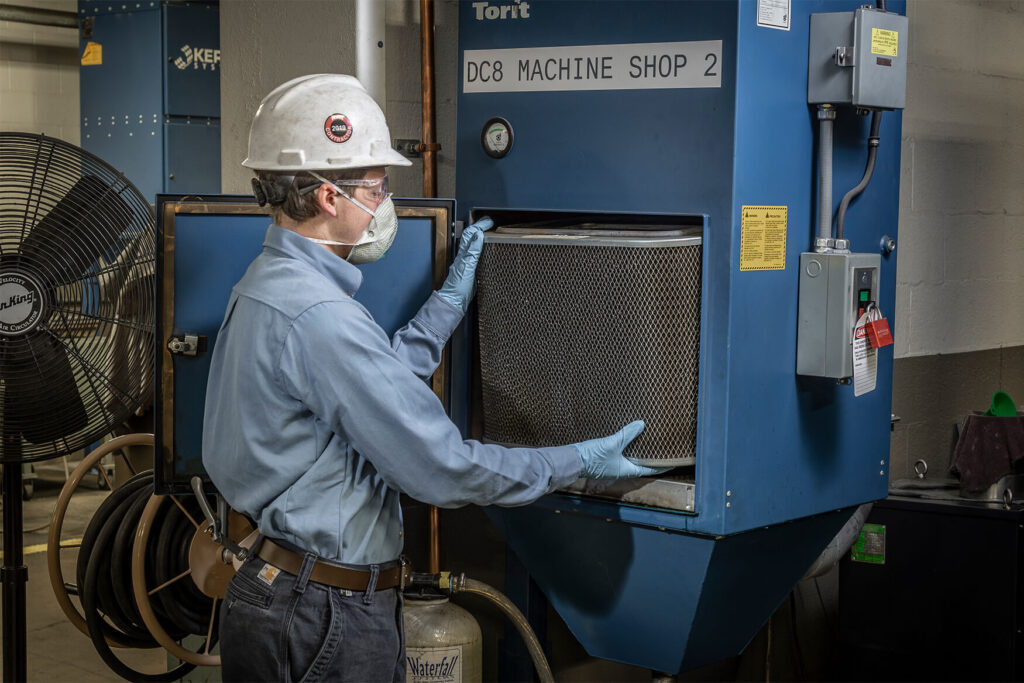
DenTechn technician replacing dust collector filters

Need More Help? Contact DenTech

Our sales team at DenTech brings over 100 years of combined experience in dust collection and industrial solutions. We know exactly what questions to ask when we’re designing and installing a system—questions about loading, temperature, processes, and your work environment.

Plus, we are familiar with the hazards of different types of dust exposure. We work to ensure your employees have the best (and safest) work environment. But it doesn’t stop at safety.

At the end of the day, our goal is to design a system that works even better than you expect it to. To us, dust collection isn’t just a machine in the corner of the room. It impacts your entire plant, your employees health and safety, your operations, and even your bottom line. And proper air filtration starts with understanding dust collector filter replacement.
Don’t let filter replacement become an afterthought. Contact our team to improve your dust collection.

Be Proactive.

Supply chain disruptions continue to cause higher costs of raw materials, slower delivery times, and product shortages.  

In a recent McKinsey Global Survey, company executives said supply chain disruptions are now a bigger threat to company growth than the pandemic.  

These disruptions can impact equipment in your facility, including dust collection systems. If you wait to order replacements until you need new components or filters, you risk waiting for parts to come in. And that causes unexpected downtime and loss of production.  

Instead, keep replacement parts and a back-up set of filters onsite. Then when it’s time to make repairs or change filters, you already have what you need.  

Supply chain issues will continue to challenge industrial manufacturers. One way to counter delays is by having replacement parts and filters on hand. You’ll be able to keep your system up and running without worrying about shortages or shipping delays.  

Our team is here to help!

Contact us with any questions about dust collection systems. Our experts can help you determine the appropriate equipment for your facility.

Whether your facility has a cartridge or baghouse dust collector, several options for filter media are available. Which filter media is best for your application?

To determine the best filter media, evaluate characteristics of dust and operating conditions in your system.

If you don’t know what the characteristics of your dust are, start with a lab test. Use information from the results to select filter media.

Dust particle size

Dust particle size determines the appropriate filter media by using MERV ratings.

MERV stands for Minimum Efficiency Reporting Value. It is a standard rating system developed by ASHRAE (the American Society of Heating, Refrigerating, and Air-Conditioning Engineers) that assigns a single numerical rating to a filter. The rating identifies the filter’s minimum performance in removing particulate (from 0.3 to 10 microns) from an airstream. Ratings go from 1 to 16, with a higher number indicating a higher filtration efficiency.

The MERV rating tells you what percentage of particles in a specific size range the filter will capture. For example, a filter with a MERV 12 rating will capture 80% to 89% of dust particles that are between 1 and 3 microns in size. So, depending on the size of the dust particles in your application, you can determine which MERV rating is appropriate. That narrows down your filter choices to ones with the MERV rating you need.

For more information on how MERV ratings correspond to particle size and filtration efficiency, see the EPA’s website.

Since MERV ratings apply to filters in a static environment, the MERV system doesn’t account for the cleaning system or dynamic changes in a dust collection system. So, you need to consider additional factors to select the appropriate filter for your dust collection system.

Fibrous dust

Fibrous dust is common in applications including woodworking, grain handling, textiles, and fiberglass. This type of dust presents a challenge because the dust’s fibers easily attach to filter media and settle into filter substrate. Dust buildup restricts airflow and interferes with pulse cleaning.

Donaldson offers filter media designed for fibrous applications. Two examples are Fibra-Web® and Ultra-Tek®.

Statically charged dust

Some types of dust, like in dry food or chemical processing applications, generate static electricity. The presence of static electricity creates a high risk of deflagration. Specific types of filter media can dissipate static charges to safely collect dust.

For example, the Ultra-Web® Conductive FR Cartridge filter includes carbon-impregnated media to dissipate static charges and flame-retardant media that complies with UL® Standard 558.

For baghouse collectors, the Dura-Life™ Anti-Static bag filter dissipates static charge buildup.

Interested in a similar project?

Let’s talk about your application.

Our team is here to help you plan, select, and implement the right solution.

Moisture

If moisture is present in the dust particles or airstream, dust can build up on filters and shorten filter life. In this case, select filter media that can stand up to moisture, such as Ultra-Web® SB cartridge filters. These filters have a web of very fine, resilient fiber to catch submicron dust particles on the surface of the filter. This prevents particulates from settling deep into the filter substrate, so filters last longer, clean better, and cost less to operate compared to competitive filters.

Some types of baghouse filters can manage moisture. The operating temperature of the process will determine which baghouse filter is appropriate for your application.

Options from Donaldson include:

Operating temperature of the system

Applications that operate at high temperatures (generally over 180° F for cartridge dust collectors and over 275° F for baghouse collectors) require filter media that can withstand dry, high temperature conditions. Application examples includes metallurgical and chemical processing. When selecting filter media, be sure to check the maximum temperature the filter can operate in.

Additional considerations

Depending on the dust properties in your application, there may be more factors that determine the filter media you use.

For example, if oil vapors, hydrocarbons, or odors are present, activated carbon filters can remove these. Among baghouse filters, the Dura-Life™ Oleophobic bag filter is designed to release wet, oily, and sticky dust.

Another example is when product contamination is a concern, such as in chemical, food, and industrial processing. In this case, select a filter that’s designed to minimize product contamination, such as Donaldson’s Torit-Tex® cartridge filter.

Many options for filter media are available for cartridge and baghouse dust collectors. The best media for your system will depend on the dust properties and operating conditions in your facility.

Our team at DenTech can help you determine the right filters for your application. We also offer preventative service agreements to keep your dust collection system up and running.

Our team is here to help!

Contact us with any questions about dust collection systems. Our experts can help you determine the appropriate equipment for your facility.

Baghouse dust collectors are used to filter dusty air produced by manufacturing and processing applications in industrial facilities. Traditionally, polyester bags are used in baghouse collectors, but large pores in the bags can collect dust in the fabric. This makes polyester bags difficult to clean and reduces filter life.

If maintaining traditional filters in your baghouse dust collector is a challenge, consider switching to pleated bag filters from Donaldson Torit®.

What are pleated bag filters?

Donaldson Torit’s innovative Ultra-Web® technology uses an electrospinning process to produce a very fine, continuous fiber (0.2-0.3 micron in diameter). The nanofibers form a permanent web-like net that traps dust on the surface of the media. Ultra-Web technology combines with a sturdy spunbond polyester substrate to form Ultra-Web Spunbond (UWSB) pleated bag filters.

UWSB pleated bag filters offer several advantages over traditional polyester bag filters in baghouse dust collectors. Benefits include energy savings, labor savings, and better dust capture.

What are the benefits of using pleated bag filters?

Energy savings

UWSB pleated bags have a significantly lower pressure drop compared to polyester bags. This is because pleated media offers more filter area, an easier path for airflow, and no large holes for dust and air to flow through. With fewer smaller dust particles passing through the media, filter efficiency increases.

Lower pressure drop also offers energy savings, since less energy is required to move a given volume of air over a period of time.

Labor savings

Pleated filter bags do not use cage and filter bag components, which makes installation and removal quicker and easier. The one-piece design and shorter length are easier to maneuver, so less time is needed to change out pleated filter bags. Less time for filter changeouts results in reduced labor costs and reduced loss of production time.

Here is an example of how changeout costs could differ for polyester filter bags and pleated filter bags. Note: These numbers are only for example purposes, and do not represent actual costs.

Contact us for service rates.

 Polyester filter bagsPleated filter bags
Number of filter bags in collector630630
Number of technicians for changeout88
Labor rate per hour$50 (may need to add in overtime rates)$50
Total amount of time for changeout20 hours5 hours
Total man hours8 x 20 = 160 hours8 x 5 = 40 hours
Total labor cost$8,000 per changeout$2,000 per changeout
Changeout cost comparison of polyester and pleated filter bags

Better dust capture

UWSB pleated bags can capture submicron dust particles (0.3 micron and larger), which is finer than the dust particles that polyester bags can capture. Surface loading technology on UWSB pleated bags allows for better pulse cleaning, lower energy use, and lower operating pressure drop. This leads to two benefits: 2-3 times longer filter life and fewer filter changeouts compared to polyester bags.

UWSB pleated bags are designed to be shorter in length than polyester filter bags. This leaves a larger dropout space in the baghouse collector, which encourages material fallout. Heavier, more abrasive particulate falls into the open space, reducing the potential of abrasion on filter bags.

UWSB pleated bag filters are available for all popular brands of baghouse collectors.

Upgrading to pleated bag filters requires an initial investment, but there are long-term benefits in energy savings, labor savings, and better dust capture.

Our team is here to help!

Contact us with any questions. Our experts can help you determine the appropriate equipment for your facility.