Have you been issued a citation, or do you have an OSHA inspection coming up? The article outlines key NFPA, EPA, and OSHA dust compliance standards; how they are enforced; and practical next steps to improve workplace safety, help meet regulatory standards, and reduce the risk of citation. 

NOTE: The following are general recommendations and not specific to a customer, citation, or problem. We recommend working with an expert who can help navigate this complex landscape.

OSHA Standards

The Occupational Safety and Health Administration (OSHA) sets the standards for safe working conditions to prevent employee harm. They provide resources outlining specific requirements employers must follow to keep their workers safe. 

OSHA has several standards focused on workplace dust safety, with details varying based on your industry, location, and hazard you’re producing. OSHA may also reference consensus standards (such as NFPA) when citing hazards under the General Duty Clause.

  • General Duty Clause — Employers must provide a workplace free from recognized risks that can cause serious physical harm or death. This catch-all standard is used when there are no specific OSHA regulations to guide you. 
  • Hazard Communication — This gives workers the right to know and understand the dangers in their workplace. You must inform employees about hazards through written materials, proper labeling, Safety Data Sheets, training, and documented procedures. 
  • Respiratory Protection — When dust is above exposure limits, you must provide your workers NIOSH-certified respirators at no cost, along with fit testing and training. 
  • Walking-Working Surfaces — Fugitive dust can be dangerous when it settles on the floor or work tables, causing falls, accidents, or even explosions. To prevent injury, keep all working and walking surfaces clean and hazard free. 
  • Electrical Safety — Compliance with OSHA standards requires proper equipment design and use to avoid fires, shock, and electrocution. Focus on insulation, grounding, inspections, and proper procedures. 
  • Machine Guarding — Machine guarding ensures no worker has contact with dangerous processes or equipment, including your dust collector. This standard sets rules about points of operation and moving parts.

To ensure you’re meeting these standards, OSHA performs inspections at both the state and national level. The Combustible Dust National Emphasis Program (NEP) identifies companies creating hazardous dust as candidates for additional inspections and scrutiny. If you fail one of these standards above, OSHA may issue a written citation outlining violations, required corrective actions, and abatement deadlines.

Responding to an OSHA Dust Citation?

Start your solution with DenTech. Explore our capabilities to see how we can help you with OSHA dust compliance.

EPA Standards

OSHA isn’t the only governing body that deals with industrial dust hazards. The Environmental Protection Agency (EPA) sets air quality standards to control emissions. They limit the concentration of particulate matter (PM) in the air to improve public health and safety. 

The EPA is a factor if you have dust exiting your facility and blowing into the environment. EPA violations can also trigger OSHA scrutiny if airborne dust presents an employee exposure risk. Specific rules differ by state, but here are the basic standards you need to know.

  • National Ambient Air Quality Standards (NAAQS) for Particulate Matter These standards are federal limits under the Clean Air Act to protect the public from the negative effects of particulate matter. 
  • PM10 — This standard applies to particulate matter 10 micrometers across or smaller. These often come from construction sites, grinding processes, dirt, pollen, mold, or road dust. To help prevent health issues, the EPA 24-hour standard is 150 micrograms per cubic meter (µg/m³). 
  • PM2.5 — This standard is for facilities that emit particulate matter 2.5 micrometers or smaller. Finer particles pose a more serious health risk than coarser ones, since they can enter your lungs and bloodstream. Under the Clean Air Act, manufacturing plants must limit PM2.5 annual emissions to 9 µg/m³.

These limits are commonly enforced through air permits and stack testing requirements. If the EPA observes a violation in your facility, they will perform a detailed inspection and issue citations. As the employer, you need to show that you are making progress towards a solution for airborne dust management. 

NFPA Standards

Along with OSHA and EPA, manufacturers dealing with combustible dust also need to comply with the NFPA—National Fire Protection Association. The NFPA focuses on explosion protection from industrial dust hazards. Here are the main standards to know. 

  • NFPA 660 — The “Standard for Combustible Dust and Particulate Solids” is a new, consolidated standard that OSHA increasingly references when evaluating combustible dust hazards. It combines information from Standards 61, 484, 652, 654, 655, and 664. NFPA 660 covers Dust Hazard Analyses (DHAs), explosion protection, housekeeping and fugitive dust, and more. 
  • NFPA 68 — The “Standard on Explosion Protection and Deflagration Venting” guides facilities on how to design, install, and maintain systems that relieve pressure from explosions in buildings and equipment. This is especially necessary for processes dealing with combustible dust or flammable gases. 
  • NFPA 69 — The “Standard on Explosion Prevention Systems” outlines the requirements for designing, installing, and maintaining systems that help control explosions from combustible dust. This is often used in equipment like ducts, pipes, and dust collectors.

These are a set of standards and guidelines to follow for workplace dust safety, but they are not enforced by the NFPA. OSHA frequently uses NFPA standards as evidence of a “recognized hazard” under the General Duty Clause. Or, they can also be enforced by an Authority Having Jurisdiction (AHJ).

Authority Having Jurisdiction

An AHJ is not necessarily a government employee (although it could be). It is simply the organization or person responsible for enforcing these codes and verifying that you meet the requirements. This can include a fire marshal, building official, insurance company, inspector, or health department. AHJ interpretations can directly impact system design, permitting, and inspection outcomes. 

You may be wondering, How do I know who my AHJ is? It’s different for everyone, but start by contacting your local fire marshal, as they are often the primary authority to enforce fire codes and NFPA standards. From there, check with your local building department or your insurance carrier to find the specific AHJ for your situation.
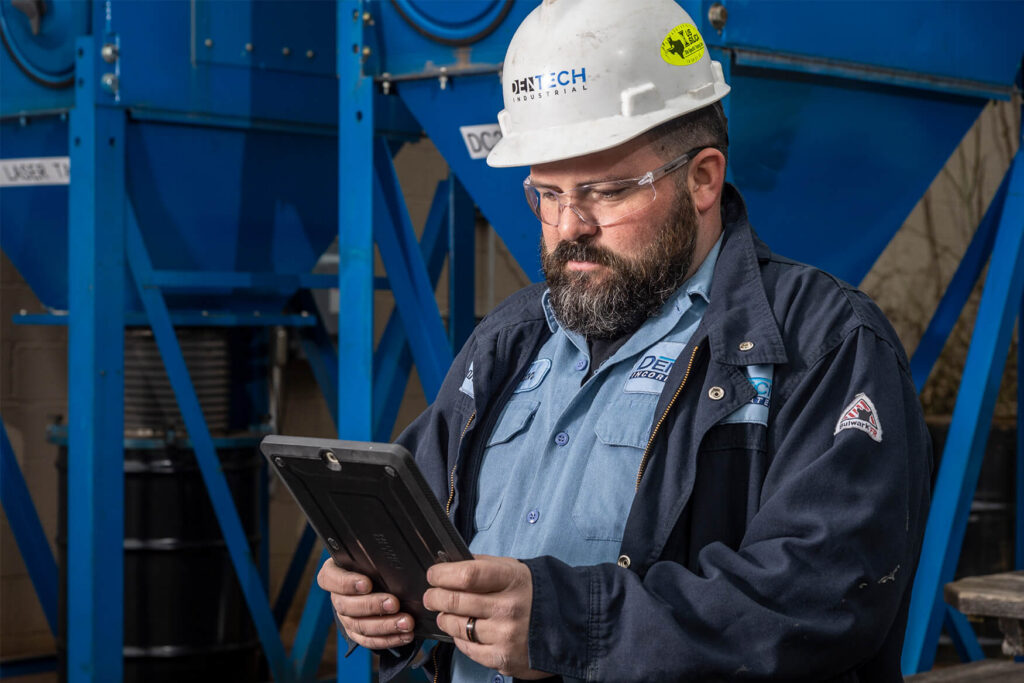
An OSHA dust compliance expert in a hard hat and protective goggles, holding a tablet.

NFPA, EPA, and OSHA Dust Compliance Next Steps

If OSHA (or another organization) issued you a citation, what do you do next? 

1). Post the Citation

Most likely, you got a letter after your inspection with written citations and a timeframe to show progress towards a solution. First, you must post the citation near the violation point so all employees are aware. Keep it there for three days (or until your hazard is fixed). As you find a solution, ensure all employees stay protected while they work. 

2). Conduct a Dust Hazard Analysis (If Needed)

If your process produces combustible dust but you don’t have a DHA in place—or have updated your process and haven’t redone an analysis—then you need one. Our team at DenTech does not perform DHAs, but we can help you understand the DHA process and how its findings affect system design and compliance.

It starts by bringing your team together to identify all the hazards throughout your process, including electrical, ductwork, housekeeping, ignition points, etc. Once you’ve identified all hazards, you then need to eliminate them. 

3). Fix the Hazard

OSHA can cite you for many different reasons, so there isn’t one easy way to amend the problem. However, the solution usually involves contacting a team like DenTech. While we won’t be able to fix every piece of your citation, we can help with OSHA dust compliance.

If you are struggling with airborne dust management, you may need to upgrade your hoods or collector. If it’s a housekeeping issue, you might need a vacuum system. If you have safety problems, we can design a custom solution. We always start by understanding your citation before working on a tailored fix so you can show OSHA you are taking steps towards a solution. 

4). Notify OSHA and Document Each Step

Make sure you document all steps and communication your facility takes with OSHA and third parties. Part of documentation is creating an abatement plan, a detailed outline of how you will correct the citation. 

Once you implement corrective action, notify OSHA within the set timeframe. Include proof of your work, such as photos, records of new equipment, drawings and designs for proposed systems, training logs, and any other relevant documents. Even if the solution takes several months to complete, as long as you can demonstrate that you are starting on the fix, OSHA will work with you. 

Dust Compliance: Fixing the Hazard

Every citation is different, but fixing your problem often comes down to one of these three things. 

Your Dust Collection System

If you’re struggling with OSHA dust compliance, you may need to install a dust collection system (or upgrade your current one). The collector may be in good shape, but it’s possible you need to replace your filters or improve your hood design to effectively capture dust

Lack of Training

Secondly, maybe your operators don’t have the proper training. For example, with a dust capture hood, operators often don’t know how to properly position and use the hood. Therefore, it won’t work correctly, and your facility won’t be protected from industrial dust hazards. 

Training your operators is essential to ensure all the systems you have are running effectively. DenTech provides training on any systems we design and install. We’ll walk you through how it functions, maintenance intervals, and all the details of the system so we can officially transfer ownership to you. 

Poor Housekeeping

Lastly, dust problems may come down to poor housekeeping. Many plants use compressed air to clean. However, we advise against that. 

Our VP of Sales, Mike Zook, says, “Despite its popularity, compressed air is actually the least desirable cleaning method because it stirs up dust in the air. Even sweeping can agitate dust and get it airborne. What you really need is a vacuum system. This removes dust without spreading it throughout your plant.” 

When a customer is facing issues with OSHA dust compliance, we always ask a few key questions to understand the problem. Why is the dust settling where it is? Is it because your collector isn’t working, or something else? From there, we develop a custom solution that’s built around your processes. 

Addressing A Dust Citation? DenTech Can Help.

With over 40 years of experience, our team can help with your OSHA citation. We’ll look at your processes and design something completely custom to you, to solve whatever dust problem you have.

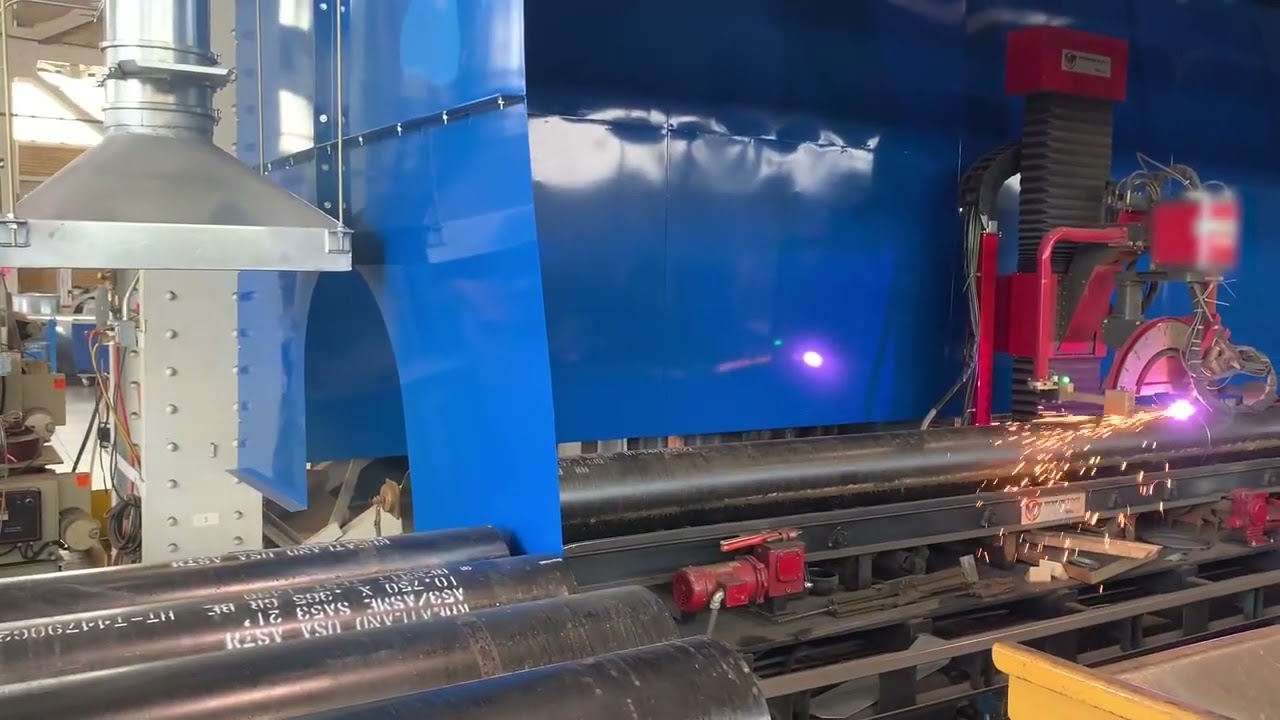
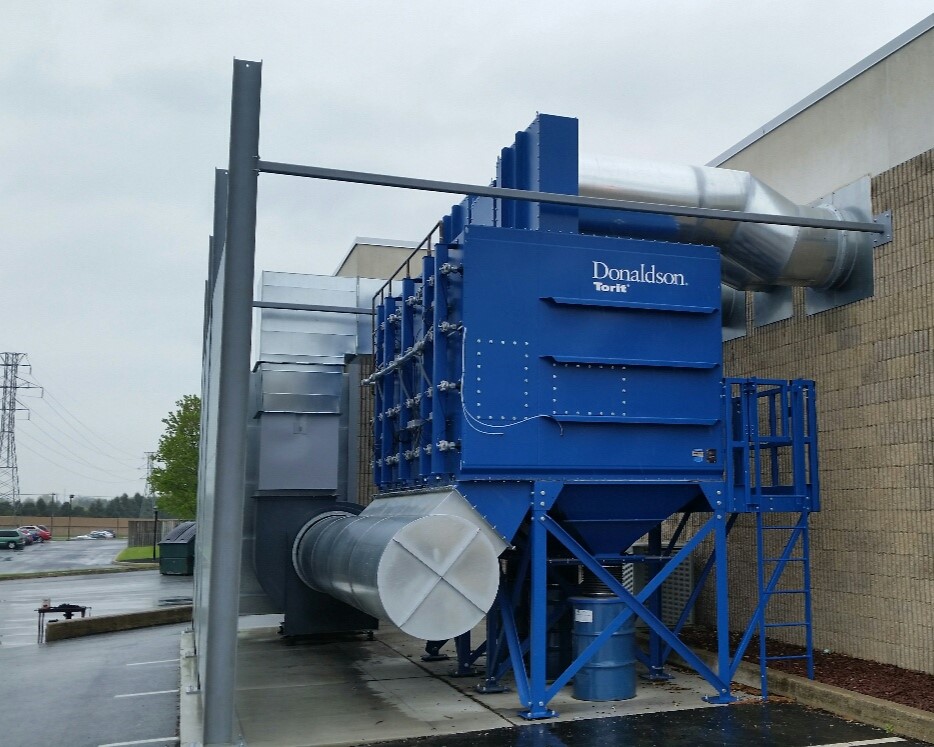
We’ve worked with many companies, such as Cannistraro, an industrial contractor in Boston. Their too-small dust collector caused safety hazards in their facility. Our team designed and installed  new ductwork, fans, a dust collector, an AyrDyne electrical control panel, and a spark cooler. With the proper systems in place to manage dust, this allowed Cannistraro to address safety concerns and keep their workplace compliant.
Get Started On Your Dust Solution

Contact our team to see how we can help you tackle your latest citation and avoid one in the future.

The food and beverage industries face unique manufacturing challenges, from combustible dust to strict sanitation standards. While many manufacturers focus on the upfront price, the real cost of a system comes from downtime, inefficiencies, compliance risks, and wasted product. That’s why industrial solutions in the food industry must be designed differently.

Custom automation, robotics, process piping, and dust collection systems help food manufacturers reduce those hidden costs by streamlining production without sacrificing cleanliness or compliance.

Unique Considerations for the Food & Beverage Industry

All industries can benefit from industrial solutions, but food and beverage manufacturers are especially suited to these upgrades. 

  • Strict Sanitation Standards: Compliance and sanitation are necessities in the food and beverage world. You need a team with experience in clean design to ensure all solutions meet regulations. 
  • Assembly Lines: Your reliance on assembly lines and conveyance can be improved through automation, piping, and custom-designed systems to move ingredients and products throughout your plant. 
  • Dust Control: Many food and beverage plants generate dust at various points in their process, calling for a custom solution to improve the safety of your plant. 
  • Changing Processes: Every product or packaging change impacts your processes. As you make improvements to your facility, you need a team to implement these changes to ensure everything runs as efficiently as possible. 
  • Output and Accuracy: The desire for increased output and accuracy makes automation and robotics a natural solution for many food and beverage manufacturers. 

Why Food Plants Can’t Use Generic Industrial Solutions

What works in general manufacturing often fails in food and beverage production. GMP (Good Manufacturing Practices) requirements, sanitation demands, and combustible dust risks require unique solutions, such as hygienic design, food-grade materials, and precise engineering. Without them, your facility faces higher contamination risks and compliance issues. That’s why we design for food from the start.

Steve Rapp, President of DenTech Industrial, says, “When creating solutions around the food industry, you need to change the way you think about design. We focus on cleanliness to reduce risks of contamination and bacteria growth.” 

Every solution we design balances four things: 

  • Sanitation and compliance
  • Worker safety
  • Long-term scalability 
  • Your operational challenges and goals

Invest in a system that’s designed right from day one, custom-made for your exact application.

Improving Your Facility: Top 3 Industrial Solutions in the Food Industry

A robot arm working on a food manufacturing process

1). Automation and Robotics

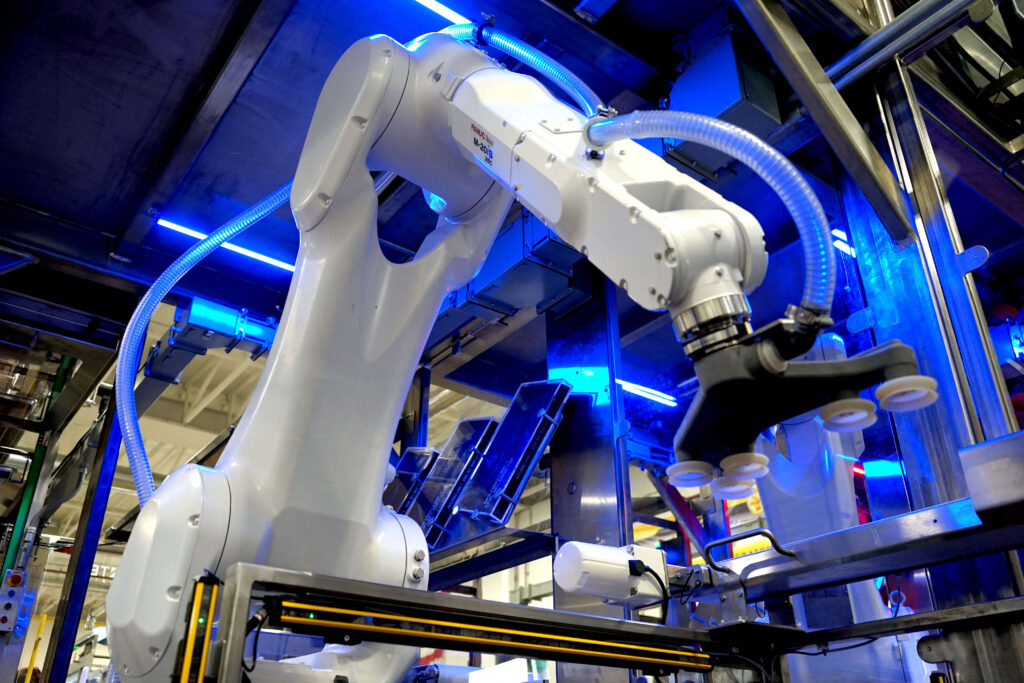
Processes that rely on conveyance or manual sorting are strong candidates for automation and robotics. It comes down to accuracy, speed, and safety. Our systems can help improve the way you pick up, transfer, and package your product at any stage of the process, all while focusing on clean design. 

Our industrial solutions in the food industry can’t be pulled from a catalog or found on the internet. They are designed specifically for your application, so every point in your production process is running as efficiently as possible while meeting all food safety standards. Processes like product assembly, carton loading, case packing, palletizing, and more can all be improved with a custom automated system.

Hidden Cost of Manual Processes:

Overtime pay, inconsistent output, higher injury rates, rework, and missed production targets rarely show up as a single line item, but they can quietly drain margins every day.

Benefits of Robotics and Automation in Food Manufacturing

  • Increased Productivity: Automation and robotics speed up those repetitive tasks and can run 24/7, meaning more output with less downtime.
  • Greater Consistency and Quality Control: Robots are more reliable. They reduce human error and variability, helping you produce uniform products faster and more accurately than a human ever could. 
  • Improved Worker Safety: Robots can take over dangerous tasks and repetitive motions to reduce workplace injuries. 
  • Better Food Safety and Hygiene: Automation limits human interaction and potential contamination, allowing you to meet all GMP regulations. 
  • Saves Money and Reduces Waste: The precision that automation and robotics bring lowers labor costs and material waste, reducing energy usage.
  • Custom Made For You: Each system is built for your specific application, so it integrates seamlessly with your existing processes and equipment.

Signs Your Food Plant Needs to Invest in Automation and Robotics

ProblemExplanation
Heavy reliance on manual, repetitive tasksIf employees are performing the same motions over and over, automation in food manufacturing can reduce fatigue, injuries, and labor strain.
Bottlenecks or inefficient production stepsWhen a current process feels slow, cumbersome, or overly complex, automation can simplify and streamline the workflow.
Safety concerns on the production floorRobots can handle hazardous, high-temperature, or high-risk tasks to improve workplace safety.
Need to increase throughput and cycle timesAutomation in food manufacturing allows you to produce more product in less time without sacrificing consistency.
Inconsistent quality or accuracy issuesAutomated systems deliver precise, repeatable results that reduce errors and product waste.
Desire for repeatable, scalable processesRobots ensure the same process is performed the same way every time, making it easier to scale production.

Project Highlight: Automated Label Applicator

DenTech integrated a new applicator into a customer’s existing line in just 12 weeks. Our solution maintained the current production rate while improving accuracy and flexibility through synchronized motion control and adjustable positioning. The automation eliminated manual steps and streamlined the customer’s labeling process.

See our label applicator at work.

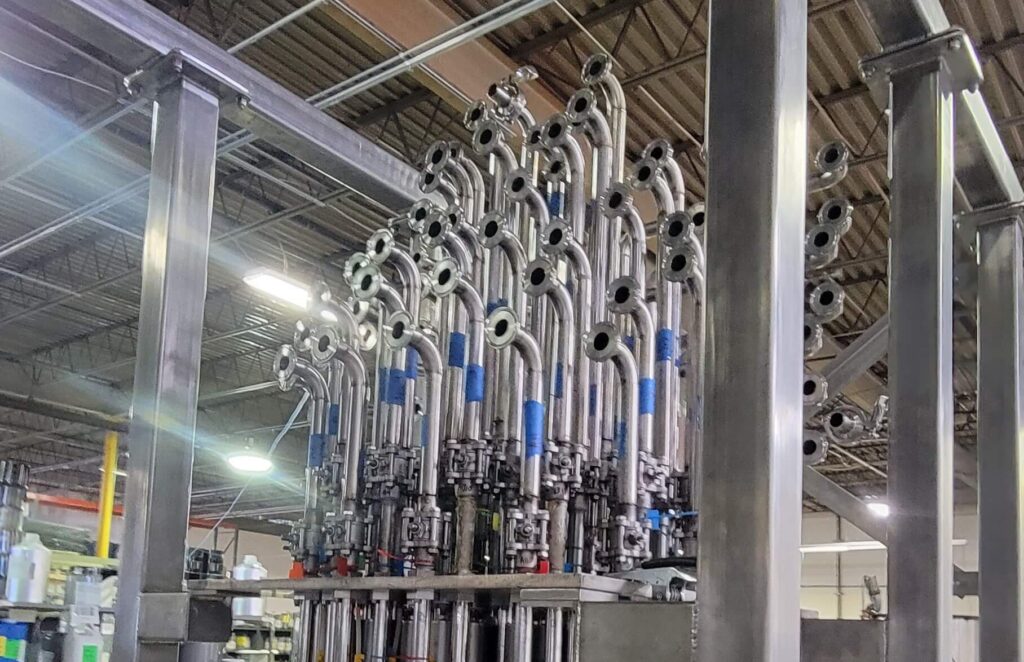
food grade process piping for a food manufacturer

2). Process Piping

Clean design is our top priority when building industrial solutions in the food industry, especially food-grade process piping. Moving your ingredients while maintaining cleanliness, quality, and temperature requires expertise and precision. When designing a system, we look at the type of product being conveyed, the piping system, the material, and the conditions of the room it’s in. Both the outside and inside of your industrial piping need to be sanitary and easy to clean. 

Our experts have worked in the food and beverage industry long enough to know the best type of piping system for your application, whether that’s jacketed, sanitary, stainless steel, PVC, and more. Our team doesn’t just design the system. DenTech’s certified welders and pipefitters install it correctly so you can meet all industry regulations.

Hidden Cost of Improper Process Piping:

Frequent leaks, extended sanitation time, product loss, unplanned downtime, premature corrosion, and increased risk of GMP non-compliance drive up operating costs over time.

Benefits of Food-Grade Process Piping

  • Ensures Safety and Quality of Food: Clean design provides a sanitary transfer of ingredients (whether that’s liquids, powders, or gases) in any plant environment.
  •  Improved Process Efficiency: Custom process piping helps you manage the flow of ingredients efficiently, with an uninterrupted transfer, which reduces leaks and downtime. 
  • Ensures Compliance: Properly designed process piping helps meet FDA and GMP requirements by using approved materials, sanitary welds, and clean-in-place (CIP) designs.
  • Easy to Clean: GMP requires fast sanitation cycles to keep your process clean. 
  • Built for Longevity: Our custom piping is not a temporary fix. These systems are built for long-term service life, reducing the need for frequent replacements or rework.
  • Custom Designed For You: In food plants, a “standard” piping system can become a liability. That’s why we design systems specifically for your product, processes, sanitation needs, and environment.

Signs You Need to Invest in Food-Grade Process Piping

ProblemExplanation
Recurring leaksLeaks caused by failing gaskets or poor welds are a clear warning sign that you need to upgrade your piping system.
Corrosion or other damageCorrosive damage indicates the piping material isn’t compatible with the product being conveyed. Properly specified piping protects your product, extends system life, and ensures safe operation.
Adding new equipment or processesExpanding your production line often requires new or upgraded process piping to seamlessly integrate new equipment with your existing system.
Non-compliant or poorly-installed pipingIf piping doesn’t meet industry or process specifications, it can create safety risks and inefficiencies.

Project Highlight: Process Piping and Dust Collection

DenTech helped a roofing manufacturer bring a new facility online by designing and installing critical process piping systems. With in-house expertise spanning piping, dust collection, and structural support, DenTech streamlined installation, reduced vendor coordination, and delivered a reliable, fully-integrated solution.

Industrial dust collector for a food manufacturer

3). Dust Collection and Explosion Protection

Dust collection isn’t solely a food and beverage issue, but it’s especially important in this industry where flour, sugar, spices, and other combustible powders are prevalent. Dust hazards in food production lines often come from processes like mixing and drum filling and emptying. You need an effective solution to keep workers safe and your plant compliant. 

Our team designs, installs, and maintains custom dust collection systems for the food and beverage industries. Maintaining a clean production environment is critical to both product quality and regulatory compliance. This is why industrial dust collection for food processing is so important. 

Hidden Cost of Poor Dust Control:

Excessive cleaning labor, lost product, higher insurance premiums, compliance risk, and unplanned downtime can cost more than the dust collector itself.

Benefits of Fire and Dust Hazard Control

  • Reduces Risk of an Explosion: When combustible dust is properly collected, it makes an explosion less likely and helps improve safety in your plant. 
  • Improves Compliance: Efficient dust collection limits compliance issues with food safety standards, so you don’t face fines or employee health problems. 
  • Limits Product Waste: An efficient system only collects dust, not your product or ingredients, reducing the amount of waste in your process. 
  • Saves You Money: Our custom systems are optimized to use as little air volume as possible, reducing energy usage, often resulting in smaller ducts, fans, and collectors. 

Signs You Need Industrial Dust Collection for Food Processing

Problem Explanation 
Fugitive dust Excess dust in the air, on your rafters, on process lines, and on other surfaces indicates you need a dust collection system in place.
Product contamination Dust can compromise product integrity, especially in food and beverage manufacturing, where clean processes and product quality is essential.
Difficulty meeting compliance standards Excess dust can put your facility at risk for OSHA, NFPA, or insurance compliance issues. 
Frequent equipment cleaning and downtimeDust accumulation leads to clogged equipment, unplanned maintenance, and production interruptions.

Project Highlight: Dust Collection and Explosion Protection

DenTech upgraded a confectionery manufacturer’s facility with a new dust collection system, explosion protection, and redesigned ductwork to safely handle combustible cornstarch dust. With custom controls and properly-routed piping, the solution improved safety, cleanliness, and efficiency.

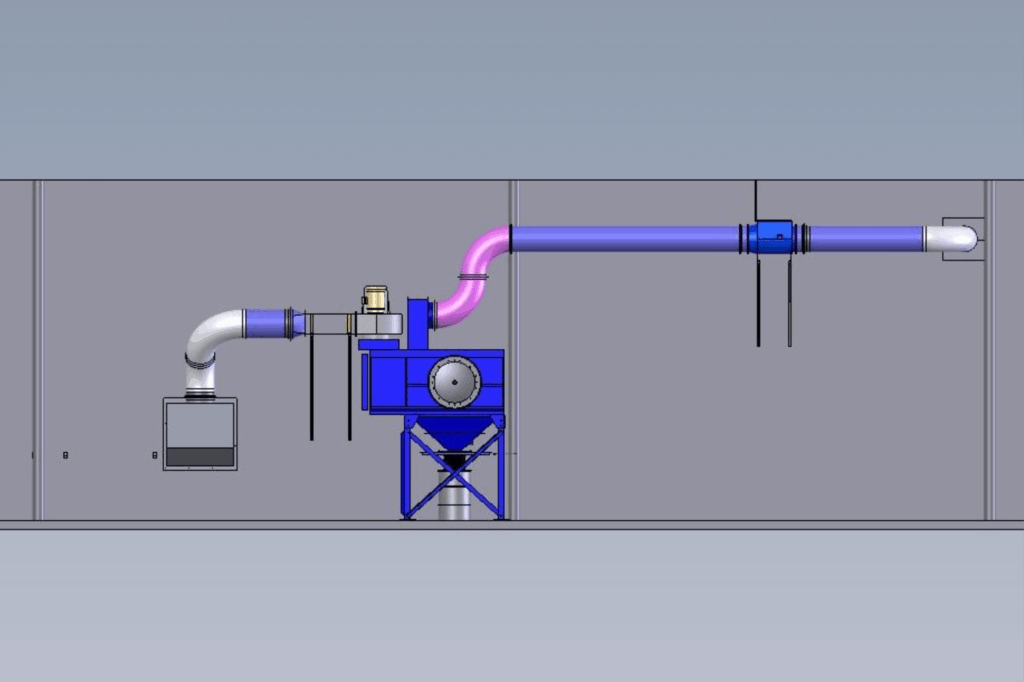
system design for a dust collector and explosion protection

Our System Design

Work With DenTech for Industrial Solutions in the Food Industry

Real cost savings in food manufacturing come from designing systems correctly the first time. With over 40 years of experience working in the food and beverage industries, we know the typical problems you face. And more importantly, we help you come up with a solution

Our industrial solutions in the food industry are designed to limit downtime. We’ve invested in the facilities and equipment that allow us to prebuild and test components ahead of time. This speeds up the installation process and limits disruptions to your workflow. 

We’ve also prioritized training and certifications. When our team enters your plant, you know we have the proper sanitary certifications for welding, safety, and beyond. We will follow regulations, maintain a safe and clean environment, and provide a quality solution that meets every expectation—all while limiting your downtime. 

This may seem like a lot to ask, but for us, that’s the standard. 

In addition to these industrial solutions in the food industry, we also offer a full suite of in-house services, from fabrication and machining to installation and maintenance. When you work with us, all you need is a single partner to handle the entire process. 

This means: 

  • Easier coordination 
  • Fewer vendors to manage 
  • Streamlined communication 
  • Flexibility in services that can change as you grow

In food manufacturing, the cheapest solution often isn’t the right one. The right solution is the one designed for your product and your process. That’s where real savings come from.

An effective dust collection system requires good components. Hoods, ductwork, filters, and everything in between need to work together to efficiently capture fumes and dust to keep your facility safe. Today we’re talking all about local exhaust hood systems—design considerations, custom fabrication, and why off-the-shelf options don’t always cut it.

The Basics of Dust Capture Hoods

Hoods are a crucial part of a dust collection system. They capture dust and fumes at their source, send the contaminated air through ductwork, and then deposit that into your collector. A well-designed hood captures this dust before it can spread. This reduces the potential for combustible dust explosions and improves workplace safety. 

Local exhaust hood systems are used in any process where dust, fumes, chemicals, and vapors are created. Open processes like welding and grinding and many processes in the food industry require hoods. Whether you’re dumping flour in a mixer or making paint, a hood is needed to prevent unhealthy elements from infiltrating your plant.  

Our VP of Sales, Mike Zook, has been engineering local exhaust hood systems for over 25 years. He says, “There are two things you need to be effective: containment and capture.” 

That’s where proper design comes in. DenTech can look at your entire system and surroundings, not just the hood, to make sure these two pieces are done effectively. 

Why Hood Design Matters

Safety

A poorly-designed hood can significantly impact safety in industrial settings. When dust accumulates outside the capture zone, it can affect both worker health and overall operational safety. 

Improper hood design can cause worker respiratory issues, along with skin and eye irritation. It can also create fire hazards. When dust gathers on the floor or is dispersed into the air in large quantities, this increases the potential for ignition sources in and around the collection system. Dust on working surfaces can cause employees to slip and fall. And lastly, dispersed dust can make its way into equipment, causing additional maintenance and potential breakdowns. 

However, a custom hood can include built-in spark mitigation and will pull dust out of your operators’ breathing zone—making them happier, healthier, and less exposed.

Compliance

An effective hood design is required to meet National Fire Protection Association (NFPA) standards for combustible dust and particulate solids. The new NFPA 660 standard outlines rules on explosion protection, air filtration, maintenance, hazard assessments, and training. If your facility doesn’t comply, you can face major OSHA fines and a potential shutdown. 

Cost

A well-designed local exhaust hood system reduces operational costs. By optimizing capture efficiency, your system requires less air volume to effectively collect dust and fumes. This often allows you to use smaller ducts, fans, and collectors, driving down capital and cost of ownership of the system. This results in a cleaner manufacturing environment, which leads to healthier employees and cleaner, higher quality products.

Are off-the-shelf hoods not working for you? Partner with us to design, build, and install a more efficient solution.

Design Considerations for Effective Local Exhaust Hood Systems

1). Style

Ventilation hoods are classified into two main categories: enclosing and exterior. Enclosing hoods either completely or partially contain the equipment/process that generates dust or fumes. In contrast, exterior hoods are positioned next to the emission source. 

Enclosing Hoods

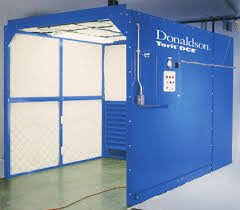
Blue Donaldson booth hood

Booth Hoods: enclosing hood that contains dust from your system, using either solid walls or plastic curtains around your equipment.

Exterior Hoods

Custom canopy hood in a plant

Canopy Hoods: large, broad capture hoods that are ideal for hot processes like welding to collect rising heat and fumes. 

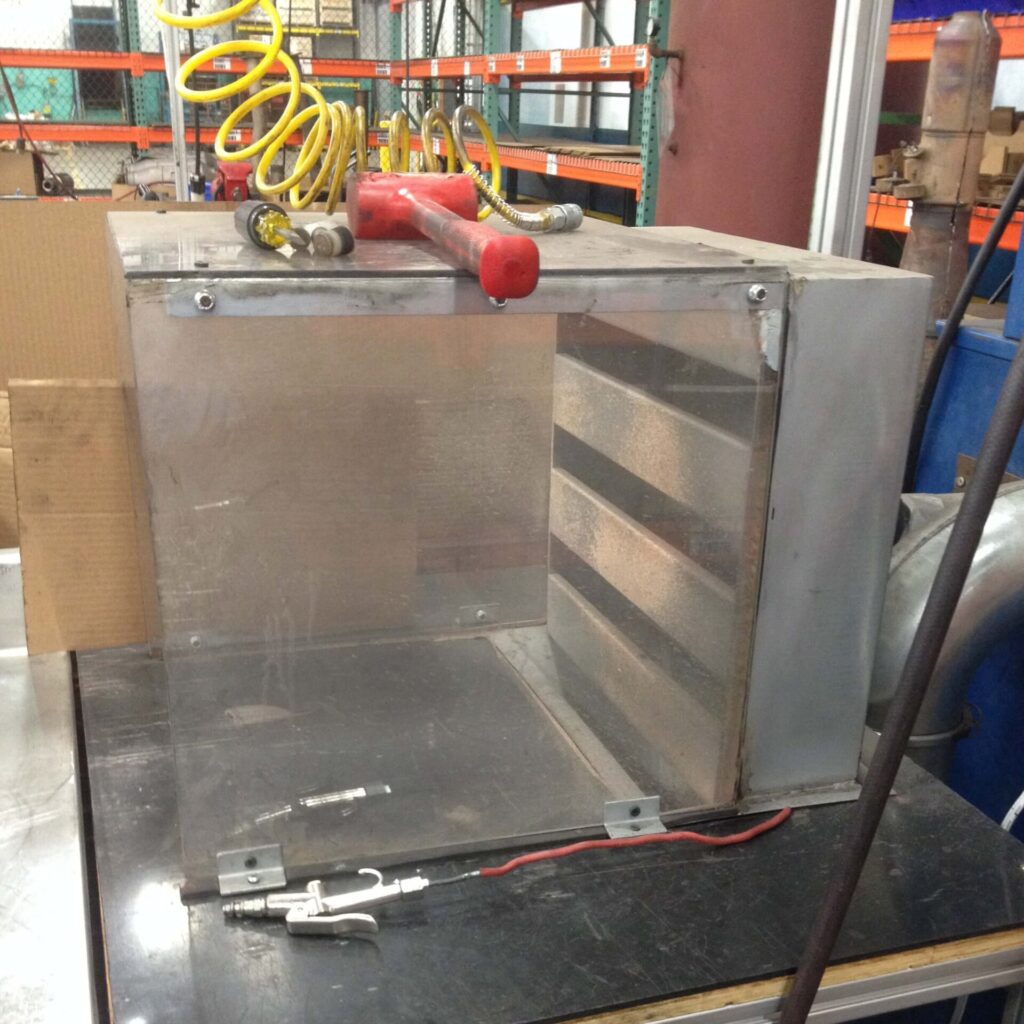
Backdraft hood on a work table

Backdraft Hoods: good for open-top mixers and material loading, these hoods create a horizontal airflow and pull dust across the top of a work surface.

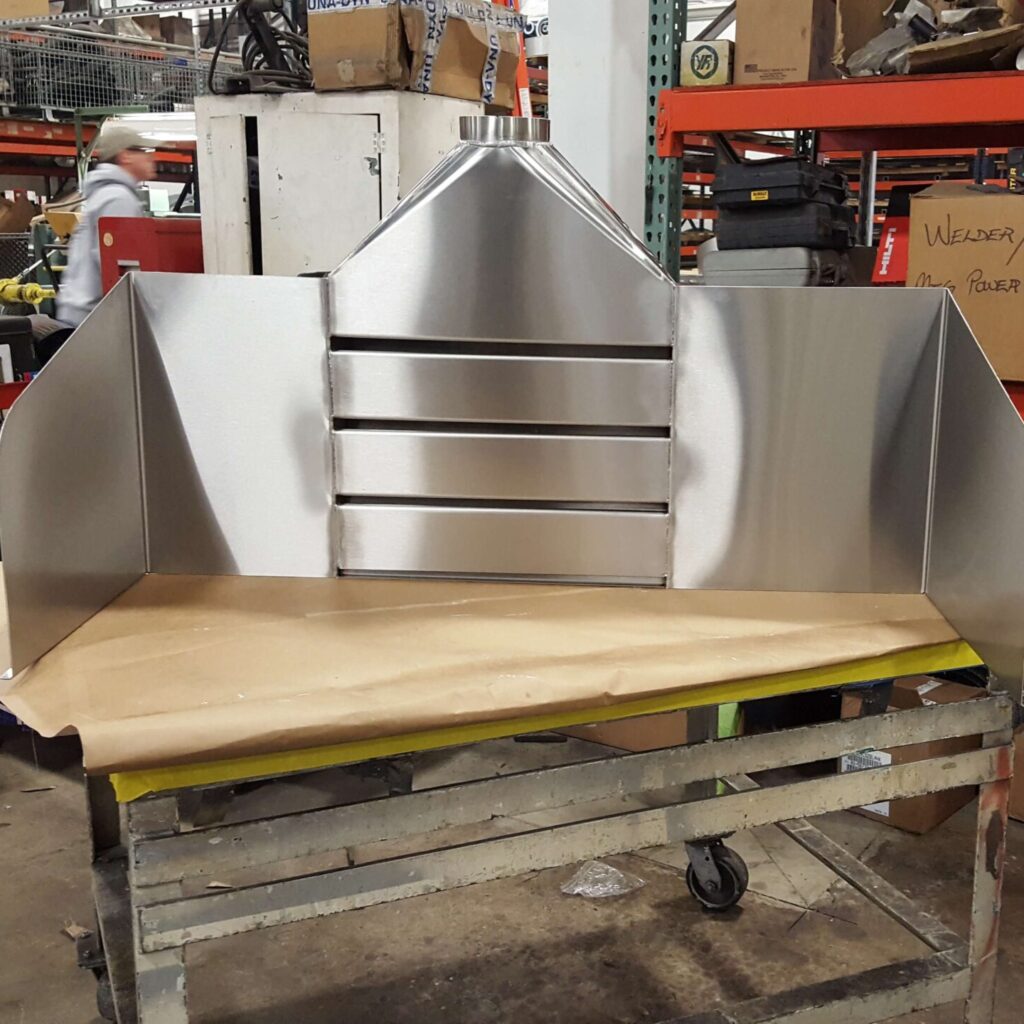
Slotted hood on a work table

Slotted Hoods: have a more focused capture and airflow, making them an energy-efficient option. 

Custom barrel hood

Barrel Hoods: used during drum or barrel filling and emptying, these seamlessly connect to your ductwork.

In addition to these, our team can fabricate custom hoods for any process in the exact size and shape you need. Just give us a call

2). Positioning

The style is just the start. Where you place the hood is also crucial for effective dust capture. You don’t want fumes pulled across your operators’ breathing zone, so always place your hood as close to the source as possible without getting in the way of your workers or equipment.

The closer you get to the dust generation point, the less air you need to support the system (and the more efficiently it runs). But we know that’s not always practical. Our team is an expert at finding a happy medium where it’s close enough to effectively collect dust, but doesn’t get in the way of your employees or good product. For example, we design and place hoods so they only pull respirable dust in, not actual product. 

We also take into account the natural air patterns of the particles and mechanical influences that may impact the dust being generated. For a hot process, we place the hood above to capture rising fumes. Other processes, like grinding, may need hoods to the side to capture dust and sparks as they fly off. 

3). Airflow

Hood airflow optimization is another major piece in effectively capturing dust and preventing it from settling in your hood or ductwork. There is a particular capture velocity and plenum speed needed to keep the dust moving into the collector. 

The goal is to use as little airflow as possible, but finding that perfect balance requires expertise. If the capture velocity is too low, it allows dust to escape or build up in your ducting. But if your capture velocity is too strong, you’ll experience heavier dust loading, which wears out your filters faster

Each system and dust type is different. Our team calculates the required airflow based on the size and shape of your hood, how close it’s placed to the source, the size of the work area, and the type of dust. Lead dust, for example, requires a higher capture velocity than weld fumes.

With 40 years of experience under our belts, our team members are experts in hood airflow optimization and design, so we can engineer a solution that works even better than you expected. 

4). Material

Depending on the application, we select from a variety of materials for your dust capture hood. Popular options include steel, aluminum, and PVC. Many food and pharma plants use stainless steel, while other fumes and vapors can be handled with PVC. Our engineers know the intricacies of your industry and process to pick the best material for your application. 

5). Flash Fire Protection

To reduce the risk of a flash fire, we make sure dust isn’t just sitting in your ductwork. We do this by engineering custom hoods, built around your specific process. For example, if there are sparks in the airstream, we’ll design a method to keep them out of your hood and ductwork so they don’t create a fire hazard downstream. We may add isolation valves or explosion vents in the ducting and collector for even greater protection. 

Spark and explosion mitigation are essential in facilities dealing with combustible dust. No matter what we’re fabricating, safety is a main priority on every local exhaust hood system we design. 

6). Integration With Current Processes

In our experience, the hardest part of integrating with your process is getting the hood to fit. We don’t want it to interfere with your operators. 

That’s why working with a team like DenTech is so important. We look at more than the hood itself, but also the mechanical influences around it when we design your system. Is there room? Is there enough air for the hood to work correctly? And is it easy for your employees to integrate into their process? Because if the operators aren’t using it, it defeats the purpose.

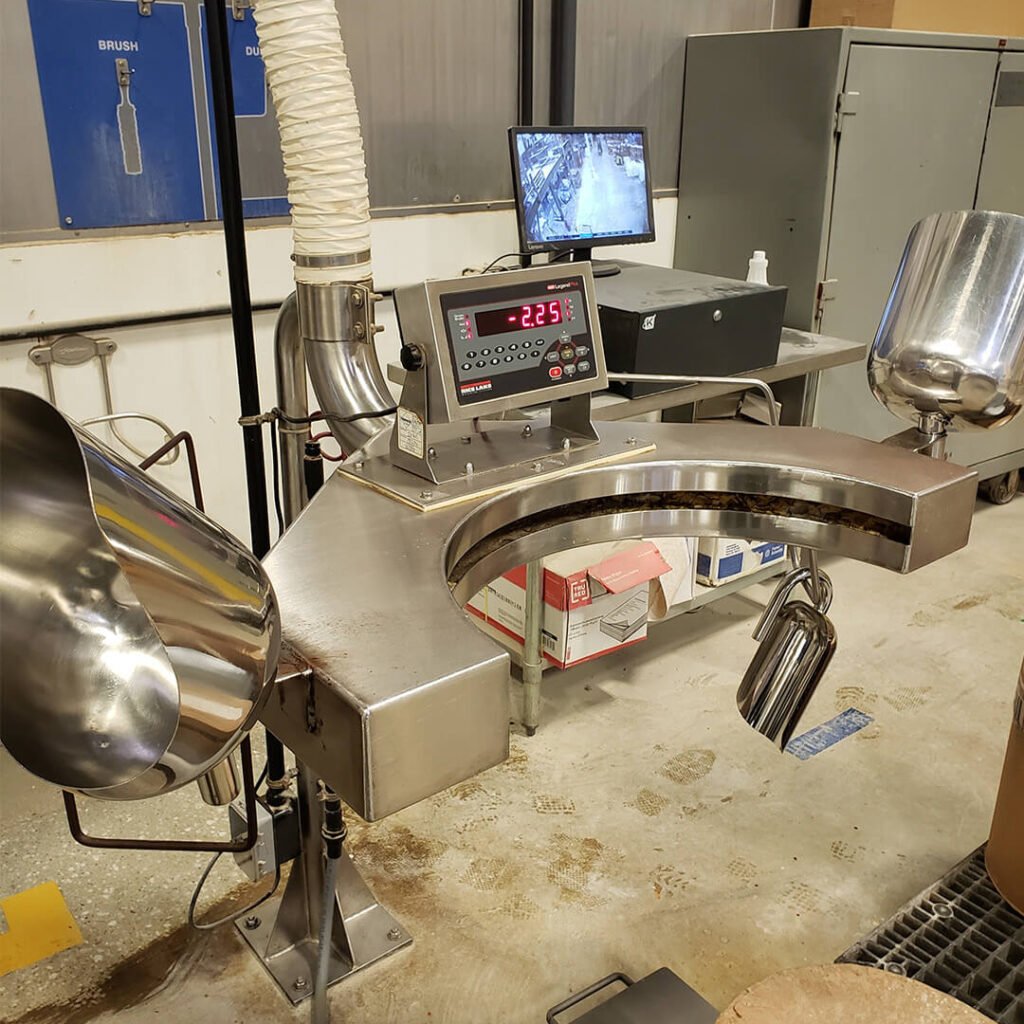
Custom capture hood on a work table

Benefits of Custom Hood Fabrication

Built For Your Exact Application

No two dust sources behave the same, and with custom capture hood fabrication, we can build exactly what you need. We’ll design the system specific to your machines, workstations, production flow, and the type of hazard we are collecting. And since it’s designed specifically for you, you know it’s going to work.

Maybe you have equipment, like a fan, that you can’t move. Don’t worry—we can work around that. Maybe you need better shielding around your hood to create a confined area for the dust. That’s not a problem.

We can find the right solution for every process and make sure it works as efficiently as possible.

Project Highlight: Cannistraro

Cannistraro came to us with a system that was too small and not installed correctly, causing safety hazards in their facility. Our team designed and fabricated two hoods for their orbital plasma cutter to capture fumes on either end. Plus, we provided ductwork, AyrDyne electrical control panels, a dust collector, fan, and spark cooler.

Watch the video below to see our custom hoods in action.

Better Performance

The second benefit of custom capture hood fabrication is they are more efficient. They reduce required airflow and lower your operating costs, meaning less energy use, longer filter life, and improved safety of your entire plant. Off-the-shelf hoods are always an option, but they may not be the right hood for what you need.

Most often, we see customers in the food, welding, chemical, and woodworking industries come to us for a custom solution.

Project Highlight: Rx Green Technologies

We partnered with Rx Green Technologies to fabricate custom hoods and ducting to collect dust at a bagging station and transfer points. A week after our work began, they asked us to work on the dust collection in a second facility as well. 

Watch the before and after video to see the difference a quality dust collection system makes.

Turnkey Solutions

With DenTech, we’re not just delivering a piece of metal, but a full solution beyond just the hood. We look at your whole system—including your ductwork, collector, and controls—to make sure you have the right pieces to achieve your desired results. 

We offer in-house design and fabrication, meaning we design, build, integrate, install, and test your local exhaust hood systems.  

We have 21,600 square feet of production space. And with welding certifications in SMAW, GTAW, and FCAW, you can trust us to make a hood that’s higher quality and more effective than anything you can buy off the shelf. With every service under one roof, our teams know exactly how each piece fits together in your entire system.

Project Highlight: Recycling Facility

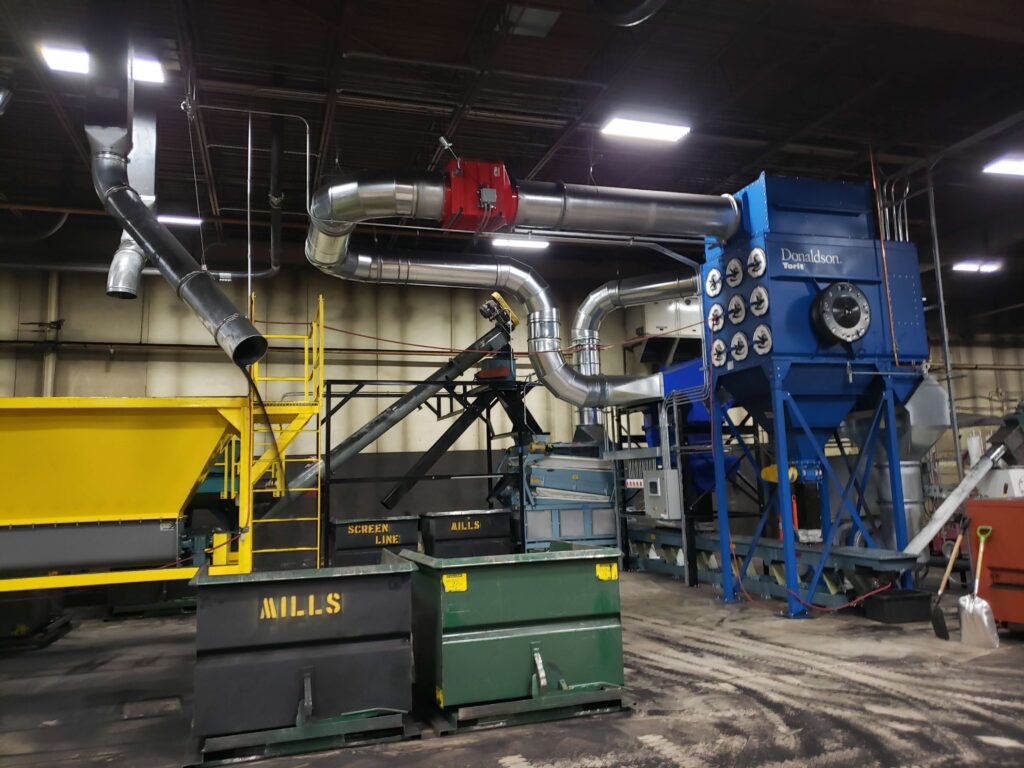
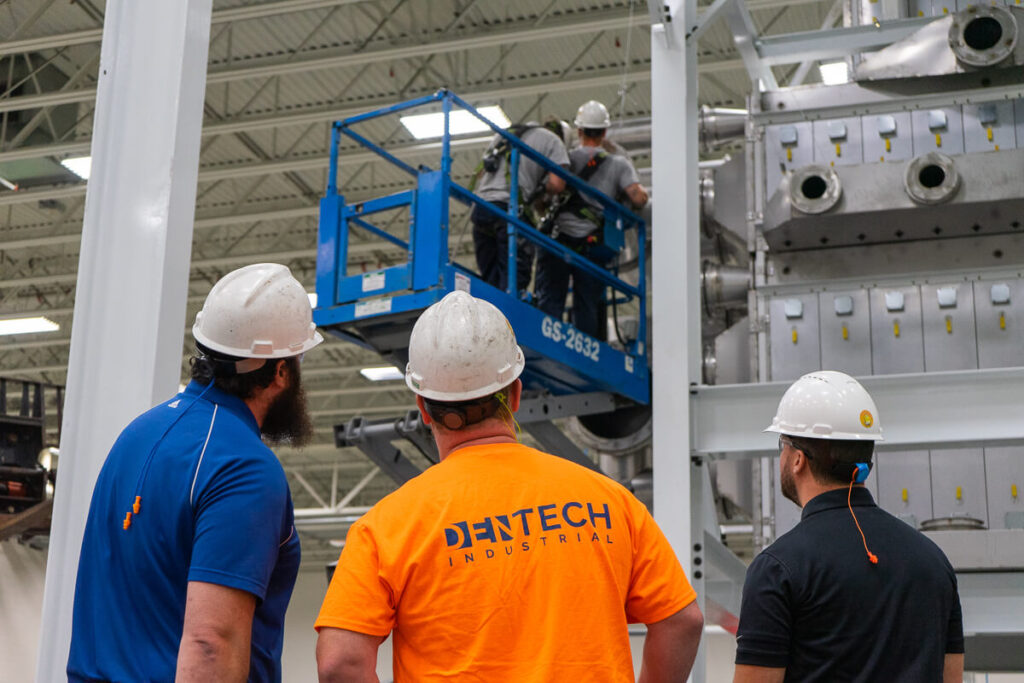
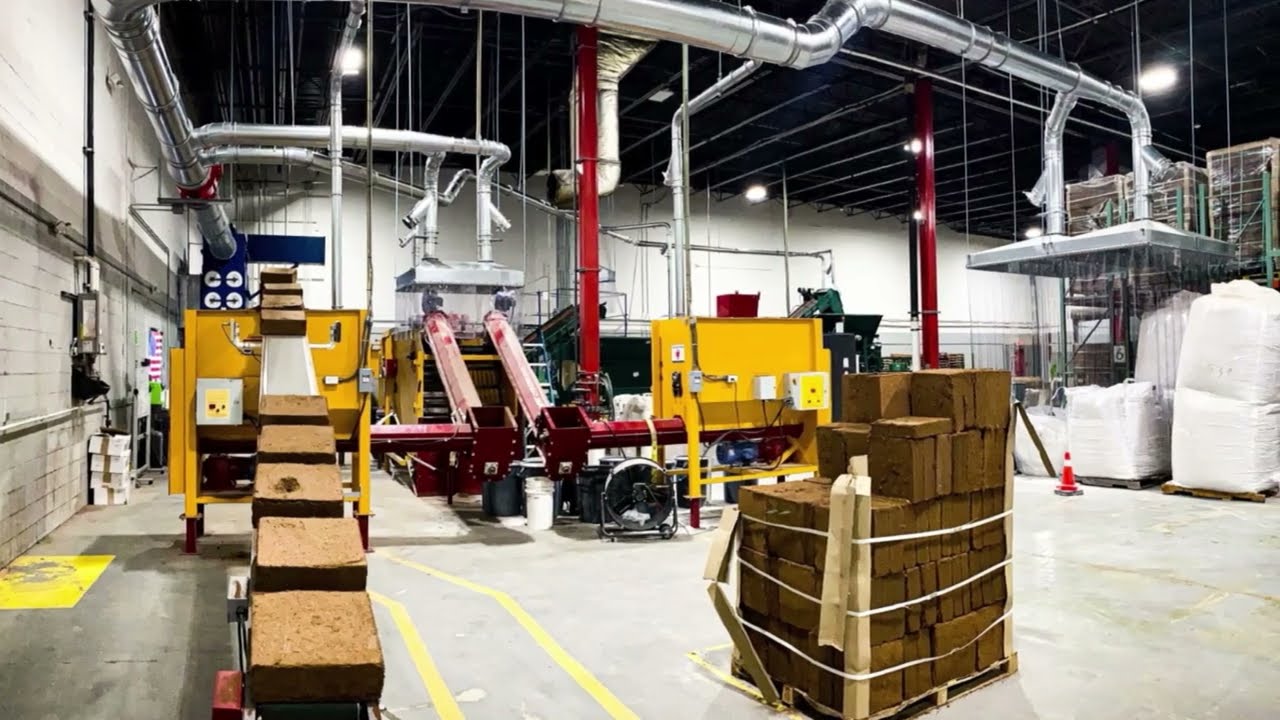
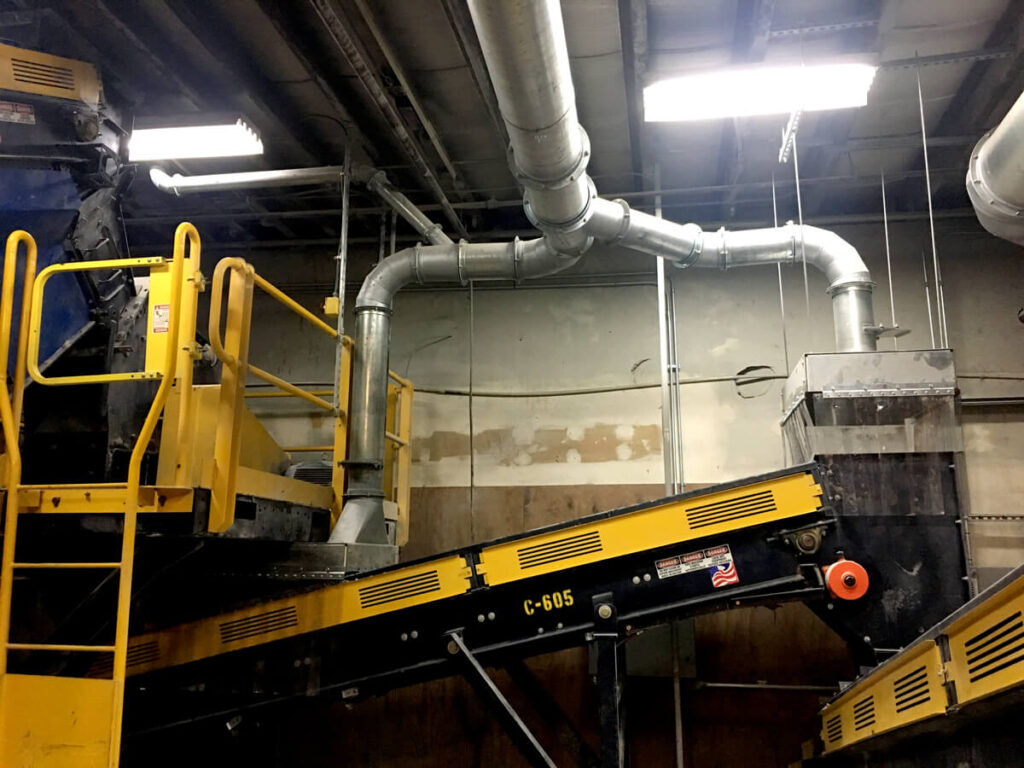
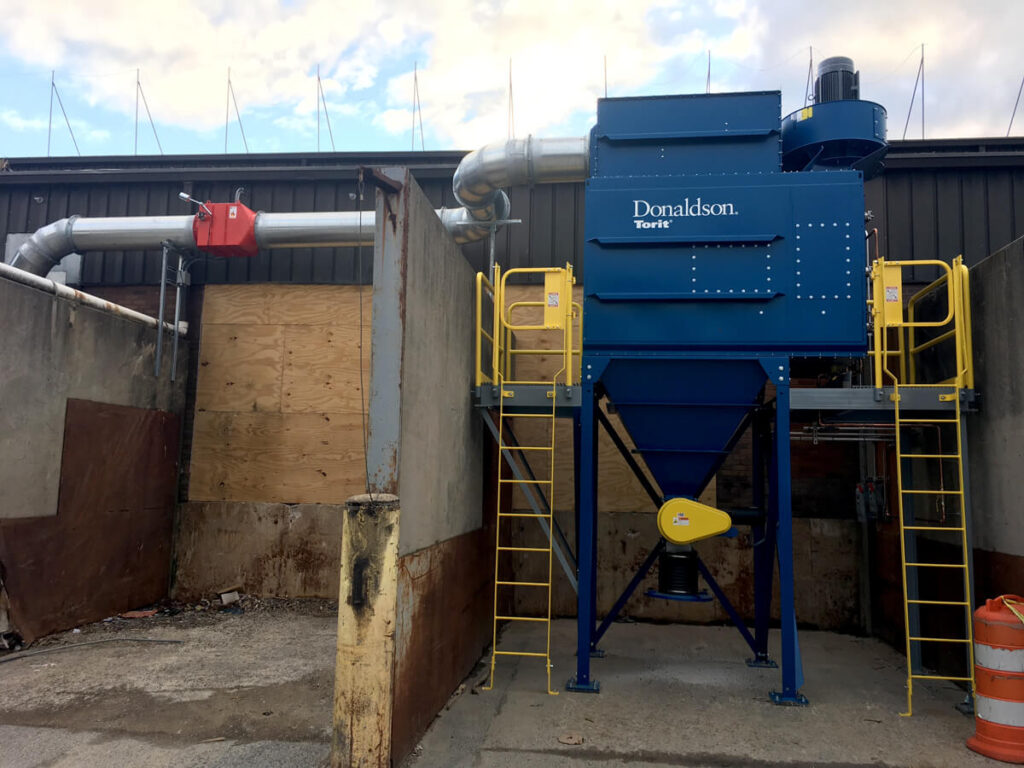
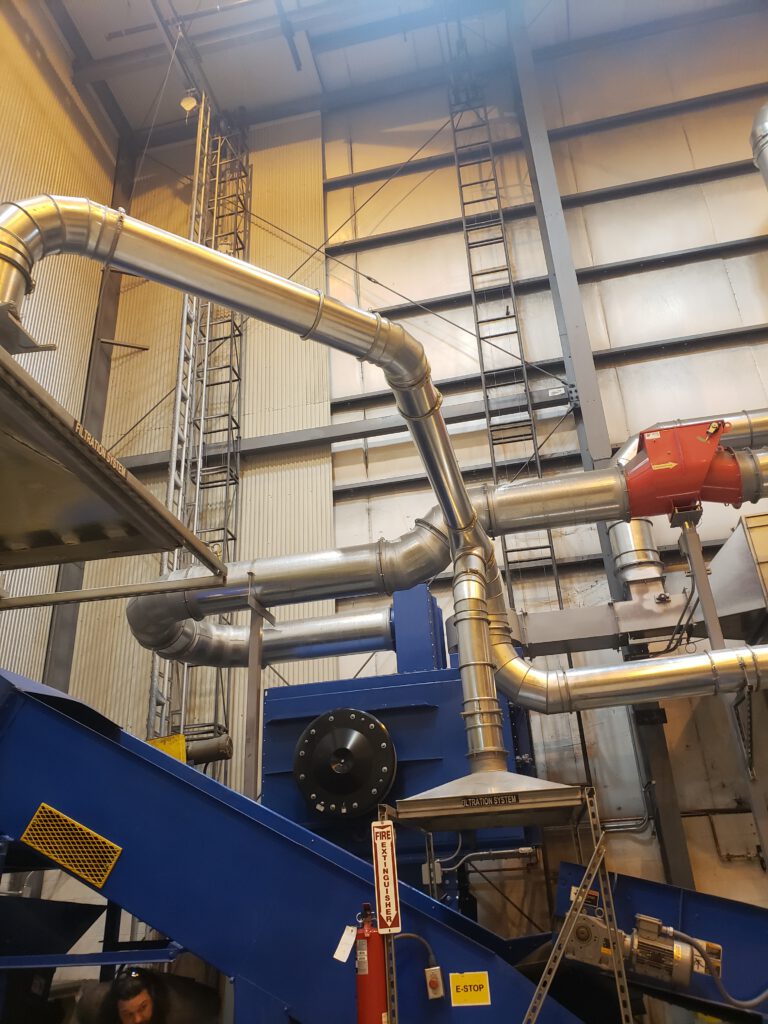
DenTech designed an entire dust collection system for a recycling facility’s glass crushing room. We fabricated the collector’s steel platforms, designed and wired an AyrDyne electrical control panel, and fabricated custom hoods, enclosures, hangers, ductwork, and supports. After installation, two of our technicians stayed onsite for system start-up, balancing, and operator training.

Check out the photos below to see the pieces of our turnkey solution come together.

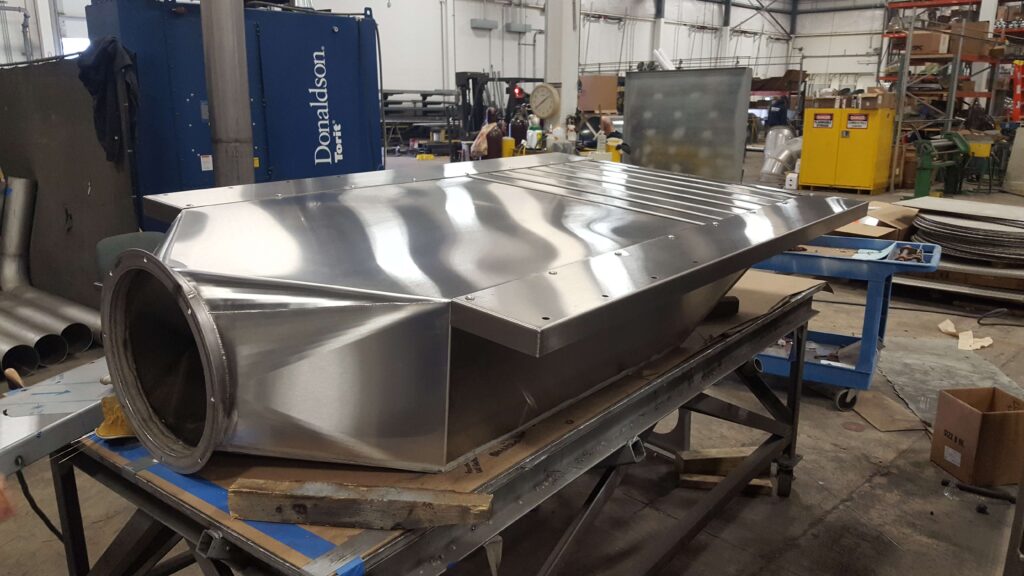
Custom local exhaust hood system in a plant
Custom Hoods
A blue Donaldson dust collector outside a plant
Dust Collector

Need a Custom Hood? Work With DenTech

Zook says, “Most of the time, when people come to us with a dust problem, it’s because they don’t have a correctly designed hood.”

  • Struggling to meet NFPA dust collection standards? 
  • Is an inefficient hood design leading to safety risks? 
  • Unable to find the right hood airflow optimization? 
  • Need help preventing combustible dust explosions? 

Whatever your issue, we can help. After 40 years of custom fabrication, we know the signs of improper hood design. Most importantly, we know how to apply this knowledge to create a custom solution that keeps your employees safe, your workspace clean, and your operating costs as low as possible.

No hood is too big or too small. Contact us for a custom dust collection system today.

Your dust collector is only as good as its filters. If you care about product quality, employee exposure, and plant cleanliness, then you need to understand the proper maintenance and replacement frequency for your filters. Keep reading for signs your dust collector filters need to be changed, common replacement mistakes, and tips on improving filter life.

Ready to buy?

How Long Do Dust Collector Filters Last?

Unfortunately, there isn’t a quick and simple answer to this question. The life of your filters depends on several factors:

  • The type of dust you are collecting
  • The amount of dust your process generates (dust loading)
  • The type of collector and filter media you have

Your filter usage determines how often you need to change them. This frequency could also change between seasons, as humidity and temperature can impact filter performance. But after you run your system for a year and notice patterns, you can start to build a customized dust filter change schedule for your facility.

Signs Your Filters Need to be Replaced

At the beginning of their life, filters can have an efficiency of more than 99%. Watch for these signs to know if you need a dust collector filter replacement:

  1. Visible dust in the air
  2. Visible dust on the clean air side of the system
  3. Visible damage on the filter (tears, holes, etc.)
  4. Increase in differential pressure, or DP (as seen on your pressure differential gauge)
  5. Decrease in airflow from the system 

Do not replace your filters just because they look dirty. In fact, they are supposed to look dirty! As particles pass through, it will build up on filters and form a dust cake. This is a sign they are working and actually helps facilitate filtration.

Not sure if your dust collector filters need to be replaced? Contact DenTech.

Monitoring Filtering Conditions

You should monitor filter conditions to ensure the dust collector is working at its highest efficiency. Filter conditions are determined by differential pressure (Delta P). Delta P measures the difference in pressure between the clean and dirty side of your filters, in units of inches of water column (inWC). Typically, the scale is zero to six inches, but that may vary depending on system design. 

Some states have air permits that dictate the operating range of differential pressure. But in general, here’s a good rule of thumb: 

  • When you hit the four-inch mark: start thinking about buying new filters
  • When you hit the five-inch mark: start planning a shutdown to change them
  • When you hit the six-inch mark: change the filters because they are now affecting airflow

You can monitor dust collector filter performance using analog gauges (magnehelic or photohelic) or automated systems like AyrDyne electrical control panels. Changes in Delta P are signs of physical changes in the filters. A gradual increase in pressure is normal as dust builds up. But a sudden spike or drop is a sign there is an issue.

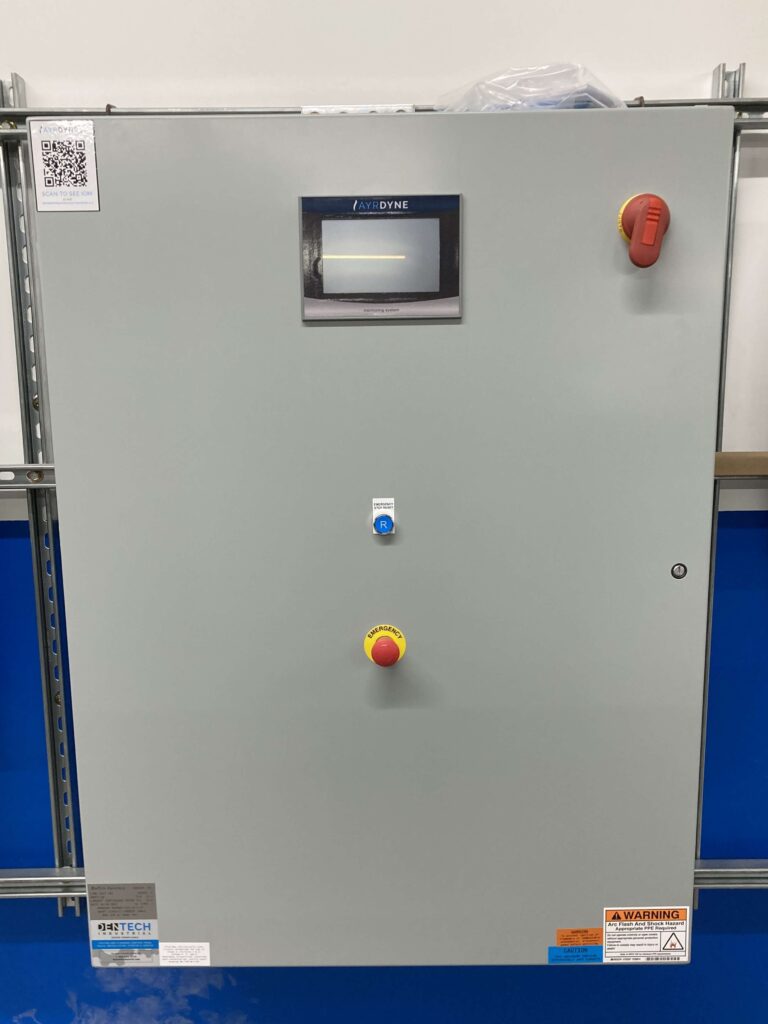
That’s where AyrDyne comes in handy. It provides a visual indication of how your system is operating, using green, yellow, and red indicators. At a glance, you know if you need to make adjustments and the status of your filter life.

AyrDyne filter monitoring panel closed
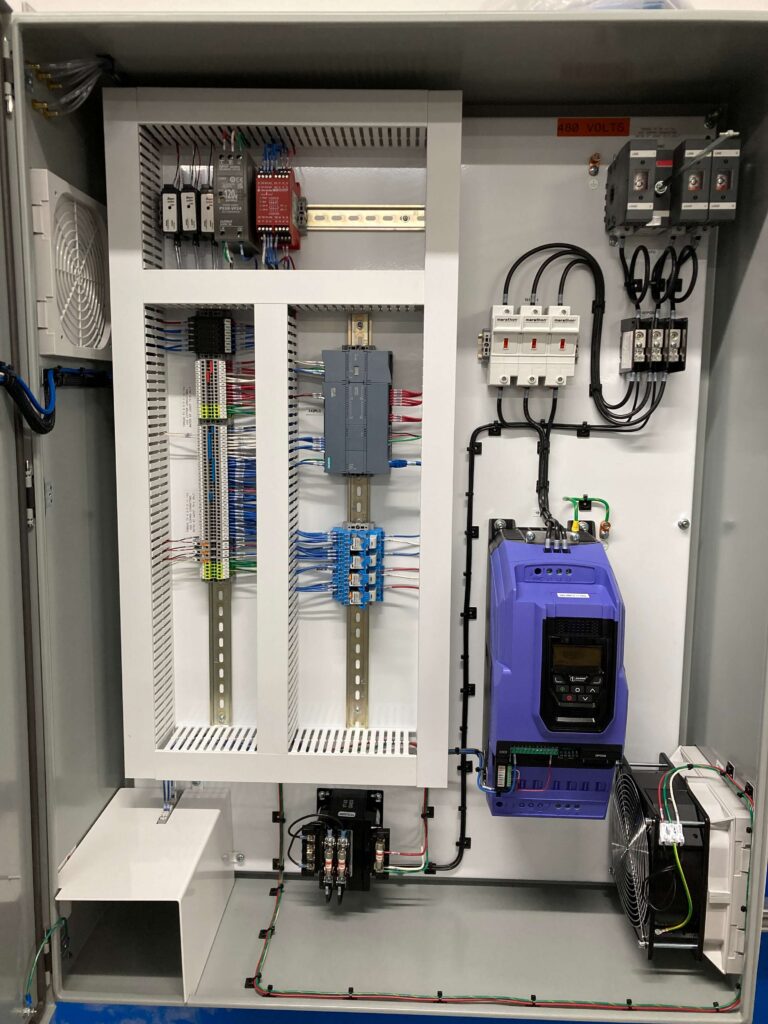
AyrDyne filter monitoring panel open showing the interior

Benefits of AyrDyne

Our AyrDyne filter monitoring system consolidates all readings and simplifies where you get your data, eliminating the need for multiple gauges. 

You can see if your filters spiked suddenly or if there was a gradual increase in pressure. It provides information on the condition of your collector and self-adjusts the cleaning range so you’re always operating as efficiently as possible. This reduces compressed air usage, saving you money. You can also set reminders and alarms to change your filters at a certain frequency. 

Lastly, with AyrDyne filter monitoring, there is a removable memory drive that you can easily download for air permit reports.

Dust Collector Filter Replacement Tips

Changing a filter seems easy… until you do it wrong. Filters are expensive, downtime is costly, and making a mistake can have a serious impact on the output and safety of your facility.

Here are some common mistakes we see operators make when changing filters on their own: 

  • Improper handling of new filters: New dust collector filters should be handled with care to ensure they are not damaged before installation.
  • Backwards installation: There’s a specific way to install them, and many people accidentally put them in backwards. Filters will not seal properly when installed in the wrong orientation, causing air leaks and dust to bypass the filters.
  • Not understanding the cleaning system: As filters get dirty, you may adjust your pulse setting range to correctly clean your filters and optimize compressed air usage. These settings need to be reset when new filters are installed to ensure proper system operation.
  • Not planning for supply chain delays: Don’t wait to order replacements until you need them, as this can cause unexpected downtime if there are product shortages or slow delivery times.

Be ready for a replacement at a moment’s notice with a set of back-up filters.

Filter replacement is a tedious task. The time it takes depends on the size of your collector, but an average 16- or 24-cartridge collector takes about a day for a full change out. To make the most of your time, here are our tips for dust collector filter replacement: 

  1. Pulse the cleaning system before removing the filters: This gets loose dust off before opening it. 
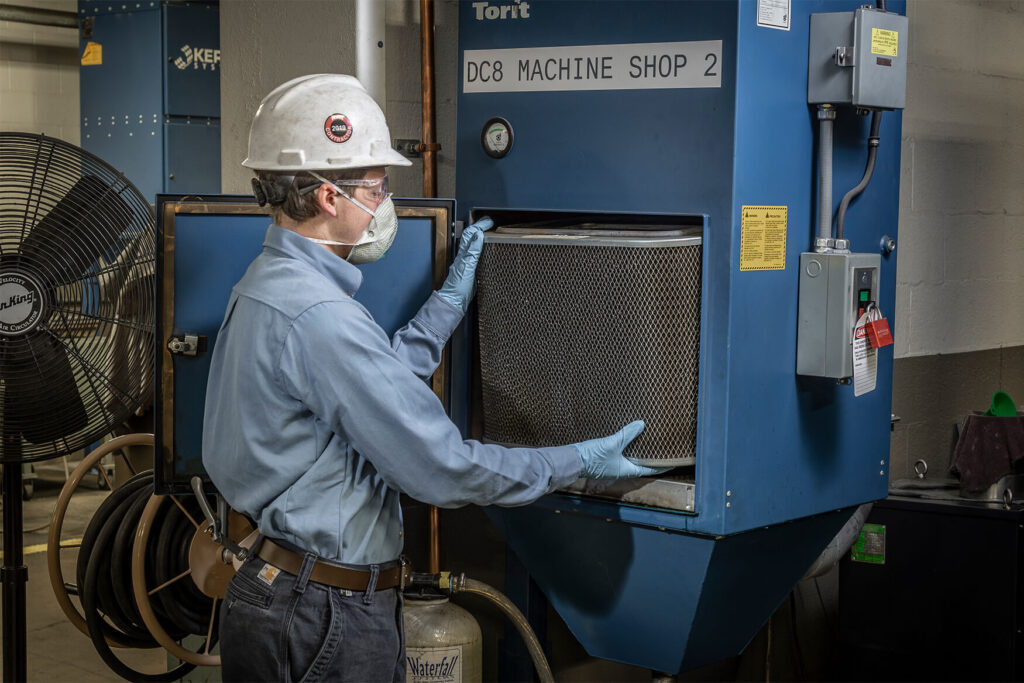
  2. Be prepared for that initial opening of the collector: The worst part of this process is getting a dust shower as you pull used filters out over your head. Be prepared to get dirty. 
  3. Check other parts of the collector while you’re inside: Look at all gaskets, diaphragm valves, and the condition of the collector itself, checking for rust, holes, and more. 
  4. Replace all cartridges at once: This ensures consistent dust collector performance and maintains proper airflow. 

The process itself is time-consuming. On replacement day, our team will lay down tarps, isolate the area, go through the safety checklist, remove filters and bag them to contain the dust, put new filters in, and finally seal up the old cartridges.

When in doubt, we recommend working with a professional team to ensure the installation is done correctly the first time. At DenTech, we can work with all makes and models of dust collectors, including popular brands like Donaldson, Farr, Imperial, RoboVent, and MAC. If you need a new collector, replacement filters, or help with maintenance, we’re the team to call.

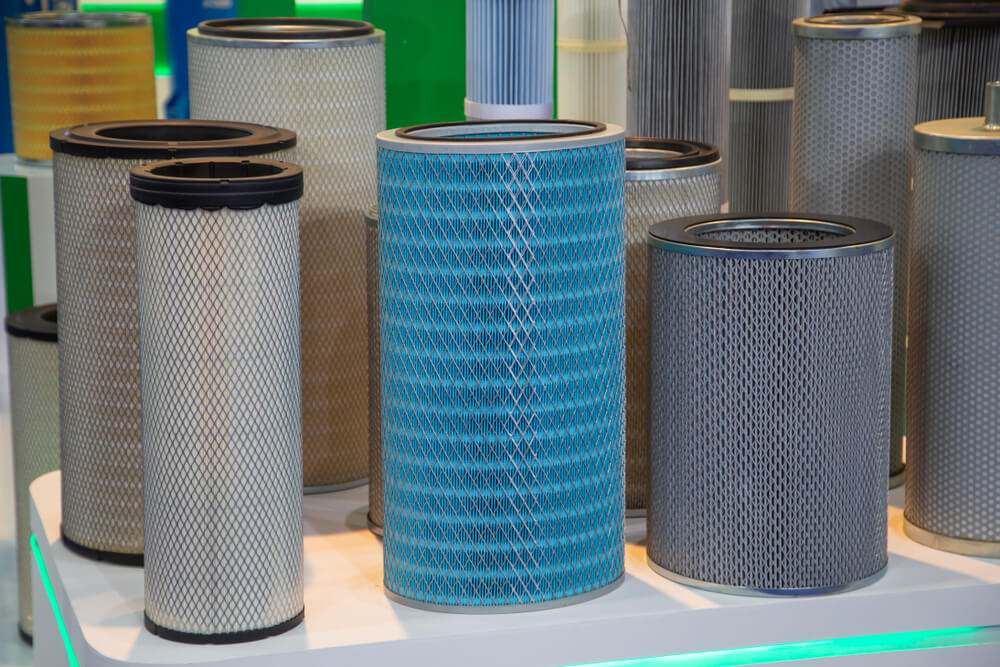
Dust collector filters of various sizes and colors on a table

Extending the Life of Your Dust Collector Filters

Properly maintaining your dust collector filters is crucial to managing dust efficiently. If you don’t, it will require more energy to run your equipment, your filter life will shorten, you’ll spend more money, and you’ll risk the health and safety of your employees. Here are our top four tips to improve the life of your filters.

1). Don’t Manually Clean Filters

While you may be tempted to manually clean filters to help extend their use, we don’t recommend that. It can actually end up damaging your filter. Instead, rely on the automated cleaning system in your machine for consistent dust collection performance. 

Many dust collectors use a pulse-jet cleaning system. The pressure gauge sends a signal to activate the diaphragm valves, which shoot a pulse of air to knock dust cake off the filters. This pulse goes off for one millisecond every ten seconds while the cleaning system is engaged. You can set this pulse to activate at a certain pressure, and change that activation point as dust builds up. 

2). Use the Correct Air Pressure

Make sure you’re using the correct compressed air pressure for cleaning (usually between 60 and 100 PSI). Too low, and it won’t clean the filter enough. Too high and your filters and diaphragms could be damaged by the air. Always follow manufacturer recommendations for compressed air settings and make sure it’s oil- and water-free. And if you have multiple pieces of equipment running at the same time, ensure your air supply system can deliver enough compressed air to meet the needs of each one.

3). Check Your Valves

If your cleaning system doesn’t work properly, the life of your dust collector filters will shorten drastically. Check your diaphragm valves yearly (and whenever you replace filters). There are features built into AyrDyne to help ensure the cleaning system is working, but the experts on our team can tell just by the sound if a collector is pulsing correctly.

4). Rely on Differential Pressure Gauges

Monitor your gauges—analog or digital—to determine if your filters are working. There’s no need to open your collector and inspect the filters unless you suspect the gauge is incorrect. Make it a habit to frequently check your differential pressure gauge to avoid overloading or over-cleaning the collector.

DenTechn technician replacing dust collector filters

Need More Help? Contact DenTech

Our sales team at DenTech brings over 100 years of combined experience in dust collection and industrial solutions. We know exactly what questions to ask when we’re designing and installing a system—questions about loading, temperature, processes, and your work environment.

Plus, we are familiar with the hazards of different types of dust exposure. We work to ensure your employees have the best (and safest) work environment. But it doesn’t stop at safety.

At the end of the day, our goal is to design a system that works even better than you expect it to. To us, dust collection isn’t just a machine in the corner of the room. It impacts your entire plant, your employees health and safety, your operations, and even your bottom line. And proper air filtration starts with understanding dust collector filter replacement.

Don’t let filter replacement become an afterthought. Contact our team to improve your dust collection.

Dust collection systems play an important part in minimizing dust exposure and contributing to a safe environment for employees. Dust collection systems offer many benefits, including:

  • Protecting employees from pollutants in the workplace
  • Helping facilities meet air quality standards and government regulations
  • Reducing health, safety, and insurance costs
  • Increasing cleanliness in the facility
  • Decreasing operational housekeeping costs

Equipment in a dust collection system must be sized properly for the system to work efficiently. Here’s a guide on how to select the proper dust collector for your facility’s needs.

How a dust collector works

Dirty air enters the dust collector and passes through filter media. Dust collects on the outside of the filter. Clean air passes through the filter and out to the fan. Then clean air might be taken outside the facility or conveyed back into the facility.

Filters are cleaned by shooting compressed air through the filter to loosen dust off the filter media. Dust falls down into a hopper below the filters.

That’s the basic rundown of how a dust collector operates. But how do you choose the right collector for your facility?

How to size a dust collector

The size of the dust collector is one of the most important considerations in air quality system design. An appropriately sized dust collector is determined by the application and particulate volumes.

Three important elements in sizing a dust collector are cubic feet per minute, area of filter media, and air-to-media ratio.

1. Cubic feet per minute

Cubic feet per minute (CFM) measures how much air the dust collector can move each minute. CFM requirements are determined by the size of the enclosure that must be cleaned and the volume of dust produced.

Generally, source capture methods require lower CFM compared to ambient air capture methods. This is because ambient air capture must turn over air for the entire facility.

The speed at which particulates are produced matters, too. High-production facilities that generate large volumes of fume or dust will need to turn the air over faster than facilities that generate relatively fewer particulates.

A dust collector with higher CFM requires larger fans and motors, which results in higher upfront costs and higher energy costs over the life of the machine.

2. Area of filter media

Area of filter media is the total filter media in the dust collector, measured in square feet. The higher the CFM and the more particulates generated in the facility, the more air filtration media will be needed.

3. Air-to-media ratio

Air-to-media ratio (also called filter velocity) is the amount of air going through each square foot of filter media each minute. To calculate this, divide the amount of airflow (CFM) by the amount of filter media in the dust collector. For example, a dust collector with airflow of 4,000 CFM and 2,000 square feet of filter media has an air-to-media ratio of 2:1 (4,000 divided by 2,000).

Generally, applications that produce large volumes of particulates require more filter media compared to applications that produce fewer particulates. The more particulates in each cubic foot of air coming through the collector, the lower the air-to-media ratio will need to be. Particulates are more concentrated in source capture systems, so they will usually require a lower air-to-media ratio than ambient systems.

Why is the right air-to-media ratio important?

If you have more filter media than is really needed, costs for the dust collector may be higher than needed. But cutting back isn’t the way to go, either. Having less filter media than is needed can have serious adverse impacts on filter life, equipment life, and the overall efficiency of your system.

Interested in a similar project?

Let’s talk about your application.

Our team is here to help you plan, select, and implement the right solution.

Additional considerations

A few more details about the facility and production process may affect dust collector selection:

  • Continuous vs. intermittent duty – Does the dust collector need to run continuously during operating hours or only intermittently?
  • Filter life – Does the facility have certain needs for filter life length?
  • Airstream conditions – Is the airstream stable or does it change?

After we have these details and calculations for CFM, area of filter media, and air-to-media ratio, we can determine the size of the collector and how many filters the system needs to maintain the ratio.

Partnering with an expert makes selecting dust collectors much easier. A DenTech Industrial dust collection specialist can help you determine the optimal air-to-media ratio for your application type, the size and volume of dust you produce, and your facility’s characteristics. Getting the air-to-media ratio right will ensure that your air quality system delivers the performance you expect while minimizing your equipment and operating costs.

Our team is here to help!

Contact us with any questions about dust collection systems. Our experts can help you determine the appropriate equipment for your facility.

Dust collection and explosion protection for a confectionery manufacturer 

Many manufacturing processes produce small dust particles that may be combustible. Under the right circumstances, this dust may create a fire hazard or explosion.

What actions do you take in your facility to minimize the risk of fire or explosion hazards?

DenTech Industrial works with customers to develop custom solutions that fit their needs.

Read on for examples of solutions we’ve installed for customers. 

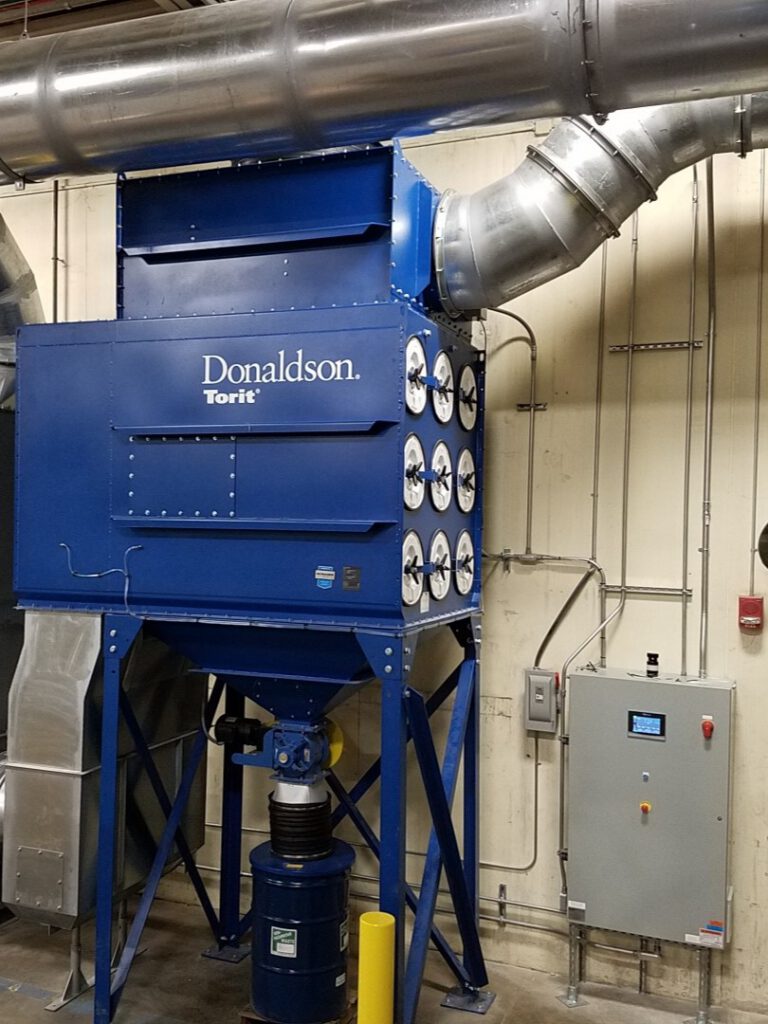
DenTech installed a Donaldson Downflo® Evolution (DFE) dust collection system for more effective cleaning, and reduced energy losses. DenTech designed, built, and installed an AyrDyne electrical control panel that includes safety system integration and maintenance monitoring. For explosion protection, we installed several devices, including a flameless explosion vent on the dust collector and an isolation valve on the ducting.

Explosion protection keeps your employees, processes, and equipment safe. 

Contact our team to talk about solutions for your facility.

Explosion protection system for sugar producer

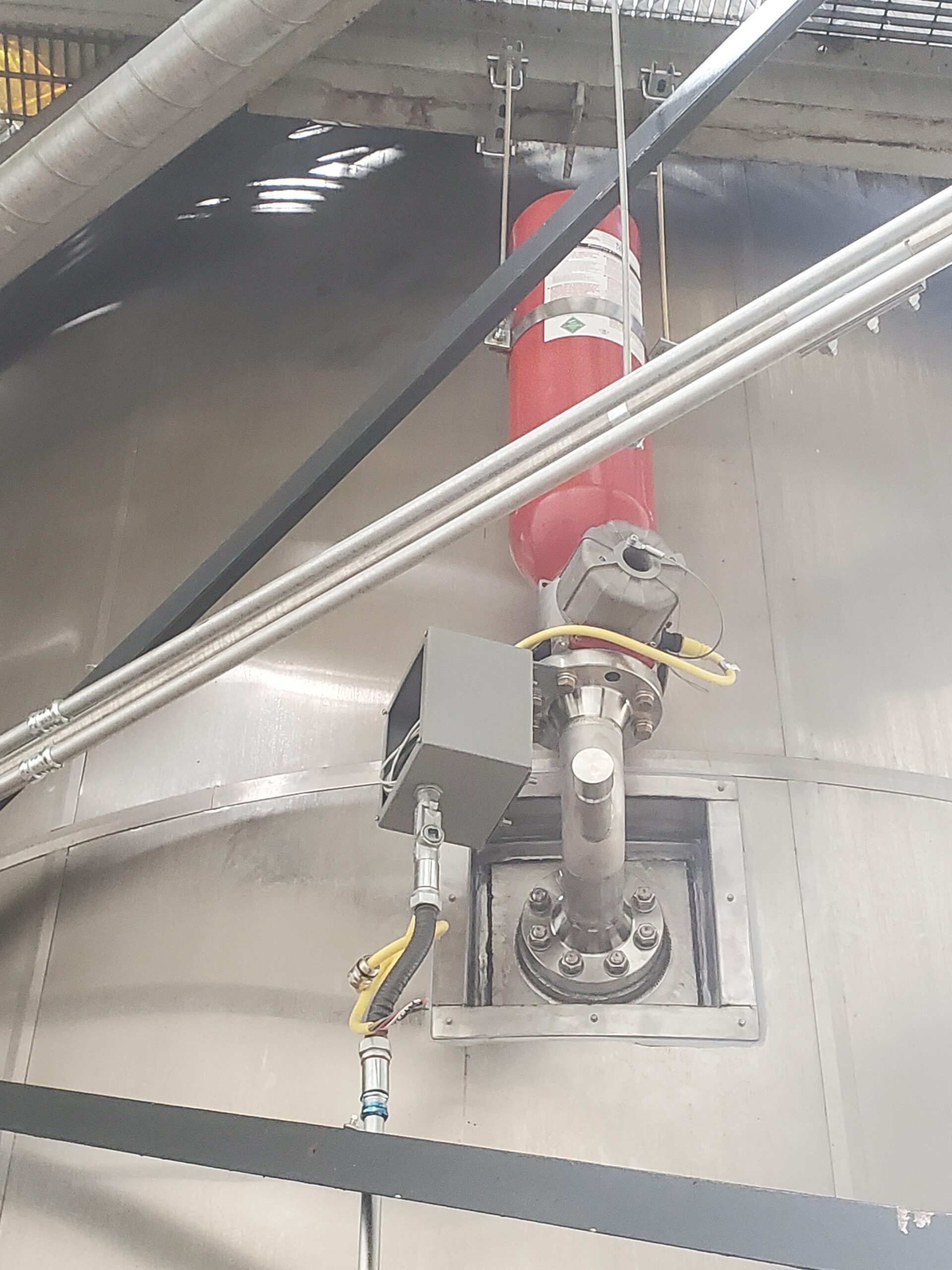
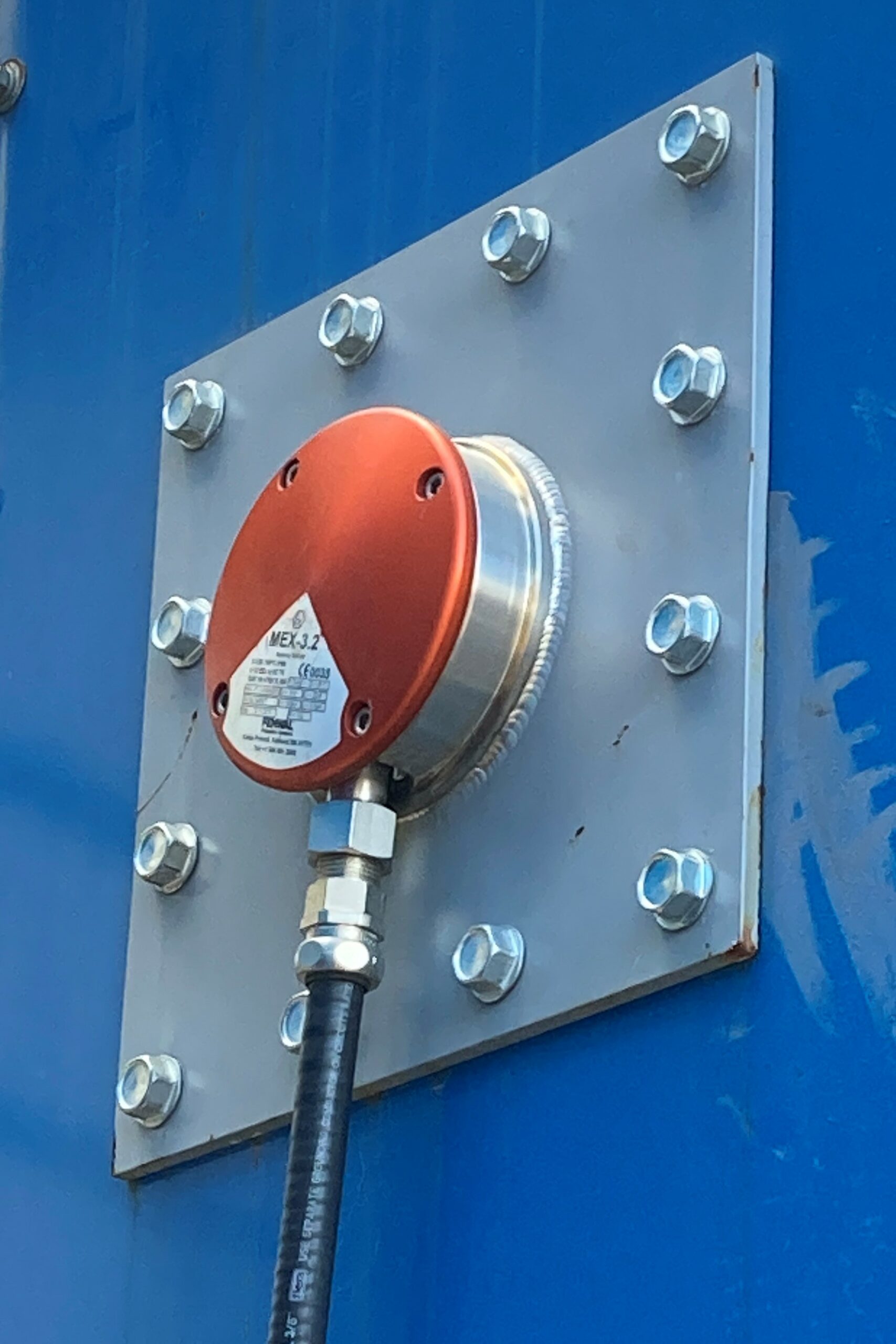
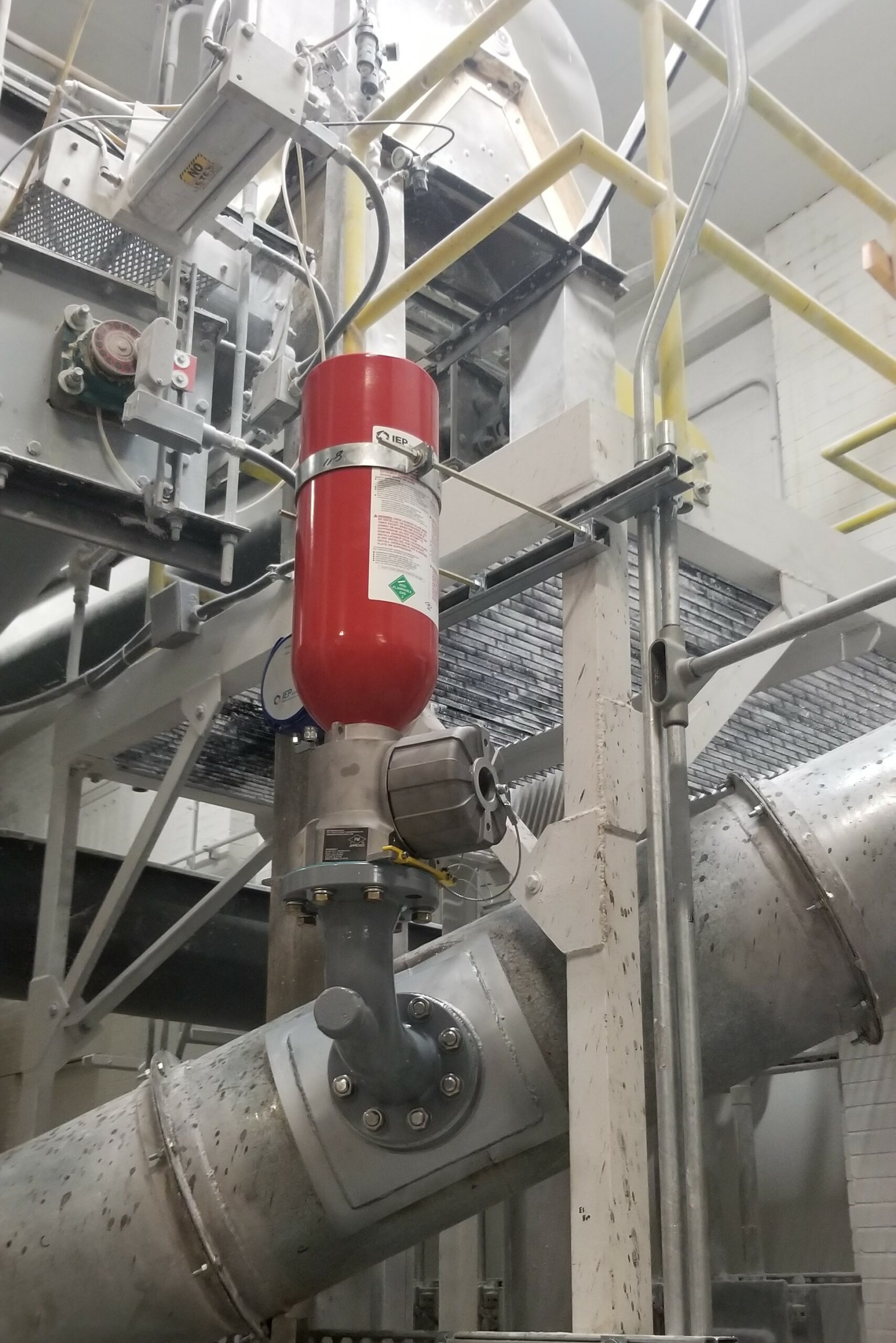
We worked with a sugar producer to update explosion protection devices in their facility. DenTech fabricated hygienic mounting pads, bottle assemblies, and other custom components. Our team installed MEX detectors, FAB units, bottle assemblies, and piston fire bottles. 

Updated controls to reduce risk of fire

DenTech worked with an aerospace manufacturer to integrate fire protection solutions into their dust collection systems. We added temperature sensors, duct smoke detectors, compressed air isolation, and control modifications to their existing dust collection system.

Our team supplied a custom interface panel that provides system shutdown to further protect the process and equipment. With these modifications in place, the manufacturer can better monitor and control conditions that may lead to a production shutdown.

Talk to our team about explosion protection methods for your facility.

Our team is here to help!

Contact us with any questions about explosion protection methods. Our experts can help you determine the appropriate equipment for your facility.